
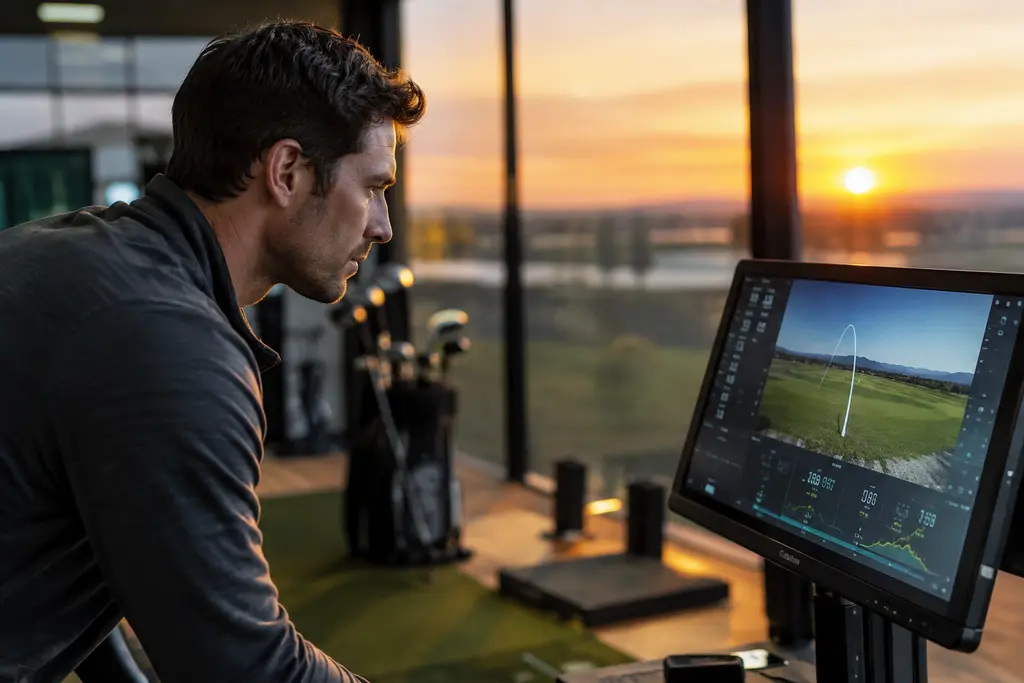
Foresight’s new GC2 made the affordable launch monitor conversation much more serious for golfers who care about fitting data, not just range entertainment. Foresight unveiled the new GC2 on October 1, 2026, opened preorders that day, and scheduled U.S. shipments for October 9-15, 2026, according to Foresight’s GC2 announcement. As of October 27, 2026, that launch window had already passed, so the better question is not whether the unit was coming. It is what golfers should expect from the system in a fitting, practice, or home setup.
The headline is price and ball data. The GC2 was announced at $1,699 USD, while Foresight’s GC3 had been positioned far higher, starting around $6,999, according to an industry release. That gap matters, but a fitter should never look at price alone. The lower cost comes with a narrower data profile: the new GC2 is a ball-data launch monitor, not a full club-and-ball fitting station.
That distinction shapes the whole buying decision. Ball speed, launch, spin, carry, peak height, descent angle, and offline result can tell a golfer a lot. They help with gapping, ball testing, wedge yardages, and basic driver launch conditions. They do not tell the whole story of why the shot happened. Without club path, face angle, dynamic loft, attack angle, lie, or club speed, the golfer and fitter must read patterns carefully and avoid pretending the unit sees more than it actually measures.
What The Affordable Launch Monitor Includes
The new GC2 uses a dual high-speed camera, photometric measurement system. In plain English, it watches the ball through impact rather than relying on long ball flight outdoors. That is one reason camera-based launch monitors have been popular indoors: they can collect useful data in a shorter flight space, provided the unit is set up correctly and the ball is in the hitting zone.
Affordable Launch Monitor Data Set
The published GC2 data list is broad for its price class. Foresight’s release says the unit measures at least 14 ball-data metrics, including launch angle, launch direction, ball speed, back spin, side spin, total spin, spin axis, carry distance, total distance, peak height, descent angle, hang time, curve, and offline deviation. For a fitter, the strongest use cases sit in ball performance and shot result: how high the ball launches, how much it spins, how it curves, and where it finishes relative to target.
That is the first practical read on this affordable launch monitor: it is not a replacement for a full studio fitting with club delivery numbers, but it can support very useful work. A golfer testing two premium balls, checking whether a 5-wood and hybrid overlap, or confirming wedge carry gaps can get answers from ball data alone. A golfer trying to diagnose a face-to-path problem needs more context.
Display, Battery, And Portability
The GC2 includes a built-in 2.8-inch color display that is not touch-operated. That matters more than it sounds. A golfer can see shot data on the unit without always opening a phone, tablet, or laptop. It also supports Wi-Fi, Bluetooth, Ethernet, and USB-C, and Foresight lists compatibility with its Foresight+ and Premier software ecosystem.
The research notes list the unit at 5.45 inches wide, 4.6 inches deep, 11.9 inches high, and about 4.5 pounds, with a lithium-ion battery rated for 5-7 hours. Those numbers put it in the portable category for a golfer who moves between a garage net, a range bay, and an indoor fitting room. Portability is not just about weight, though. It also means the golfer must learn consistent placement, alignment, and hitting-zone discipline.
| GC2 Feature | Fitting Meaning |
|---|---|
| Dual high-speed cameras | Direct ball measurement through impact in a compact hitting area. |
| 14 listed ball metrics | Useful for carry gaps, launch windows, spin checks, and ball testing. |
| 2.8-inch color display | Basic shot feedback can be viewed without an external screen. |
| No club-data measurements | Club delivery questions still need another system or fitter observation. |
Affordable Launch Monitor Setup In A Fitting Bay
Where affordable launch monitor buyers can get into trouble is setup discipline. A camera unit can be excellent at its assigned job and still produce poor sessions if the hitting area, ball position, alignment, lighting, or strike routine changes from shot to shot. Foresight lists the GC2 hitting zone at 123 square inches. That is workable, but it asks the golfer to be consistent. If you are used to raking balls randomly across a mat, the GC2 will push you toward a more organized practice station.
Indoor And Outdoor Use
The GC2 was presented for indoor and outdoor use, including ranges, driveways, and simulator-style spaces. In a fitting shop, that flexibility is useful because the same unit can support a quick wedge-gapping session, a ball comparison, or a home-simulator discussion. Outdoors, the golfer still needs to control alignment and understand that measured ball data and calculated outcomes can depend on how the system is configured.
For a player building a home practice area, I would treat setup as part of the purchase, not an afterthought. A quality mat, safe net or screen, stable device position, good lighting, and a repeatable target line all affect the quality of the session. The GC2 may lower the hardware entry point, but it does not remove the need for a sensible hitting environment.
We treat golf technology like any serious equipment purchase: match the tool to the job, then build the setup around repeatable use. That same practical gear mindset appears across our network at Triplet Powersports, where equipment choice also depends on how and where it will be used.
Software Expectations
Connectivity is one of the stronger parts of the spec sheet. Wi-Fi, Bluetooth, Ethernet, and USB-C give golfers several ways to connect depending on whether they are working from a phone, tablet, computer, or more fixed simulator station. The research notes also point to Foresight+ and Premier compatibility, which places the GC2 inside Foresight’s newer software ecosystem rather than leaving it as a stand-alone number box.
Still, golfers should separate hardware cost from the full cost of use. Software, subscriptions, screens, mats, projectors, and space buildouts can change the real spend. The GC2 hardware price is the beginning of the decision, not the whole budget.
Where The GC2 Helps Fitting Decisions
An affordable launch monitor is most useful when the golfer asks questions that ball data can answer. Carry distance is the cleanest example. If a player thinks a 6-iron carries 170 yards but the measured pattern sits closer to 160 with a wide spread, that changes course strategy and club selection. No score gain is guaranteed, but better yardage awareness can help a golfer make calmer choices.
Gapping And Distance Control
The GC2 should be especially helpful for gapping sessions. A fitter can have a golfer hit enough shots with each iron or wedge to see carry windows, peak height, and descent angle. Those three numbers tell you whether clubs are meaningfully separated or just wearing different numbers on the sole. If a 4-iron launches too low and lands too flat, the answer may be a hybrid, higher-lofted fairway wood, different shaft profile, or loft adjustment. The GC2 can show the ball-flight result; the fitter still has to connect that result to equipment options.
For wedges, carry and spin are the key starting points. Many amateurs practice wedges by total distance, but total distance can be affected by turf, landing angle, and green firmness. Carry windows are more stable for fitting and practice. If the GC2 helps a golfer learn three repeatable wedge carries, that can be more valuable than chasing one big driver number.
Ball Testing And Driver Windows
Ball testing is another strong fit. Since the GC2 measures spin, launch, carry, peak height, and descent angle, golfers can compare balls with the clubs they actually use. That matters because a ball that performs well with a driver may not produce the preferred wedge spin or iron descent. A fitter can use the GC2 to narrow options, then confirm on grass and on the course.
Driver work is useful but needs a careful lens. Ball speed, launch angle, spin, carry, and offline deviation can show whether a setup is playable. Without club delivery data, though, the fitter has to use strike location, visual ball flight, player feedback, and experience to decide whether the issue is head loft, shaft fit, tee height, delivery, or face contact. For readers who want a more focused GC2 fitting angle, our related Foresight GC2 fitting view breaks down how the device fits into a session.
Where The GC2 Has Limits
The most important limitation is clear: the GC2 does not deliver club-data measurements. That means no club head speed, club path, face angle, loft, lie, or face-to-path readout from the unit. This is the main tradeoff that helps explain the lower price. It is not a flaw if the buyer understands it. It is a problem only if the buyer expects a full professional fitting system in a lower-cost package.
Why Club Data Still Matters
Club data matters because two shots can produce similar ball flights for different reasons. A pull-draw and a straight ball that starts left can look close on a small screen, yet come from very different delivery patterns. A high-spin driver can be caused by too much loft, a steep strike, low-face impact, the wrong head, or a shaft that does not match the player’s timing. Ball data shows the symptom. Club data often helps explain the cause.
That does not make the GC2 a poor fitting tool. It means it works best in the right role. A trained fitter can still learn plenty from ball speed, spin, launch, and dispersion, especially when combined with impact tape, foot spray, lie-board feedback where appropriate, and direct observation. The risk is in over-reading the numbers. If the unit does not measure a variable, do not pretend it does.
Who Should Not Treat It As A Full Studio
Golfers chasing a full driver build from scratch may still want a session on a higher-end system that measures both club and ball. The same goes for players working through face control, path changes, or lie-angle decisions. The GC2 can support parts of those conversations, but it should not be the only evidence if the fitting question depends on club delivery.
On the other hand, many golfers do not need every variable for every practice session. If the goal is to build a reliable 8-iron carry, compare golf balls, or check whether a hybrid fills a distance gap, the GC2’s ball-data set is directly relevant.
Who The New Foresight GC2 System Fits
For golfers comparing an affordable launch monitor against a traditional lesson package, a premium studio fitting, or a basic radar unit, the GC2 sits in a specific lane. It is best read as a serious ball-data device from a known launch-monitor brand, priced far below Foresight’s higher GC models, with a clear tradeoff around club data.
The best buyer is a golfer who values measured feedback, has space to set up the unit correctly, and understands the difference between ball result and swing cause. It also fits coaches or fitters who want portable ball data for gapping and testing, while still relying on higher-end tools when club delivery is the main question.
The wrong buyer is the golfer who wants the monitor to solve fitting questions alone. Launch monitors are measurement tools. They do not replace judgment, setup discipline, or on-course testing. Used with that mindset, the GC2 gives golfers a more accessible route into Foresight ball data without pretending to be something it is not.