
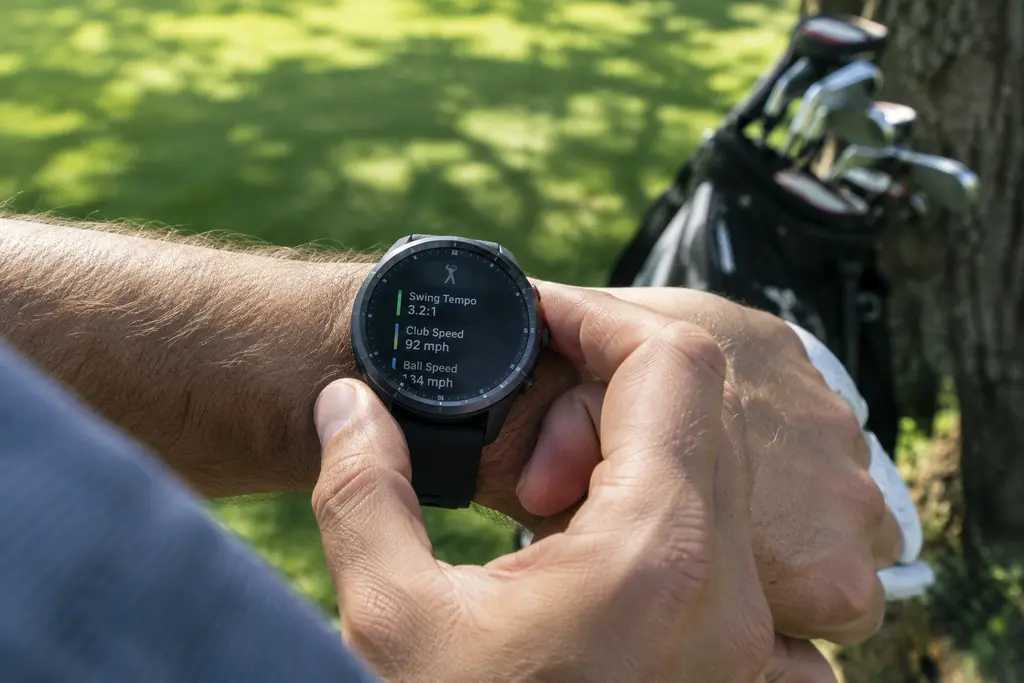
The Garmin Approach S72 gives beginner golfers a new way to see swing data from the wrist, but the right question is not whether one metric looks impressive. The better question is whether the numbers help explain contact, start line, tempo, and fit needs without pushing you into a club purchase too early.
Garmin unveiled the watch on October 6, 2026, through its product announcement for the Approach S72 Garmin announcement. In Japan, Garmin said the 47 mm model went on sale on October 22, 2026, after pre-orders began on October 15, 2026, while the 43 mm model was scheduled to follow in early November 2026 Garmin Japan release. That timing matters for buyers because availability, size choice, and local pricing can vary by market.
From a fitting-first view, the watch should be treated as a practice and pattern tool. It can help you walk into a lesson or fitting with better questions. It cannot prove, by itself, that a shaft, lie angle, grip size, or driver loft is right. A fitter still needs to see ball flight, strike pattern, delivery, and how your swing holds up across enough shots.
Garmin Approach S72 Swing Metrics Explained
Garmin Approach S72 Data Starts On The Wrist
The key beginner benefit is that the swing metrics are measured on the wrist, without external sensors. The tracked items in the research include hand speed, backswing length, wrist rotation, and the newer swing plane metric. That makes the watch easier to use than a sensor kit that has to be moved between clubs, but it also means you should read the numbers as body-and-hand movement clues rather than full clubhead or ball-flight measurements.
That distinction is important for equipment decisions. A launch monitor can show ball speed, launch, spin, carry, descent angle, and dispersion. The watch can help explain what your hands and wrist were doing during the motion. The best use is combining both views. If your 7-iron launch data looks inconsistent and your watch shows unstable backswing length or wrist rotation, you have a practice lead worth testing before changing clubs.
What The Watch Does Not Replace
A smartwatch does not replace a full fitting bay. It does not tell you the lie angle mark on an impact board, the real gapping between clubs, or whether a different shaft weight improves delivery. It also should not be used to promise more distance. Beginners often improve quickly because they learn what repeatable contact feels like, but no device can guarantee a lower score or a longer shot.
If you are new to golf tech, keep a simple rule: use the watch to identify patterns, then use a coach, fitter, launch monitor, and on-course results to confirm what matters. For a wider look at practice tools and measurement devices, our golf gadgets 2026 breakdown takes the same fitting-first approach.
How Beginners Should Read The Main Numbers
Swing Tempo Is A Timing Check
Swing tempo is shown as a ratio: backswing time divided by downswing time. The research notes that Garmin treats a 3.0 tempo, or 3-to-1, as an ideal model based on professional golfers. That does not mean every beginner should chase a tour-looking motion by next weekend. It means the ratio gives you a reference point for rhythm.
Garmin also offers six timing options for tempo training. The training feedback can show green signals when backswing and downswing timing are in the desired window, and golfers can progress through timing options as consistency improves. For a beginner, the Garmin Approach S72 tempo work is best used with half swings, wedges, and mid-irons first. Driver tempo can be noisy because beginners often overswing when the ball is teed up.
Hand Speed, Backswing Length, And Wrist Rotation
Hand speed is tracked across the swing, including maximum speed, speed at the top of the backswing, and speed at impact. The research notes that the watch displays this on a clock-face visual and chart, with maximum hand speed ideally occurring just before impact for control. That is a useful check because many new golfers spend speed too early, then arrive at the ball with poor face control.
Backswing length measures the distance or angle from the start of the swing to the top. The watch uses a clock-face style illustration, which can help beginners see whether a swing is longer or shorter than intended. A longer backswing can help create more distance because of a wider rotation radius, but longer is not automatically better. If the longer motion makes contact worse, a shorter and more repeatable motion may fit you better.
Wrist rotation measures how much the lead wrist rotates from address through the top of the backswing and down to impact. The useful part is not finding one perfect number. The useful part is seeing which wrist pattern goes with your better shots. If your best strikes share a similar wrist-rotation shape and your poor strikes show a different pattern, you have a clear practice target.
Using Watch Data In A Fitting Session
Bring Patterns, Not One Best Swing
A beginner fitting gets better when you bring patterns instead of one highlight swing. Before a session, use the Driving Range activity mode to hit small groups of shots with one club. The research notes that this mode can show wrist-based metrics live, log shots, set favorite metrics for round use, display tempo-training graphs, change club-specific settings on the wrist, and sync later to Garmin Connect for deeper review.
That gives a fitter a better starting point. If your tempo and backswing length stay stable with an 8-iron but fall apart with a hybrid, the issue may be club length, confidence, delivery, setup, or a mix of those. If wrist rotation changes heavily with longer clubs, the fitter may want to check face angle tendencies and shaft feel. The watch does not answer every question, but it can point the fitting conversation toward the right tests.
Swing Plane Needs Context
Swing plane shows the hand-path angle during the backswing and downswing relative to the ground. The research also notes a transition angle, which is the change in swing plane between backswing and downswing. This is useful because many beginners hear swing-plane advice without a clear way to see whether the move is changing.
Still, be careful with self-diagnosis. A flatter or steeper hand path is not automatically good or bad. It depends on your body motion, club delivery, strike location, and ball flight. If you use the watch during a lesson, the coach can pair the visual with video and real ball flight. That is a much cleaner route than trying to rebuild your swing around one watch screen.
Price And Buying Fit Before You Commit
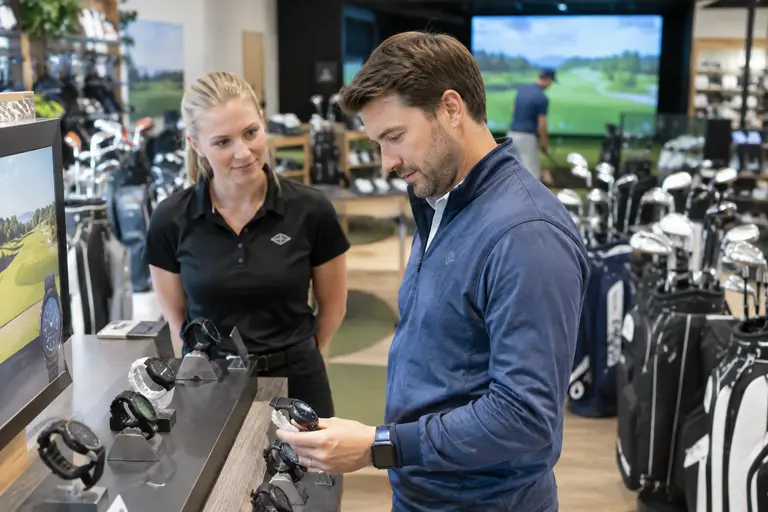
The research provided here confirms launch timing and Japan availability dates, but it does not provide a full market price table for every region. For that reason, a fair buyer check should start with the features you will actually use: on-wrist swing metrics, tempo training, Driving Range mode, Garmin Connect review, and standard golf-watch functions. Do not pay for data just because it sounds advanced. Pay for data you will review and act on.
For pricing transparency, compare the watch cost against other ways to spend the same golf budget. A beginner might also need a lesson, a basic wedge gapping check, a grip change, or a starter fitting. If your current clubs are far from playable for your height, speed, or delivery, a fitting may return better practical value than any wearable. If your clubs are serviceable and you practice often, a watch can help you track swing habits between lessons.
- Buy for practice feedback if you like reviewing tempo, hand movement, and range sessions.
- Wait for more local pricing clarity if size, availability, or regional model options are still unclear where you live.
- Book a fitting first if your clubs feel too long, too short, too heavy, or hard to square consistently.
- Use network references wisely; related golf tech notes available on wikiapp.org can assist in separating device research from sales pressure often encountered on store floors.
Garmin Approach S72 Beginner Takeaways
The Garmin Approach S72 is most useful for beginners who want to connect feel with measurable swing patterns. Tempo can show whether your rhythm is changing. Hand speed can show whether speed is arriving too early or closer to impact. Backswing length can show whether your swing is growing beyond control. Wrist rotation and swing plane can help explain why two swings that feel similar may produce very different shots.
The fitting-first move is to avoid treating any single number as a verdict. Use the watch for repeated range sessions, save the patterns, and compare them with real ball flight. Then, if you book a fitting or lesson, bring the data as context. The best equipment decisions still come from matching the golfer, the club, and the strike pattern together.