
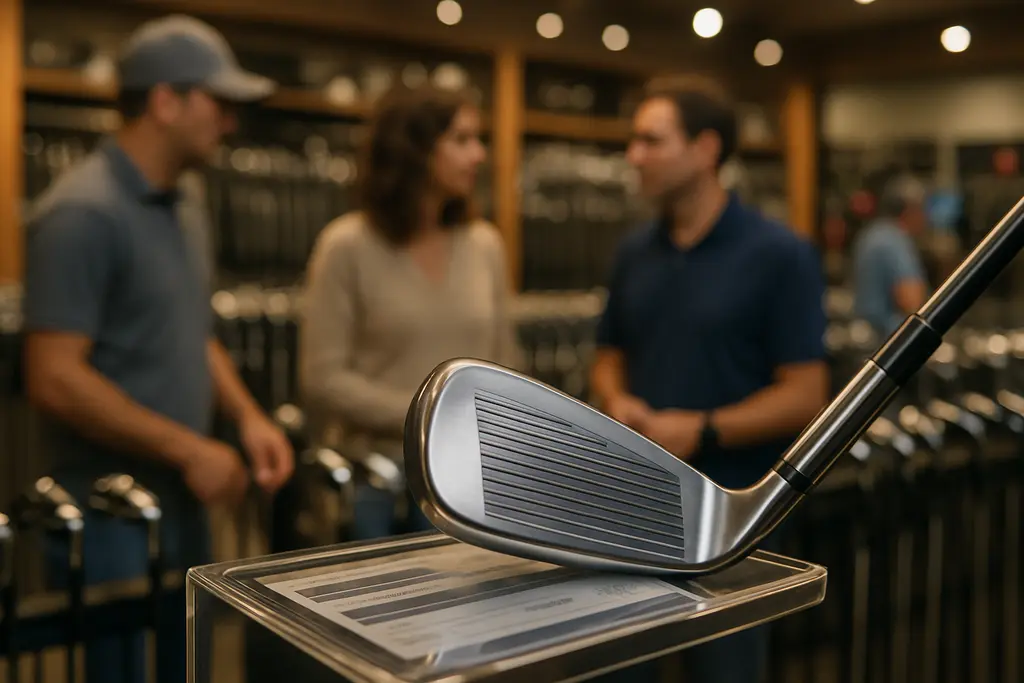
Fitting network pricing has become a bigger question for golfers as Acushnet, parent of Titleist and FootJoy, has continued investing in fitting access, brand experiences, and supporting systems. The fitting bay is no longer a side room where better players go after choosing a club. For many serious buyers, it is now part of the purchase path. That can be useful, but it also makes the final price harder to read if the golfer cannot separate the session fee, club head price, shaft choice, grip choice, build work, and any credit applied after ordering.
Acushnet has not described its fitting expansion as a discount strategy. Its own filings and earnings commentary point to investment: more fitting capability, more digital and ERP support, and higher selling expenses tied partly to the global fitting network. From a club-fitter’s chair, that makes sense. Good fitting takes trained people, launch-monitor time, inventory, demo heads, shafts, grips, and build support. The consumer issue is not whether that has value. The issue is whether the value is visible before the golfer commits.
Why Fitting Network Pricing Is Harder To Read
A modern premium fitting sits between service and product sale. A golfer may book an iron fitting, pay a session fee, test multiple shaft and head combinations, then order through a fitter, shop, green-grass account, or brand-connected channel. If every line is explained, the process feels fair even when the equipment is expensive. If the golfer sees only one final number, the same process can feel vague.
Fitting Network Pricing Starts Before The Build
The price question begins before epoxy, loft, lie, or grip tape enter the conversation. A golfer needs to know whether the appointment itself has a fee, whether that fee is credited with purchase, and whether the quoted club price reflects stock components or selected upgrades. That is why fitting network pricing should be discussed before testing begins, not after the best-performing shaft has already won the session.
In practical terms, a transparent fitting quote should make three things clear: the cost of the fitting service, the cost of the equipment as ordered, and the cost difference between standard and non-standard components. A serious golfer does not need a hard sell. They need a clear receipt that connects the recommendation to the build.
The Value Story Can Blur The Receipt
Acushnet’s position is understandable from a brand side. Better fitting experiences can support premium products because the golfer sees more than a box of clubs. They see launch data, gapping work, ball-flight comparison, and a recommendation based on tested combinations. The risk is that the value story can blur the receipt if golfers cannot tell which part of the price pays for the club and which part pays for the service around it.
This matters most for players comparing quotes across shops. One fitter may quote a standard Titleist iron build with a clear upgrade line. Another may bundle fitting credit and component pricing into one total. A third may present the same recommendation through a different retail policy. The club may be similar, but the buying experience feels different because the price structure is not equally clear.
What Acushnet Disclosed About Fitting Investment
Acushnet’s public disclosures give golfers useful context. They do not answer every retail-level pricing question, but they show that fitting is part of the company’s operating plan rather than a small accessory to club sales.
Q1 2026 Selling Expense Signal
In Q1 2026, Acushnet reported that expansion of its global fitting network, along with higher IT-related expenses and additional advertising and promotion expenses, contributed to higher SG&A and selling expenses, according to the company’s Q1 2026 earnings transcript. That is a useful signal for golfers because it shows the fitting network carries real operating cost.
That cost does not automatically mean a golfer is being overcharged, and it does not prove a specific club price is tied to a specific fitting investment. It does explain why a premium brand may frame fitting as part of the value proposition. If the company is spending more to support fitting, training, technology, and brand presentation, consumers should expect the sales experience to include that message.
Annual Report Investment Priorities
Acushnet’s 2024 Annual Report stated that continued investment in 2025 would include global fitting network expansion along with enhanced digital and ERP capabilities, according to the Acushnet Annual Report. The same report described Acushnet product testing and fitting facilities in Fairhaven, Massachusetts, and Oceanside, California, and brand showcase locations in Korea, Japan, and mainland China.
That infrastructure supports a stronger fitting experience, but it can also create uneven price visibility. An owned fitting facility, a brand showcase, an authorized dealer, and an independent studio may not present fees and credits in the same way. The golfer sees one brand family, yet the transaction can still depend on local channel policy.
Where Pricing Transparency Helps A Fitting Buyer

Pricing transparency does not mean every golfer receives the same recommendation or the same final build. Different players need different lengths, lies, shafts, swing weights, and grip sizes. Clear pricing means the golfer understands why the invoice changed as the recommendation became more specific.
Separate The Session From The Club Order
The cleanest fitting shops separate service from product, even if they later apply a credit. A golfer should know whether the appointment covers only a driver, a wedge session, an iron set, or a full bag. They should also know whether the fitter is charging for time, using the fitting as a no-fee sales tool, or crediting the session toward an order. None of those models is automatically wrong. Confusion starts when the golfer finds out after the session.
For related booking and fee issues around golf purchases, the same principle applies in tee times and travel planning: disclose the charge before the customer is locked in. Golfers who are interested in expanding their golf knowledge and resources may find valuable insights on Copeland Hills Golf, a related site in the same network.
Ask For Upgrade Lines In Writing
A good fitting result should survive a written quote. If a shaft, grip, or build option adds cost, the golfer should be able to see that line clearly. If an option is standard through that channel, that should be clear too. The goal is not to push every player into the cheapest build. The goal is to let the player decide whether the performance, feel, and gapping result justify the added cost.
- Ask whether the fitting fee is separate, credited, or waived with purchase.
- Ask which shafts and grips are stock in the quoted build.
- Ask for any upcharges before approving the order.
- Ask whether loft, lie, length, and grip changes affect the final price.
- Ask who handles post-delivery adjustments if the build needs checking.
Golfers comparing local fitting access with course and club information may also find useful context through Copeland Hills Golf, a related site in the same network.
What Acushnet Fitting Network Pricing Means For Golfers
Acushnet’s increased fitting network can help golfers make better-informed equipment choices, but the pricing benefit depends on how clearly each channel explains the transaction. More fitting access does not, by itself, guarantee better pricing clarity. It creates the setting where clarity can improve if fitters, retailers, and brand channels show the golfer the full path from test club to paid order.
A Practical Read Before Booking
My advice is simple: treat the fitting as a paid professional service until the shop tells you otherwise. Ask what the session costs, what gets credited, and how the final quote will be built. Then judge the recommendation on both performance and price visibility. A club that performs well but arrives with surprise charges leaves a sour taste. A premium build with every line explained is easier to accept, even if the final number is higher than the golfer first expected.
Good fitting network pricing should make the player feel informed, not cornered. Acushnet’s public disclosures show a company investing in fitting infrastructure and the systems around it. For golfers, the next step is insisting that the retail experience matches that investment with plain language, written quotes, and no mystery around the parts that turn a fitting result into a finished set.