
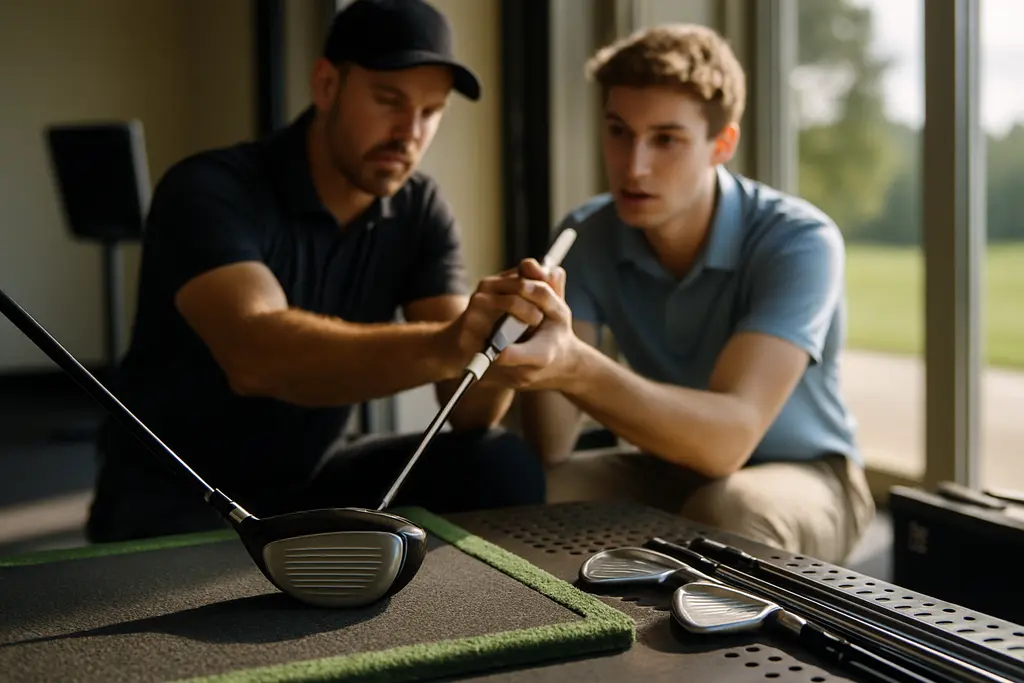
If you are new to golf, custom fitting can sound like something reserved for low-handicap players with repeatable swings and premium bags. That is not the best way to look at it. A fitting is simply a structured way to learn which club length, lie angle, shaft, head style, grip size, and set makeup give you a better chance to make normal swings without fighting the equipment.
New golfers do not need perfect technique before booking. In many cases, the value is in avoiding a poor first purchase: irons that are too long, a driver that spins too much, wedges with awkward gaps, or grips that make the club harder to hold. A good fitter should meet you where your swing is now, explain what the data means, and avoid pushing you into a build that does not match your budget or stage of play.
Why Custom Fitting Makes Sense Early
What Custom Fitting Actually Checks
A fitting is not a test you pass or fail. It is a comparison process. The fitter starts with baseline shots, watches your delivery, and then changes one or two variables at a time. That can include shaft weight, shaft flex, clubhead model, loft, lie angle, length, grip size, or wedge setup. The goal is not to create one magic club. The goal is to narrow the range so your clubs fit your body, your motion, and the shots you are trying to hit.
Good custom fitting is practical. It should answer questions like: Do you strike the center more often with a shorter driver? Are your irons too upright or too flat? Does a lighter shaft help you keep speed without losing control? Are your wedges spaced in a way that leaves usable yardage gaps? Those answers matter more than the brand name on the sole.
The broader golf market shows that fitting is no longer a niche service. Golf Datatech reported that nearly 80% of “Serious Golfers,” defined in the research as frequent players, have been custom-fit at some point, and close to 90% of those fitted golfers planned to have their next club purchase fit as well, according to Golf Datatech research. Golf Digest also reported that more than 50% of U.S. driver and iron sales now include a fitting component, based on its coverage of fitting adoption.
Those numbers do not mean every beginner should order a full premium set on day one. They do show that fitting has become part of normal club buying. If you are spending real money on equipment, it is reasonable to ask for real information before you buy. For further insights and related discussions within the golf community, be sure to check out Banat Zayed, a related site in our network.
The Custom Fitting Process In The Bay
Bring Your Current Clubs And Honest Goals
A custom fitting session usually starts with what you already have. Bring your current clubs, even if they are old, borrowed, or bought second-hand. They give the fitter a baseline. If your 7-iron flies low and left, or your driver contact is spread across the face, that information is useful. Do not hide bad shots. The misses often explain more than the best swings.
Be direct about your golf. Tell the fitter how often you play, whether you take lessons, what ball flight bothers you, which club you avoid, and what you can spend. A good shop can work inside limits. If you only need help with irons, say that. If your driver is the one club costing you tee shots, start there. If you are building your first set, you may not need 14 clubs immediately.
Data You Will Hear
Most modern sessions use a launch monitor such as TrackMan or GCQuad. The fitter should not bury you in numbers, but a few metrics matter because they explain why one setup performs differently from another.
- Ball speed: how fast the ball leaves the clubface.
- Clubhead speed: how fast the club is moving at impact.
- Launch angle: the initial height window of the shot.
- Spin rate: how much the ball spins after impact.
- Shot dispersion: the pattern of misses left, right, short, and long.
- Attack angle: whether the club is moving upward or downward through impact.
Physical measurements can also be part of the session. Height, wrist-to-floor distance, and hand size can help the fitter decide where to start on length, lie angle, and grip size. Those measurements are not the final answer by themselves. A player’s dynamic delivery still matters. Two golfers with the same height can need different lie angles because they move the club differently.
Pricing, Time, And What To Book First
Full Bag Versus One Club
For a new golfer, the best first booking is often not the longest one. A full-bag session can take roughly 90 to 120 minutes, while a driver-only or iron-only session may run closer to 45 to 60 minutes. Those are planning ranges, not universal shop rules. Ask the fitter how long the appointment runs and what happens if you get tired halfway through.
Fatigue matters. New players may not have the swing stamina to hit driver, fairway woods, hybrids, irons, wedges, and putter in one sitting. If your swing changes after 70 balls, the data near the end of the session may be less useful. That is why many golfers are better served by starting with the part of the bag causing the biggest problem.
Pricing varies by shop type, session depth, and whether the fitting fee is credited toward a purchase. Some retail fittings may be free with purchase. Independent specialists may charge a separate fee. Neither model is automatically better. What matters is whether you receive clear specs, clear pricing, and a recommendation you understand before you approve an order.
Questions To Ask Before You Pay
Before booking, ask plain questions. A fitter who answers clearly before the session is more likely to explain clearly during the session.
- Is the fitting fee separate, or can it be credited toward clubs?
- Which club brands and shaft options are available to test?
- Will I receive my final specs after the session?
- Can you quote the full build cost before I order?
- Do you recommend buying everything now, or phasing the bag over time?
If you want a simple prep list before your first appointment, our beginner club fitting checklist covers what to bring and how to think through the session. Readers who follow practical gear and sport coverage across our network can also visit Banat Zayed.
How New Golfers Should Read The Recommendation
Avoid Chasing One Perfect Swing
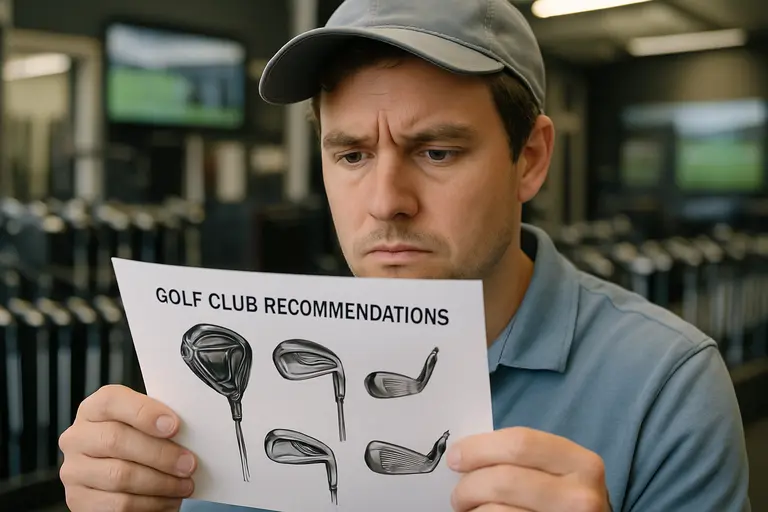
The best fit is not based on your single best strike. It is based on patterns. If one driver carries farther once but the next six shots are wide right, that is not strong evidence. A fitter should look at groups of shots, strike location, launch window, spin, and left-right spread. For beginners, tighter contact and more predictable misses can be more useful than chasing one longer number.
This is also where expectations matter. Fitted clubs can help remove equipment problems, but they do not replace lessons, practice, or better course decisions. No fitter should guarantee a score drop or a fixed distance gain. A sound recommendation gives you a better starting point. Your swing still has to deliver the club.
Know When Standard Gear Is Enough
Sometimes the right answer is not an expensive custom order. A newer golfer might fit well enough into a standard-length iron with a lie adjustment and the right grip size. Another player may need only a driver loft change or a shaft that keeps launch and spin in a better window. A good shop should be willing to say when a smaller adjustment solves the problem.
Used clubs can also be part of the plan, especially for players still learning what they like. If you buy used, the fitting information still helps. Knowing your likely iron length, lie angle, shaft weight range, and grip size can keep you from buying a set that works against you from the first range session.
Custom Fitting For New Golfers
Custom fitting is best viewed as a buying tool, not a status symbol. For a new golfer, it can reduce guesswork, explain why certain clubs feel easier to hit, and help you spend in the right order. Start with the club category that causes the most trouble, bring honest information about your game, and ask for the final specs in writing.
The right session should leave you clearer, not more confused. You should know what was tested, what changed, what the fitter recommends, and what the full cost would be before you make a purchase. That is the practical value: better information, cleaner decisions, and clubs that make sense for the golfer you are now.