
Hot List 2026 gave club-fitters and serious golfers something more useful than a simple medal chart: a large, launch-monitor-backed look at how new clubs perform when real players hit them. Golf Digest evaluated 244 clubs across drivers, fairway woods, hybrids, irons, wedges and putters, with 32 player panelists of varying handicaps involved in the testing process, according to the Golf Digest Hot List.
That does not mean a golfer should buy the highest-rated head and expect an automatic scoring drop. A fitting still has to match ball speed, launch, spin, strike pattern, delivery, shaft behavior, turf interaction and player preference. What the testing does well is give fitters a bigger reference point before the golfer ever steps into the bay.
What Hot List 2026 Testing Measured
The Launch Monitor Setup
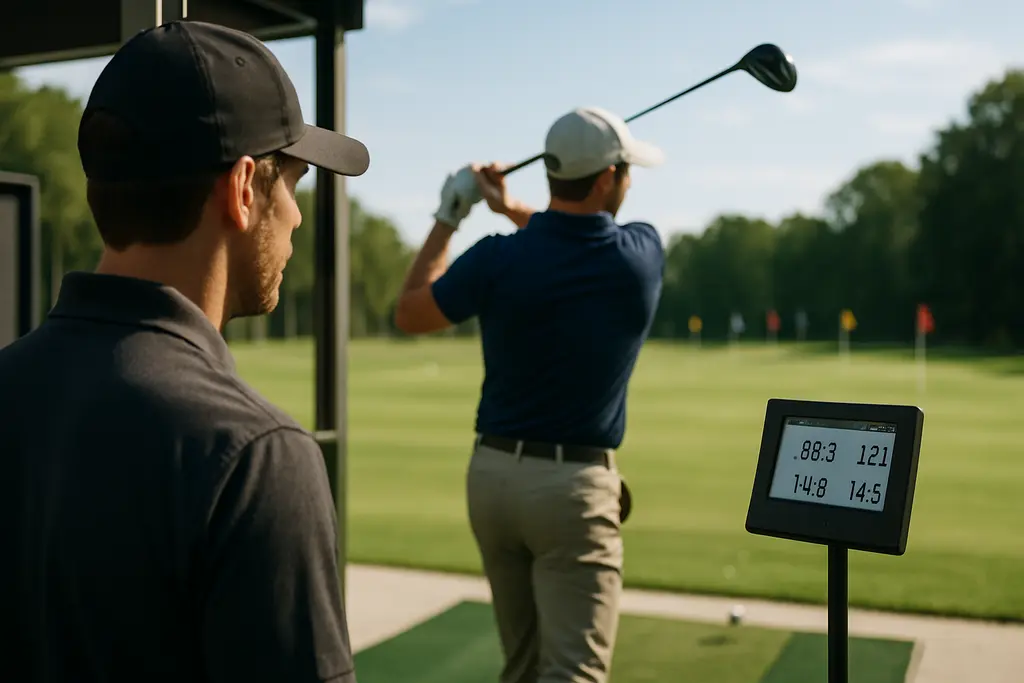
The full-swing portion of the testing used Rapsodo MLM2Pro launch monitors, with one unit assigned to each tester’s station. Across the sessions, Golf Digest reported more than 28,000 recorded full-swing shots, while its Range Results data set referenced nearly 27,000 full-swing shots tracked for measures such as distance, carry and dispersion on drivers and 7-irons.
For fitting work, the scale matters. A single golfer can have a strange testing day. A panel of different handicaps hitting many heads creates a better broad read on club behavior. It still is not a substitute for an individual session, but it can show patterns: which categories tend to launch easier, which heads appear more forgiving across a wider player group, and where the newest designs are trying to solve common misses.
How Outliers Were Handled
The data treatment is one of the more useful parts for golfers to understand. Shots that measured less than 80 percent of a player’s average for that club were treated as mishits and removed from the distance data set. Golf Digest also used a two-sided Grubbs test to remove outliers.
That approach makes sense for product comparison because one topped shot can distort a distance average. In a real fitting, though, I still want to see the bad strikes. The removed shot might not belong in a clean club comparison, but it absolutely belongs in a golfer’s scoring profile. A club that keeps a thin miss in play or preserves enough speed on a toe strike may be more valuable than the one that wins only on centered contact.
Why Hot List 2026 Data Needs Context
Driver Distance Is Not The Same As Iron Fit
For drivers, Golf Digest used total distance in performance comparisons. For other clubs, including 7-irons, carry distance was the key distance measure. That distinction matters in a fitting bay. Driver roll can be influenced by launch, spin and landing angle, while iron performance is usually more useful when measured by repeatable carry, peak height, descent angle and stopping power.
A golfer who reads a driver ranking should not look only for the longest average. Lower spin can help some players, but it can punish others if launch is too low or strike location is inconsistent. Many Gold-rated driver models in the testing reflected the current move toward lower spin, adjustable weighting, movable weight structures and larger or more perimeter-weighted heads aimed at forgiveness. The fitting question is not whether lower spin is modern. It is whether that spin window fits the player’s speed, attack angle and strike pattern.
Iron Categories Were Matched To Player Type
Golf Digest tested irons in four categories: Players, Players-Distance, Game-Improvement and Super-Game-Improvement. Low-handicap players hit Players irons, while high-handicap testers used Super-Game-Improvement irons. That is a practical reminder for anyone comparing iron data. A better player’s result with a compact Players iron does not tell a mid- or high-handicap golfer enough about launch help, sole width, off-center protection or confidence at address.
In a proper fitting, category is a starting lane, not a locked gate. Some improving players fit well into Players-Distance heads. Some lower-handicap golfers still score better with more help in the long and mid irons. The better test is whether the club produces playable windows and predictable gaps through the set.
What The Club Trends Mean For Scoring
Fairway Woods Are Filling Long-Iron Gaps
Golf Digest noted design movement in fairway woods, including more flexible faces, weight-saving or composite designs that lower the center of gravity, and more higher-lofted options such as 7-, 9- and 11-woods being used as long-iron replacements. That trend fits what many fitters see every week: plenty of golfers launch a higher-lofted fairway wood more easily than a strong long iron.
This is a scoring issue, not just a distance issue. If a golfer can carry a 7-wood over a front bunker, land it steeper and keep the miss playable, that club may save more strokes than a long iron that looks traditional but produces low, running shots. The right answer still depends on turf, wind, set makeup and the player’s strike pattern.
Subjective Feedback Still Belongs In The Test
The scoring criteria included objective launch-monitor data and player feedback on a 5-point scale for Performance, Look, Sound and Feel. Testers were encouraged to use the launch data, but their own reaction still mattered. That is not a flaw. It mirrors real fitting work.
For fitters, Hot List 2026 is a useful reminder that the best-performing head on a screen can fail if the golfer dislikes the look, hates the sound or cannot aim it. Comfort does not override ball flight, but it affects commitment. A player who makes a freer swing with a slightly less perfect-looking data profile may end up with a tighter pattern on the course.
Golfers looking for even more insights can explore broader golf and sports content through a related resource within the same network, My All Time Best.
How The Compare Tool Helps Golfers Prepare
Side-By-Side Data Can Sharpen A Fitting Plan
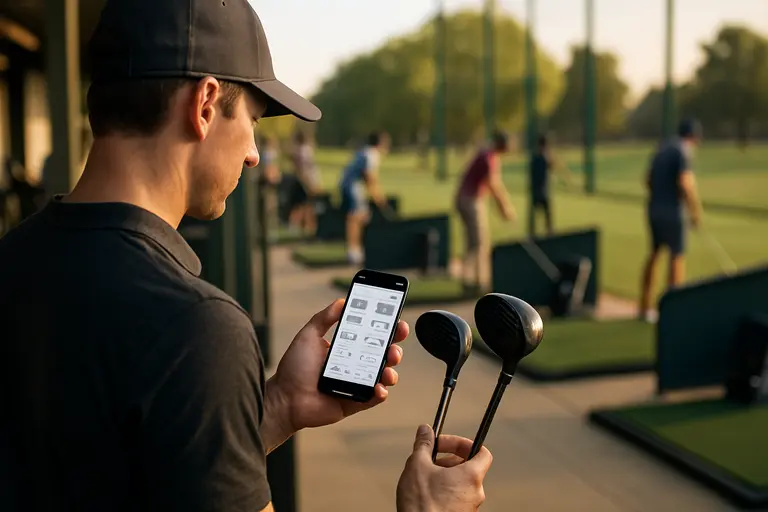
In early February 2026, Australian Golf Digest reported that the Hot List introduced a Compare Clubs tool for side-by-side views of detailed performance measures, including distance, dispersion, vector ratings and forgiveness information across models, as described in its Compare Clubs tool report.
That type of tool is best used before a fitting, not instead of one. A golfer can build a short list of heads that fit the right category, then test them with the same ball, similar shaft profiles and clear target windows. The danger is treating a broad data table as if it predicts one player’s best fit. It does not. It gives direction.
- Use category first: compare drivers with drivers, or Game-Improvement irons with similar Game-Improvement irons.
- Check dispersion, not only distance: a longer average can be less useful if the shot pattern widens.
- Bring your current clubs: the best benchmark is the set you already play.
- Ask about gaps: the winning model is the one that fits the bag, not only the one that wins a single test.
Hot List 2026 also reminds golfers that performance categories can blur. A high-launch fairway wood might replace a hybrid. A forgiving Players-Distance iron might beat a traditional cavity-back for one golfer and lose badly for another. The data gets you started; the fit decides whether the club belongs in the bag.
Using Hot List Data In A Fitting Bay
A Practical Fitter’s Read
The smartest way to use this testing is to treat it as a map of possibilities. If a driver family trends toward lower spin, a fitter can test whether the golfer needs that spin reduction or needs more launch and stability. If higher-lofted fairway woods are gaining traction, a fitter can test them against long irons and hybrids using carry distance, peak height, descent angle and left-right pattern.
The same thinking applies to irons. A player should not move into a smaller head because a better player panel liked it, and should not reject a more forgiving iron because it lacks tour-style shape. The best scoring clubs are the ones that produce repeatable windows, sensible gaps and misses the golfer can survive.
Launch-monitor testing is powerful because it turns impressions into evidence. It is limited because golf is played off uneven lies, in wind, under pressure and with consequences. The value of Golf Digest’s testing is that it gives golfers a broader, cleaner starting point. The value of a fitting is that it filters that information through the swing, delivery and scoring needs of one player.