
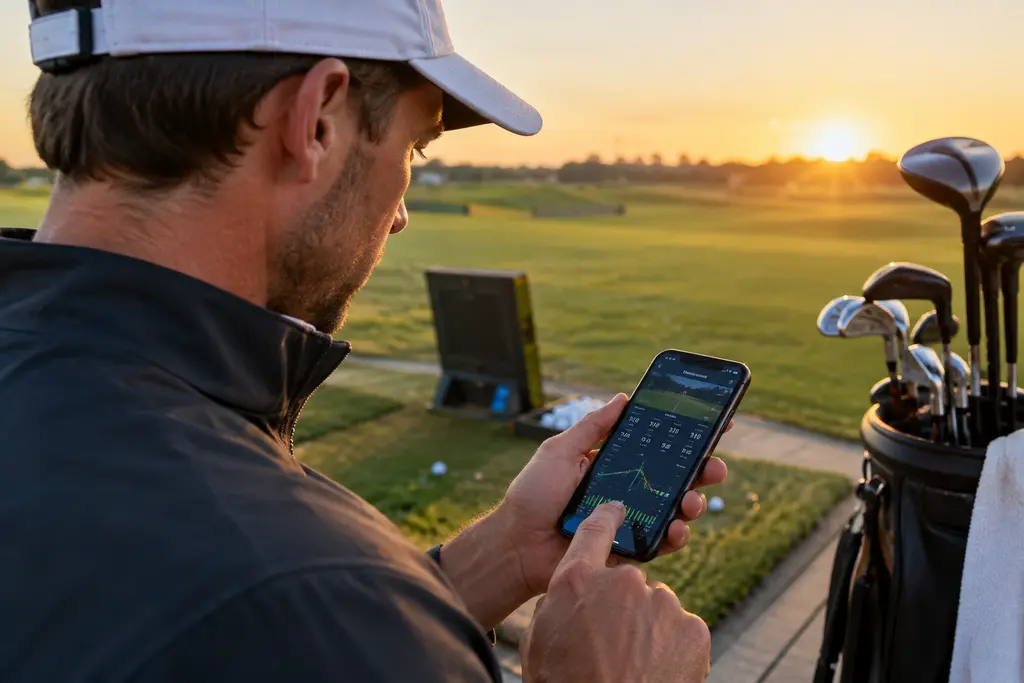
The GHIN Mobile App upgrade gives club fitting trends a practical push: golfers now have easier access to round-based stats that can help a fitter ask better questions before a club ever gets pulled from the build cart. That does not replace a launch monitor session, impact tape, lie-board checks where useful, or a fitter watching ball flight. It does give the session a cleaner starting point.
As of October 30, 2026, the app changes had already been announced and rolled out as part of a broader move from simple score posting toward on-course performance tracking. For a golfer booking a fitting, that matters. A handicap record tells us where scoring sits. Hole-by-hole tendencies, fairways hit, greens in regulation, putting patterns, and GPS-based course decisions can tell us where equipment questions should begin.
I would not use app data to prescribe a shaft, loft, lie angle, or head model on its own. I would use it to make the fitting more focused. If a golfer arrives saying every missed green comes from a long-iron problem, but the round data shows repeated short approaches from 125 to 155 yards, the fitting should not skip wedge and iron gapping. Good booking forms and good fitters should now be ready for that kind of evidence.
Why Club Fitting Trends Now Start With Round Data
The biggest shift is not that golfers have another app. It is that a common handicap platform has moved closer to being a performance record. In October 2026, the USGA said GHIN added a redesigned Stats section with hole-by-hole trends, putting, fairways hit, and greens in regulation, plus enhanced GPS features for green distances, hazards, layups, and Apple Watch support through a subscription option; it also reported GHIN Challenges participation across 36 Allied Golf Associations, more than 750 Challenges, and over 30,000 golfers USGA announcement.
Club Fitting Trends Fitters Can Read In GHIN
Those numbers do not tell a fitter everything, but they can point to patterns worth testing. Fairways hit can start a driver discussion, but the fitter still needs strike location, face-to-path tendencies, launch, spin, peak height, and dispersion. Greens in regulation can start an iron discussion, but the fitter needs to know whether misses come from poor contact, poor start line, unsuitable carry gaps, or course-management choices.
These club fitting trends are best used as a filter. A player who misses greens short may need better gapping, more reliable launch, a different set makeup, or simply a better target strategy. A player who misses many fairways may need a driver build that improves contact consistency rather than chasing the longest single shot. A player with repeated three-putts should not assume a new putter is the full answer, but length, loft, lie, head shape, and face balance can all be tested against stroke delivery and start-line control.
What The Stats Do Not Tell A Fitter
Round data can be honest, but it can also be incomplete. A fairway hit does not say whether the drive finished 190 yards out or 120 yards out. A green in regulation does not show whether the player hit a towering 7-iron or a thin 5-hybrid that chased onto the front edge. Putting totals do not separate read, speed, start line, green condition, and approach proximity.
That is why the fitting bay still matters. The app can identify where to look. The session has to confirm what is happening. Launch-monitor data, face impact, ball speed, spin rate, descent angle, carry distance, and left-right dispersion remain the working tools. If you want a plain-language primer before booking, our piece on fitting metrics explains how those numbers connect to real club decisions.
Booking Signals From Golfers And Fitters
Booking behavior is part of the same conversation. Golfers are used to mobile tee times, handicap posting, GPS, and quick account access. A fitting reservation that still requires multiple phone calls can feel out of step with how golfers already manage their rounds.
Distance To A Fitting Still Matters
For club fitting trends, one practical data point is travel distance. In MyGolfSpy’s 2024 fitting survey, 45 percent of golfers traveled less than 10 miles for their most recent fitting, another 33 percent traveled 11 to 25 miles, and less than 5 percent traveled more than 100 miles MyGolfSpy fitting survey. That lines up with what many fitters see in practice: most golfers want expertise, but they also want a session they can schedule without turning it into a full-day trip.
This has a direct service lesson. Shops should make location, session type, expected time, fitting category, and follow-up process easy to understand before a golfer books. The point is not to push every player into a full-bag session. The point is to match the booking to the question. A driver-only problem, a wedge gapping check, and a full iron build are different appointments.
Mobile Habits Raise The Standard
The GHIN upgrade did not create online fitting reservations, but it adds pressure to the service side of golf. If a golfer can post a score, review stats, check GPS information, and join app-based competitions from a phone, the next natural expectation is that booking a club service or fitting should feel just as direct.
That does not mean every fitting should be reduced to a generic calendar slot. A good booking flow should still ask useful intake questions: current handicap range if the golfer wants to share it, typical miss, clubs being tested, hand orientation, any physical restrictions, current set makeup, and whether the player is bringing recent round data. Across our network, Back 2 Tap offers adjacent performance conversations, but in golf equipment the same rule applies: better inputs usually lead to a better session plan.
How To Bring GHIN Data To A Fitting
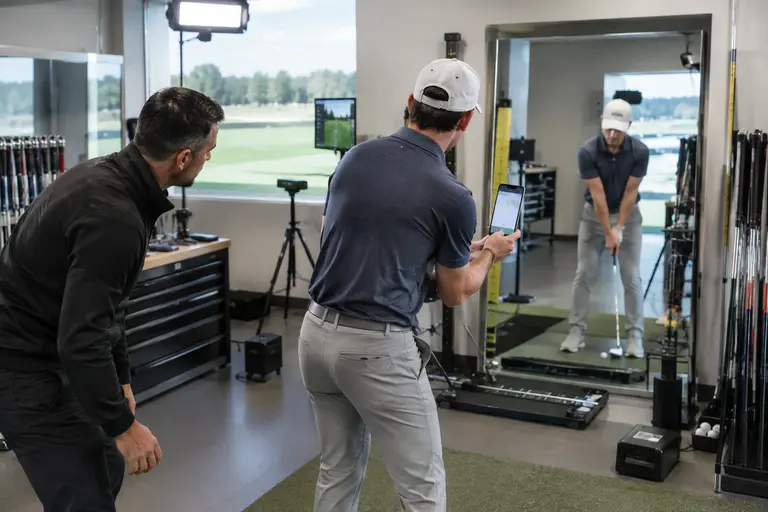
The practical value of club fitting trends shows up when golfers arrive prepared without overdiagnosing themselves. You do not need to walk into a fitting with a self-made spec sheet. In fact, that can get in the way. Bring the evidence, then let the testing sort the causes.
Before You Book
Use the app data to decide what kind of session you need. If your missed shots are concentrated off the tee, book driver or fairway wood work. If approach misses are the recurring scoring issue, start with irons, hybrids, or gapping. If your scoring changes mostly inside 100 yards, wedge lofts, bounce options, and distance control may deserve the first appointment.
- Bring recent round notes rather than one memorable bad shot.
- Know your current set makeup, including lofts if available.
- Share recurring misses, not just the shot you want to hit.
- Tell the fitter whether your home course asks for more carry, more roll, or frequent layups.
- Keep expectations grounded; a fitting can improve match quality, but it cannot promise a score or distance result.
During The Session
Once the session starts, the fitter should test the app-based pattern against measured shots. If GHIN data suggests missed greens, the session should compare carry gaps, launch, spin, and descent angle through the relevant part of the bag. If GPS information shows repeated layup zones, the fitter may need to look at hybrid, utility iron, or fairway wood spacing instead of only the longest club.
This is where booking and fitting quality meet. A shop that knows why you booked can set up the right heads, shafts, lie options, and test structure in advance. That saves time and keeps the session from becoming a random product trial. The best sessions still allow surprises, but they do not start blind.
GHIN Mobile App Upgrade And Club Fitting Trends
The GHIN Mobile App upgrade did not turn a handicap app into a fitting system. That distinction matters. It did, though, give golfers and fitters more shared language around performance. Instead of saying, I feel like I miss too many greens, a golfer can bring a pattern. Instead of guessing whether driver, irons, wedges, or putter should be tested first, the fitter can compare round evidence with measured ball-flight data.
What Shops Should Build Around
Fitting providers should treat this as a workflow opportunity. Booking pages can invite golfers to bring GHIN stats or similar round records. Intake forms can ask for the top scoring concern. Follow-up notes can connect the recommended build to the performance pattern tested during the session. None of that requires a promise of lower scores. It requires a clear record of what was tested, why it was tested, and what the golfer should monitor after purchase or adjustment.
The best club fitting trends are not about chasing every new feature. They are about using better evidence at the right time. GHIN’s October 2026 app changes made round data easier to see. A careful fitter can turn that information into sharper questions, cleaner booking, and a more useful session plan. The clubs still have to earn their place through testing, but the conversation before testing can now be much better informed.