
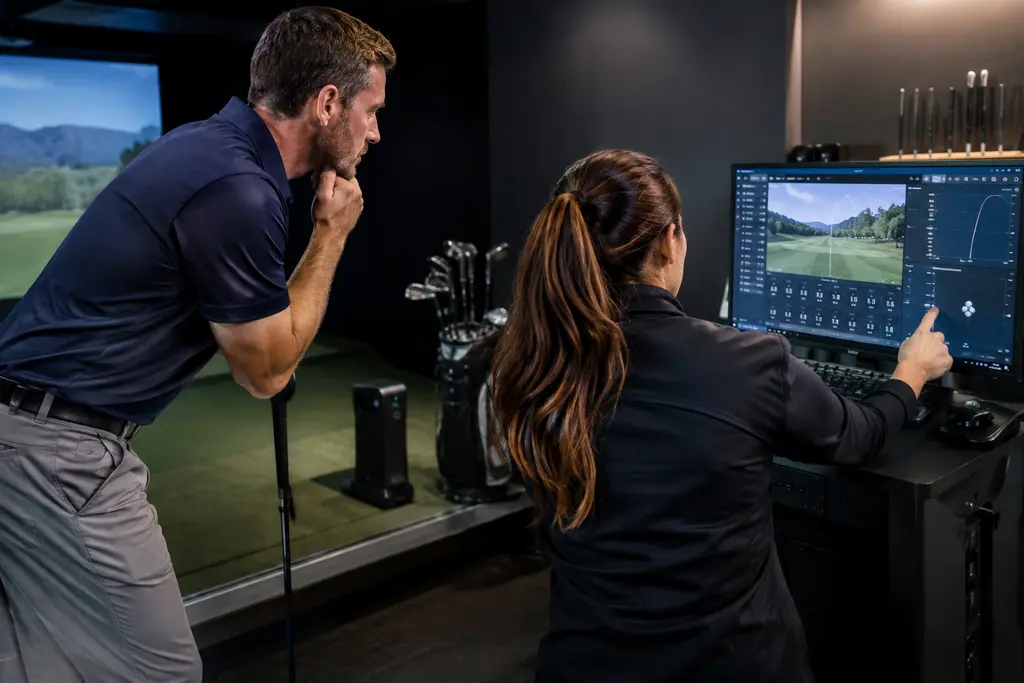
Launch monitor price cuts have changed the first question many golfers ask. It is no longer just, “Can I afford data?” It is, “Which data is worth paying for, and what else will I need after the box arrives?” That is a healthier place for golfers, fitters, and shop owners, as long as the lower hardware price does not hide subscription costs, space needs, or limits in the numbers being measured.
The price movement through 2026 was not isolated to one product tier. Low-cost personal units reached casual practice budgets, while several mid-tier and indoor simulator models moved closer to what serious recreational golfers might consider. That does not make every device a fitting-grade tool, and it does not mean every golfer should buy one. It does mean the conversation has moved from novelty to practical value.
Launch Monitor Price Cuts And Access
Launch Monitor Price Cuts Changed The Entry Point
The clearest access story came at the lower end. Shot Scope launched the LM1 on March 26, 2026, at $200 with no subscription fee. Golf Digest reported that the unit provides five core metrics: club speed, ball speed, smash factor, carry distance, and total distance Golf Digest’s LM1 report. That is not the same as a premium fitting bay, but it gives a golfer a way to put numbers next to range sessions without adding a phone or tablet requirement.
That matters because basic feedback can stop a lot of guessing. A player working on tempo can watch club speed. A player trying to compare two range balls or two drivers can at least see whether ball speed and carry are moving in the expected direction. The numbers still need context, especially outdoors where range balls and wind can distort the lesson, but a $200 entry point changes who can even start asking better questions.
Mid-Tier Cuts Made Simulator Planning More Realistic
The middle of the market also shifted. On September 20, 2026, Bushnell’s LPi Circle B indoor simulator launch monitor was cut from $1,999.99 to $999.99, according to MyGolfSpy Bushnell LPi price report. A drop of that size can change a home setup budget because the launch monitor is only one piece of the spend.
Mat, net, screen, projector, lighting, software, and room protection can all add cost. For golfers building a practice space, a lower hardware price may create room in the budget for the pieces that make data more useful and safer to collect. A golfer who spends everything on the monitor and then hits from a poor mat into a weak net has not solved the practice problem.
The same pricing pressure showed up around other models in the research for this piece. FlightScope’s Mevo Gen2 was reported at $1,299 after a September 18, 2026 reduction, and Uneekor’s Eye Mini was reported at $2,999 after an early October 2026 cut. For golfers comparing that Uneekor tier, our earlier Eye Mini price cut analysis is a useful companion because camera-based data, impact video, and total setup cost should be weighed together.
What Lower Prices Do Not Solve
Hardware Price Is Only One Line Item
The practical effect of launch monitor price cuts is wider access, not automatic clarity. A device can be cheaper and still be the wrong buy for a golfer’s space. Radar units often need enough ball flight and correct setup alignment. Camera-based indoor units can reduce certain space demands, but they may require careful ball placement, lighting, or specific software choices. The right answer depends on where the golfer will use the unit, not just what the checkout page says.
Subscription terms are another part of price transparency. The research notes include examples with no subscription fee and examples aimed more at simulator users, where software choice can be a major part of the long-term cost. Before buying, golfers should separate the one-time hardware price from recurring costs and required accessories. That same pricing mindset applies beyond golf gear; clear local cost information is useful across our network, including comparing services in Ambikapur City, where readers evaluate options before spending.
Basic Metrics Still Need A Fitting Lens
A lower-priced device can show useful numbers, but numbers do not fit clubs by themselves. Ball speed is helpful only if the golfer knows whether strike location, launch, spin, or face angle is causing the pattern. Carry distance is helpful only if the golfer understands the ball being used, the hitting surface, and the weather or indoor conditions.
This is where a fitting-first approach matters. A player who buys a monitor for gapping wedges may need reliable carry distances more than a full simulator package. A player testing driver shafts may need launch, spin, start line, curvature, and strike feedback. A player working indoors through winter may care more about short-room accuracy and software than portability. Lower prices open the door, but the purchase still needs a job description.
How Golfers Should Compare Monitors Before Paying
Fit The Device To Your Practice Space
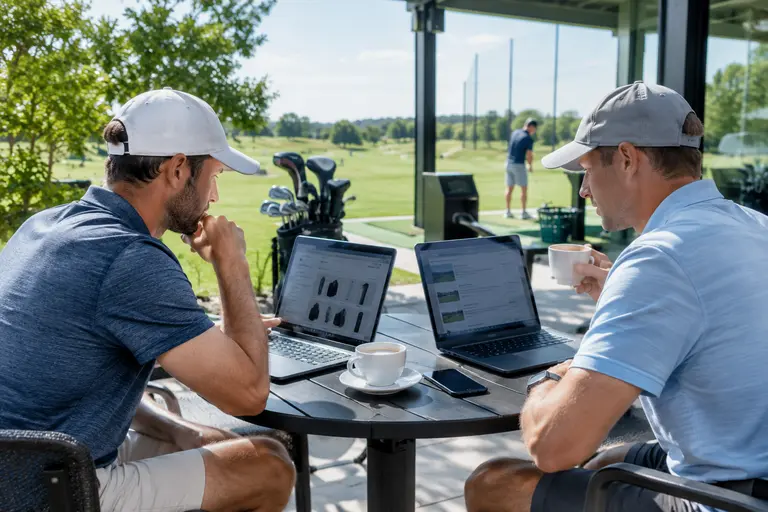
Launch monitor price cuts can make a purchase feel urgent, but golfers should slow down long enough to measure the hitting space. Indoors, the key questions are ball-to-net distance, unit-to-ball distance, ceiling height, and whether the hitting area can stay level and repeatable. Outdoors, the questions shift to portability, battery life, range-ball quality, and whether the device performs well in the available environment.
For fittings, the space question is even sharper. A clubfitter needs reliable conditions and repeatable setup, because the data may influence a shaft, loft, lie, or head decision. If the monitor misses shots, struggles with partial wedges, or does not provide the needed ball-flight detail, the lower price does not help the golfer make a cleaner buying decision.
Ask What The Number Will Change
Before buying, ask what decision the monitor will support. If the answer is “I just want to see numbers,” a simple unit may be fine. If the answer is “I want to choose between two drivers,” the monitor needs to show enough ball-flight and strike-related information to separate a good hit from a good fit. If the answer is “I want to build a full simulator,” software support and indoor reliability move near the top of the list.
The best value is rarely the cheapest device in isolation. It is the device that gives dependable feedback for the golfer’s main use. For some players, that could be a $200 basic monitor. For others, the better value may be a discounted mid-tier model with stronger indoor features. A golfer who practices twice a month and a golfer who gaps wedges every week do not need the same tool.
Launch Monitor Price Cuts For Smarter Fitting
The real gain from launch monitor price cuts is not that every golfer now needs to own one. The gain is that more golfers can arrive at a lesson, fitting, or range session with a better feel for what data can and cannot answer. That makes fitting conversations better. A player who has watched carry distance, ball speed, and strike tendencies is often better prepared to ask useful questions.
Still, price drops should not be treated as proof of performance. A lower price can reflect competition, product timing, retailer strategy, or a shift in the category. It does not guarantee that a unit is accurate enough for every fitting task, and it does not guarantee lower scores. Golfers should compare the full cost, confirm the metrics, match the device to the space, and be honest about how often they will use it.
Read the 2026 price movement as an opening, not a shortcut. The market is giving more golfers a chance to practice with data. The smart play is to buy only after the device, the room, the metrics, and the total cost all line up with a clear purpose.