
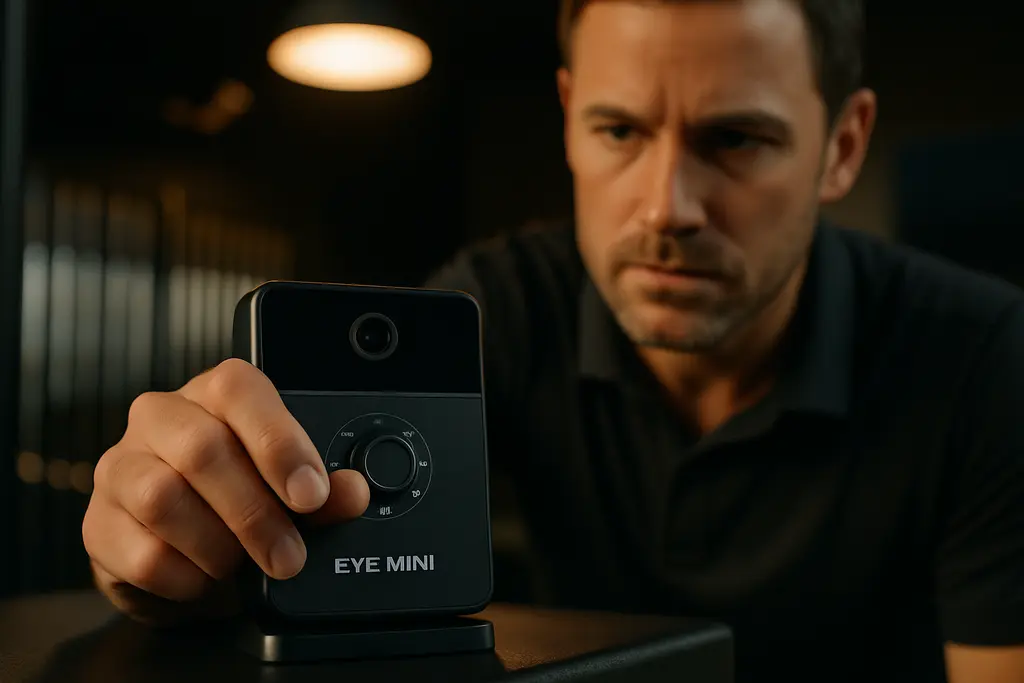
The Eye Mini price cut has already changed the launch monitor conversation for fitters, teaching pros, and serious players building a home practice bay. Uneekor dropped the Eye Mini from a previous $4,500 MSRP to $2,999 in early October 2026, so the better question is no longer just whether it is cheaper. The better question is whether that new price puts the right data, workflow, and total setup cost within reach for your fitting needs.
As a fitter, I look at this kind of price move through a practical lens. A launch monitor is not a magic distance box. It is a measuring tool. If it helps you see ball speed, launch, spin, club delivery, strike pattern, and shot shape clearly enough to make better equipment decisions, it has value. If the space, software, or workflow does not fit how you test clubs, the sticker price can be misleading.
Eye Mini price cut Basics For Fitters
Uneekor’s price move was significant because it placed the Eye Mini at $2,999 after previously sitting at $4,500. That is about a one-third reduction, and the change was reported in early October 2026 by Loop Golf. ProductFindr also listed the Eye Mini at $2,999 and noted availability through major U.S. retailers such as PlayBetter and Best Buy, according to its Eye Mini listing.
For fitters, that matters because the Eye Mini is not positioned like a basic swing-speed-only device. Research notes describe it as an optical launch monitor using dual high-speed cameras, with 19 ball and club data points. That data set includes fitting-relevant items such as ball speed, launch angle, spin, and club path. Those are the numbers that help separate a shaft issue from a loft issue, a strike issue from a delivery issue, and a good-looking flight from a repeatable one.
Why The Eye Mini price cut Matters For Club Data
The strongest value case is not only the lower hardware price. Research notes indicate that club data is included in Uneekor’s free Player software tier, so a buyer does not need a paid Uneekor tier just to see the full club-and-ball metrics described in those notes. Subscription terms can change, so any buyer should verify the current software access before paying. Still, for a fitting bay, included club data can affect the total ownership math as much as the monitor price itself.
A golfer testing drivers needs more than carry distance. You want to see whether a lower-spin head is actually lowering spin or simply changing strike. You want to know if a draw-biased head is helping face delivery or masking a contact pattern. With irons, the key questions are carry gap, peak height, spin, landing angle, and whether the player can repeat the number. A launch monitor that shows club and ball information gives the fitter more ways to explain why one build is beating another.
What The Data Package Means In A Fitting
Good fitting is controlled comparison. Change one variable, collect enough shots, and check whether the pattern improves. The Eye Mini’s reported data package can support that process because it covers both the ball and the club. That distinction matters. Ball data tells you what happened. Club data helps explain why it happened.
Ball Flight Numbers Need Context
A driver that carries farther on one shot may not be the best driver. If that shot came from a high-toe strike with unusually low spin, it may not repeat. If another build produces slightly less peak distance but tighter launch, spin, and direction, it may fit the player better. The same thinking applies to fairway woods, hybrids, and irons. The fitter should not chase a single best shot; the fitter should study the playable pattern.
Research notes say the Eye Mini can show real-time numbers on its built-in E-Ink screen. When connected to a PC or iPad, the same notes say it can open more detail such as attack angle, club path, spin data, and impact video through Club Optix when stickers are used. For a fitting session, impact video can be especially useful because it ties the numbers to strike location. If a player keeps missing low on the face, a head or shaft change may not be the first fix. Tee height, length, swing weight, or delivery may need attention.
Club Delivery Helps Explain Equipment Changes
For a teaching pro, the Eye Mini price cut may bring higher-level measurement closer to lesson-bay budgets. That does not mean every lesson should become a data lecture. It means the teacher can use numbers selectively. A player working on path and face can see whether a setup change actually moved delivery. A golfer testing irons can see whether a lighter shaft improved speed but hurt strike control. A wedge fitting can focus on spin and launch windows instead of relying only on turf feedback and visual flight.
That is where price and fitting quality intersect. Cheaper equipment is not automatically better value. Better value comes when the monitor supplies the data you need, at a cost that still leaves room for mats, balls, screens, lighting, and the time needed to interpret the results properly.
Room, Software, And Setup Costs
The monitor price is only one line in the budget. Research notes list 10 feet as the minimum recommended room length for accurate use, with 12 feet or more being safer for full swing shots. Before buying, measure the swing area, ceiling height, hitting position, ball-to-screen distance, and where the unit will sit. A great device in a cramped room can create poor testing habits, especially if the player shortens the swing because of walls, ceiling, or net anxiety.
The same budget discipline applies to simulator hardware. A full indoor setup may require an impact screen, enclosure, projector, computer, hitting mat, landing pad, and proper lighting. Research notes say those items can add several thousand dollars above the $2,999 monitor price. That does not make the purchase wrong; it just means the fitting budget should be built as a system, not as a single-device receipt.
Portable Does Not Mean No Planning
The Eye Mini is described in the research notes as a portable unit with battery power, a built-in screen, and iOS or app support. That can suit fitters who move between an indoor bay and outdoor range work. It can also help a golfer who wants practice feedback without turning every session into a projected simulator round.
Still, portable launch monitors need repeatable setup. Mark the ball position. Keep the hitting area consistent. Use clean balls and avoid worn mats that change strike. If stickers are required for certain club metrics or impact video features, build that into the session plan. Nothing slows a fitting faster than discovering halfway through that the needed setup steps were skipped.
How To Decide If It Fits Your Shop Or Home Bay
Start with the job you need the launch monitor to do. A club-fitter needs reliable comparison data across heads, shafts, loft settings, and lengths. A teaching pro may care more about delivery feedback and impact tendencies. A home golfer may want practice structure, simulator play, and clear feedback on strike and carry distance.
- For a fitting shop: the key value is whether the data supports confident build decisions and clear player communication.
- For a coach: the key value is whether the numbers help confirm swing changes without overwhelming the lesson.
- For a home bay: the key value is whether the monitor, room, software, and accessories fit the full budget.
- For range use: the key value is whether setup stays quick enough that the tool gets used often.
For readers who follow gear buying across our publishing network, Triple T Powersports explores equipment from a different sport category, reminding us that the core lesson is to assess the entire ownership experience, not just the initial price. In golf, this means considering monitor cost, data access, space, accessories, and the skills needed to interpret the numbers.
The Eye Mini price cut also sharpens comparisons with other launch monitors. Entry-level radar units may still cost less, while higher-priced systems may offer different workflows or installation styles. The right choice depends on your bay, your software expectations, and the type of data you trust during club decisions. Avoid buying from a single spec line. Test the workflow if possible.
What The Eye Mini price cut Means In A Fitting Bay
The Eye Mini price cut does not make the unit an automatic fit for every golfer or every shop. It does make the conversation more serious for buyers who previously viewed the Eye Mini as out of reach. At $2,999, it sits in a range where a fitter can weigh camera-based measurement, club data, impact video options, and portability against the full cost of building a useful testing space.
My fitting-first advice is to write down the decisions you expect the monitor to support. Driver loft and shaft testing? Iron gapping? Wedge spin work? Lesson feedback? Home simulator practice? If the Eye Mini’s reported features match those jobs, the reduced price may improve the value case. If your room is too tight, your budget does not include the needed accessories, or your work does not require club data, a different monitor category may still make more sense.
Price cuts are useful only when they help buyers make better choices. For fitting, better choices come from repeatable testing, clear data, and honest interpretation. The new Eye Mini price gives more golfers and fitters a reason to run that analysis carefully before they buy.