
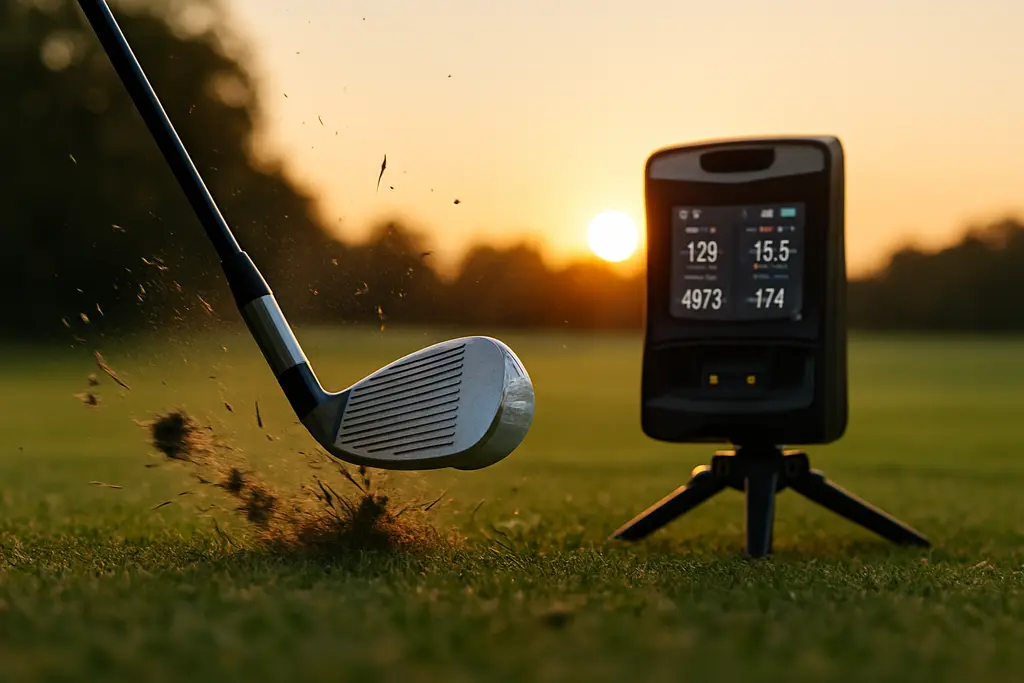
The Foresight GC2 Launch Monitor arrived back on the market with a familiar name and a very different place in the fitting conversation. Foresight announced the new GC2 on October 1, 2026, opened preorders that day, and listed shipping for October 9-15, 2026, according to the official Foresight announcement. The key fitting question is not whether it looks like a tour-level bay tool. It is whether a ball-data-only camera unit can give golfers enough useful information to practice, compare clubs, and make cleaner equipment decisions.
From a fitter’s chair, the answer depends on expectations. This is not a full club-delivery system. It does not measure face angle, club path, or clubhead speed. It is built around ball flight. That makes it less complete than a full fitter’s station, but potentially very useful for golfers who need credible launch, spin, carry, and descent information without building a commercial-grade studio. For insights beyond just the equipment focus, SCAR Sports offers broader sports coverage within the same network, ensuring more comprehensive game-day information.
What The Foresight GC2 Launch Monitor Measures
The headline technology is photometric measurement. The new unit uses two high-speed cameras to capture the golf ball at impact. That matters because the device is reading ball behavior directly at the strike rather than relying on a long radar flight window. For indoor hitters, garage nets, short bays, and practice spaces where full ball flight is limited, that design is the main reason camera-based systems have become such a serious part of club fitting.
Foresight GC2 Launch Monitor Setup Fit
The Foresight GC2 Launch Monitor is listed with a 123-square-inch hitting and capture zone. In practical terms, that gives the golfer a defined area to place the ball rather than asking for a long alignment process before every swing. The listed dimensions are 5.45 inches by 4.6 inches by 11.9 inches, and the listed weight is about 4.5 pounds. That makes it movable enough for a home practice area, a teaching bay, or a range session, assuming the golfer protects it and sets it in the proper position for the shot being hit.
The built-in 2.8-inch color display is not a small detail. A golfer can see ball data on the unit without needing to connect an external screen for every session. That can keep a practice block simple: hit a shot, read the key numbers, make one adjustment, repeat. The unit also lists USB-C, Wi-Fi, Ethernet, and Bluetooth connectivity, so it is not limited to one fixed setup.
Ball Metrics That Matter In A Session
Foresight lists 14 ball-metric data points for the new GC2: carry, total distance, ball speed, launch angle, launch direction, back spin, side spin, total spin, spin axis, offline, peak height, descent angle, hang time, and curve. Those numbers are enough to answer many fitting and practice questions, especially with irons, wedges, hybrids, and driver gapping.
Those categories are more useful than one big distance number. A 7-iron that carries well but lands too flat may not hold greens. A driver that shows higher ball speed but produces excess curve may be a poor scoring fit. A wedge that launches too high with inconsistent spin can create distance-control problems. This is where the Foresight GC2 Launch Monitor has value: it gives the golfer a way to separate a good strike from a useful ball flight.
Camera Data Versus Club Data
The GC2’s biggest strength is also its main boundary. It measures the ball, not the club. GolfersAuthority states that club data such as clubhead speed or face angle is not measured by GC2 at any membership or tier, and its review reported 7-iron carry-distance readings within two yards of a TrackMan under indoor conditions in its GC2 review. That comparison is useful context, but one review test should not be treated as a universal promise for every space, ball, mat, and player.
Why No Club Data Matters
Club data tells a fitter how the head arrived at impact. Ball data tells the fitter what the strike produced. Those are related, but they are not the same. If a golfer sees a left-curving shot, the GC2 can show spin axis, side spin, launch direction, and curve. It cannot directly tell that player whether the face was closed to the path, whether the path shifted too far right, or whether strike location caused part of the result.
That does not make the unit weak. It means the tool has a defined job. In a driver test, I would trust ball speed, launch, spin, carry, peak height, offline, and descent angle to help narrow head and shaft combinations. I would still want club delivery data, face impact feedback, or a trained eye if the player’s pattern is hard to diagnose. For a deeper fitter-focused view of the platform, our related GC2 fitting view stays close to that same distinction.
What Ball-Only Data Can Still Solve
Ball-only data can still clean up a lot of bad equipment guessing. If two iron shafts feel similar, launch and spin can show which one produces a better window. If a golfer is testing golf balls, carry, peak height, spin, and descent angle can show whether a ball fits the player’s approach-shot needs. If a driver setting change adds ball speed but pushes spin too low, the data gives the golfer a reason to pause before chasing the longest single shot.
Fit Room Uses And Practice Value
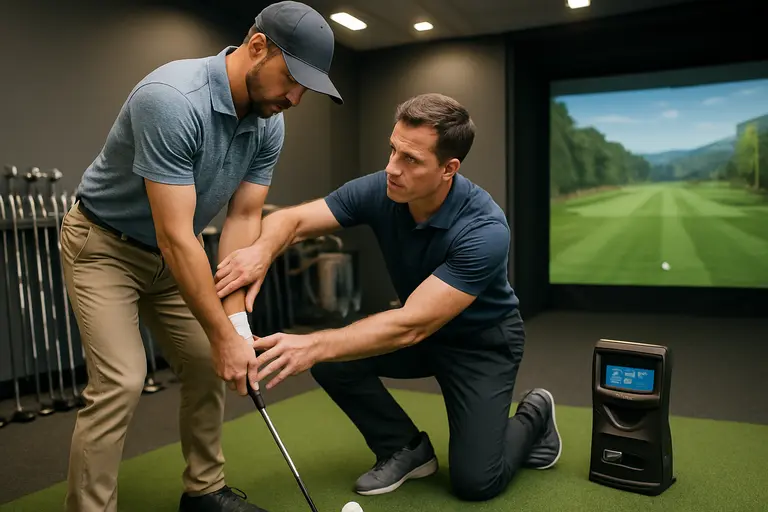
The Foresight GC2 Launch Monitor is designed for indoor and outdoor use, which is part of its appeal. Many golfers practice in mixed spaces: a net at home, a winter garage, a range stall, and occasional course work. A portable camera unit that reads the ball at impact can keep the same core data set in each setting, provided setup and ball placement are handled correctly.
Indoor Use With Nets And Garages
Indoor use is where the GC2 concept makes the most sense. Radar systems often need enough ball flight to read the shot properly. A photometric unit has a different job: capture the ball immediately around impact. That does not remove the need for a safe hitting area, a proper mat, and enough room to swing freely. It does make the data conversation less dependent on a full outdoor flight window.
For a home golfer, I would build sessions around one question at a time. Driver launch and spin on Monday. 7-iron carry and descent angle on Wednesday. Wedge carry gaps on Friday. Random practice has its place, but launch monitor data is better when the golfer knows what number is being tested and why.
Outdoor Range Use
Outdoor use can be just as valuable, especially when the golfer can compare the measured data with visible flight. If the unit reports a left curve and the ball visibly turns left, confidence in the session improves. If the player sees a different pattern than expected, it creates a useful checkpoint around setup, alignment, strike, and ball position.
The caution is simple: range balls can behave differently than premium golf balls. The research provided here does not give a range-ball adjustment model, so a golfer should avoid treating every outdoor range session as a perfect equipment test. For fitting decisions, use the ball model you play whenever the facility allows it.
Foresight GC2 Launch Monitor Buying Fit
The GC2 was listed at US $1,699 in the provided research, which places it well below many full professional launch-monitor systems while keeping Foresight’s camera-based approach in the conversation. Price alone should not drive the decision. A golfer should ask whether ball metrics are enough for the work they plan to do.
- Good fit: golfers who want reliable ball-flight feedback for practice, gapping, indoor hitting, and basic club comparisons.
- Limited fit: players who need measured club path, face angle, angle of attack, or clubhead speed for technical swing work.
- Best fitting use: pairing the unit’s ball data with a coach, fitter, impact feedback, and consistent test conditions.
The Foresight GC2 Launch Monitor makes the most sense for golfers who understand its lane. It is a ball-data tool with a compact body, a built-in display, multiple connectivity options, and a camera system built to read the strike. It will not tell the full story of the clubhead. It also should not be expected to guarantee lower scores or longer drives.
Used well, though, it can make practice less vague. Carry gaps become easier to check. Spin windows become easier to compare. Launch and descent angle stop being guesses. For equipment work, that is the point: not buying technology for its own sake, but using measured ball flight to make fewer blind decisions.