
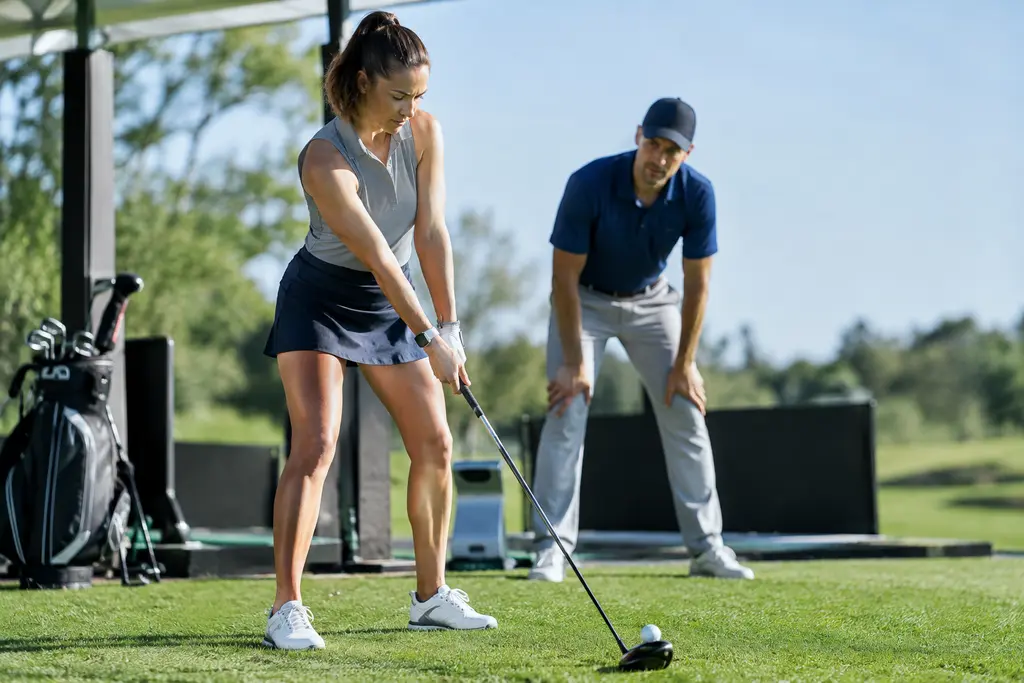
Local Fit Days are one of the better ways to test new launch monitors and golf gear before you commit to a fitting, a simulator build, or a club order. The value is not just hitting a few shots with fresh heads and shafts. The real value is seeing ball flight, launch data, strike quality, and setup details in the same session, then asking enough questions to understand what the numbers mean for your own game.
As a fitter, I like these events because they expose golfers to better questions. A player may arrive thinking only about driver distance, then leave understanding carry distance, spin, descent angle, left-right dispersion, gapping, and how different launch monitors capture data. That does not mean one event can replace a full fitting for every player. It means a well-run local session can help you make a cleaner decision before booking deeper work or ordering equipment.
Golfers now have more ways to get hands-on time with technology. On June 11, 2026, PGA TOUR Superstore opened dedicated simulator showrooms nationwide where customers could compare launch monitor and simulator brands including Bushnell, Foresight, Full Swing, Garmin, Rapsodo, SkyTrak, Trackman, and Uneekor in store, according to First Call Golf. That kind of access matters because the right question is not always, “Which monitor is best?” It is often, “Which monitor fits my space, use case, ball data needs, and budget discipline?”
Why Local Fit Days Beat Guesswork
Buying golf equipment without hitting it is still common, but it is rarely the cleanest path. A spec sheet can tell you the loft options, shaft family, and club category. It cannot show you whether your strike pattern moves toward the toe, whether a lower-spin head falls out of the air for you, or whether a shaft feels stable enough when you swing at playing speed.
How Local Fit Days Differ From Demo Days
A demo day often centers on trying current product from one or more brands. A fit day should go a step farther. The fitter should capture usable data, compare your gamer against test options, and explain why one setup is producing a different pattern. The best Local Fit Days leave you with context, not just a favorite club from the hitting bay.
There is overlap, of course. Liberty Lake’s Trailhead Demo Days in summer 2026 included brand events for Cobra, Mizuno, Callaway, TaylorMade, and Titleist, and the Titleist Custom Fitting Day used Trackman launch monitor technology, according to the City of Liberty Lake. That is the kind of local opportunity golfers should watch for: real brand access, launch data, and enough structure to compare gear without rushing.
What The Fitter Should Help You See
A strong session connects ball flight to cause. If a driver carries farther but widens dispersion, that is not an automatic win. If a 7-iron launches higher but loses predictable spin, that may or may not help depending on your course conditions and stopping needs. The fitter should help you separate a single good swing from a repeatable pattern.
For launch monitors, ask what the unit measures directly and what it calculates. Ask whether the setup is indoors or outdoors, whether premium balls are used, and whether the hitting area matches how you practice. Camera-based and radar-based systems can both be useful, but setup quality matters. A poor alignment, limited flight environment, worn mat, or inconsistent ball can muddy the read.
Local Fit Days Checklist For Launch Monitors
Walking into a session prepared saves time and protects you from overreacting to one hot swing. Bring your current driver, a mid-iron, wedges if gapping is part of the session, and the golf ball model you normally play if the shop allows it. The fitter needs a baseline. Without your current clubs, every new head can look better simply because there is no fair comparison.
- Start with your gamer: Hit enough shots to create a real baseline before testing new heads or shafts.
- Track strike: Ball speed alone can fool you if contact location is moving around the face.
- Watch dispersion: A tight pattern often helps scoring more than one long outlier.
- Ask about gapping: New irons should fit the set, not just win a single-club distance contest.
- Save the data: Ask whether the fitter can email or print the session report for later review.
Treat Local Fit Days as a screening tool. If two drivers perform similarly, feel and visual comfort may matter. If one iron produces better height but creates a gap problem at the long or short end of the set, you may need loft, shaft, or set makeup work. If a launch monitor reads differently from what you see on the course, ask why before dismissing the data or accepting it without question.
For golfers comparing events, the same planning ideas used for launch monitor days apply here: control the variables you can, ask direct questions, and avoid making a purchase call while tired or rushed.
Reading Gear Data Without Chasing One Number
Distance is the easiest number to notice, but it is not the only number that matters. With drivers, I want golfers to look at ball speed, launch, spin, carry, total distance, offline dispersion, and strike location together. With irons, I care about carry gaps, spin consistency, peak height, descent angle, and whether the club still performs on slight misses.
Launch monitor testing is most useful when the fitter explains patterns. A single 7-iron that flies five yards longer may be exciting, but if it reduces spin too much, it could be harder to hold greens. A fairway wood that looks long off a perfect mat lie may be less useful if you struggle to launch it from turf. A wedge that spins well on a clean indoor strike may need outdoor turf testing before you trust it on partial shots.
This is where newer simulator showrooms and in-shop tech departments can help. You can compare systems, surfaces, screens, and ball data in a controlled setting. For a home simulator buyer, that is valuable. For a club buyer, it can show how different monitors present shot information and how much space, lighting, ball choice, and alignment affect the session.
If you are pairing a fitting stop with a golf trip or a sports weekend, broader scheduling coverage from Scar Sports can assist you with the logistics and extras beyond the fitting itself. Keep the fitting itself focused: arrive rested, warm up normally, and avoid testing too many products in one block.
Booking Smart And Avoiding Bad Comparisons
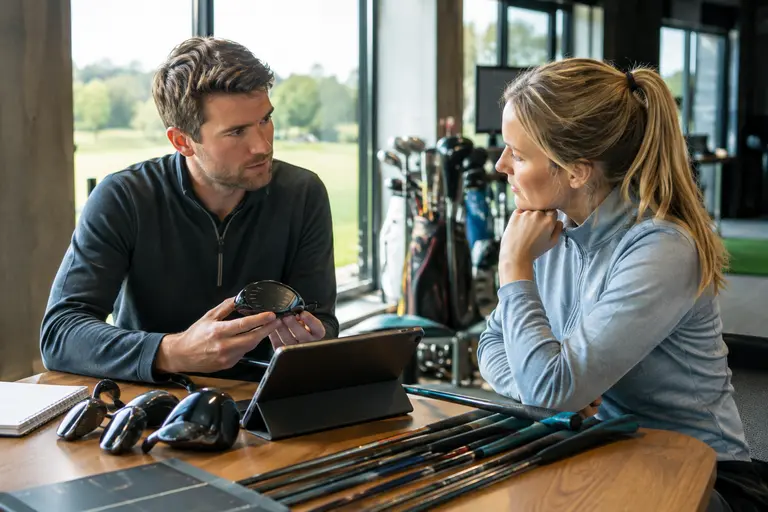
Before booking, ask who is conducting the session. A brand representative can be excellent, especially with deep product knowledge. An independent fitter may give a wider comparison across brands. A store associate in a simulator showroom may be best suited to technology comparison rather than full club build work. None of those roles is automatically better; the right fit depends on your goal.
Ask how long the appointment lasts and what is included. Some events are short product trials. Some are formal fittings. Some focus on launch monitors or simulator packages. Some include club fitting, swing analysis, or both. Do not assume that every event includes the same service level just because the word “fit” appears in the listing.
Be cautious with indoor-only results if your course conditions are very different. A player who practices from firm turf may react differently to a thick mat. A golfer who plays in wind should pay close attention to spin and peak height. A player with a steep delivery should ask whether sole design, bounce, and turf interaction can be tested outdoors before ordering irons or wedges.
Good booking questions include: Can I bring my current clubs? Will I receive the data? Which launch monitor will be used? Are left-handed heads available? Are multiple shaft weights and flex profiles on hand? Is the session brand-specific or brand-neutral? Those answers shape how much confidence you should place in the result.
Local Fit Days And Smarter Gear Testing
The best use of these events is not to chase a miracle club. It is to build better evidence. If your current driver is spinning too much, you want to see whether a different head, loft setting, shaft, or strike pattern is the main issue. If your irons fly similar distances, you want gapping work, not just a stronger-lofted head that hides the problem. If you are buying a launch monitor, you want to compare setup, data presentation, indoor performance, and support needs before the box arrives at home.
Local testing also helps golfers learn which numbers matter for their scoring. A high-handicap player may benefit most from tighter dispersion and easier launch. A strong player may care more about spin windows and distance control. A senior golfer may need fairway woods, hybrids, or higher-launching irons that produce playable carry. A junior may need fit settings that can be adjusted as speed and height change.
Use the event to narrow choices, then take time to review the data. If the numbers and the ball flight agree, you can move forward with more confidence. If they conflict, ask for another session, an outdoor check, or a broader fitting. Good gear decisions come from repeatable patterns, not one swing that looked perfect on a screen.