
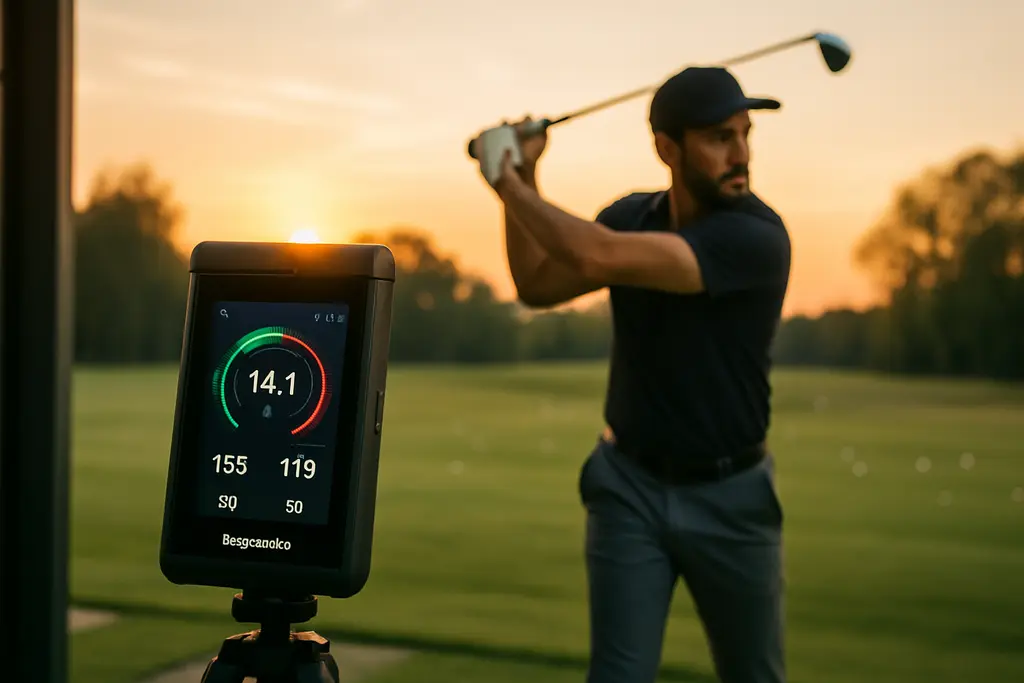
The Rapsodo MLM2XPRO moved from announcement to launch in October 2026, and for club fitting it deserves a close look for a simple reason: it sits at the intersection of personal launch monitor, simulator platform, and practice data tool. That does not make it a replacement for every studio-grade fitting system, and it does not guarantee lower scores or longer drives. It does give golfers and fitters a new Rapsodo option with more simulation depth, faster feedback, and a data set that can support better equipment conversations when the setup is done correctly.
Rapsodo announced the new golf ecosystem on October 1, 2026, with Rapsodo Studios, its first PC App, a redesigned Mobile App, and the MLM2XPRO launch monitor all tied into the same product family. The company said the system was set to launch on October 15, 2026, according to the Rapsodo ecosystem announcement. By October 19, 2026, that launch date had passed, so golfers evaluating it are no longer dealing only with a preview.
What The Rapsodo MLM2XPRO Adds To Fitting
Rapsodo MLM2XPRO Data In Context
The fitting value starts with what the unit measures and how quickly it can present the result. Rapsodo describes the MLM2XPRO as its fastest and most advanced personal launch monitor yet. The hardware builds on the dual-camera and Doppler radar tracking used in the MLM2PRO, then adds instant shot-to-display processing, simulation putting, a top LED screen, and an adjustable tripod leg.
For a fitter, instant feedback matters because it keeps the session moving. A driver test can lose structure if the player hits three heads and two shafts, then waits too long to see whether launch, spin, and dispersion actually changed. Faster display does not make a number correct by itself, but it can help a fitter keep the golfer engaged and compare shots while the swing feel is still fresh.
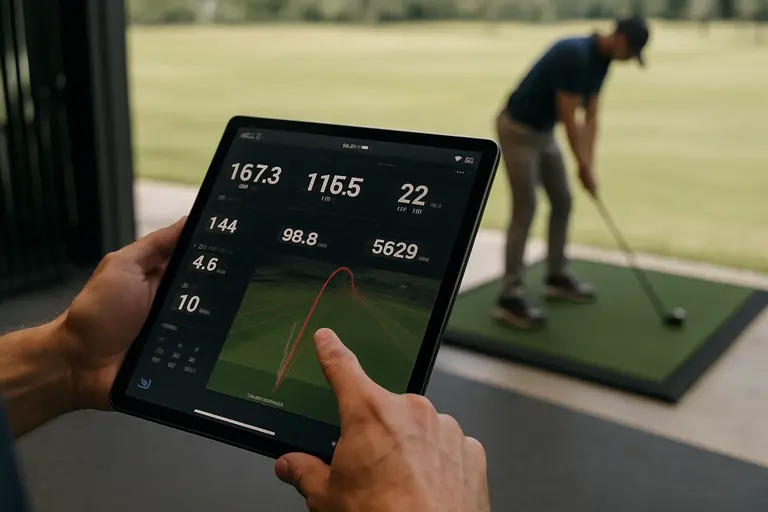
The unit tracks 15 performance metrics on every swing, including launch angle, spin rate, and spin axis. Those three numbers are especially useful in equipment work. Launch angle helps frame dynamic loft and delivery. Spin rate helps show whether a driver, fairway wood, iron, or wedge is flying in a usable window. Spin axis helps explain curvature rather than leaving the golfer to guess why a ball started well and bent away from target.
Where Personal Monitor Data Helps A Fitting
The Rapsodo MLM2XPRO can be most useful in fittings where the player needs evidence, not only feel. If two iron shafts feel similar, launch and spin can help separate them. If a driver head looks strong but keeps producing a weak curve, spin axis and shot pattern become part of the decision. If a wedge produces inconsistent launch and spin, that may point toward technique, strike, golf ball, or loft and bounce discussion rather than a simple club swap.
That said, personal monitor data should be treated as part of the fitting picture. A good club-fitter will still watch strike location, start line, club delivery, turf contact, ball condition, and the golfer’s ability to repeat the swing. The best use case is not chasing one perfect shot. It is building enough repeatable evidence to decide whether a club change is helping the golfer produce a more predictable pattern.
Setup Requirements That Affect Data Quality
Alignment, Level, And Hitting Zone
Launch monitor data is only as useful as the setup behind it. Rapsodo’s setup guidance for the MLM2PRO calls for placing the unit behind the ball, roughly 7.5 feet or two to three paces back, aligning the unit with the target line, leveling it, and using the correct hitting zone. The research supplied for this article says those setup requirements carry over to the MLM2XPRO, and Rapsodo explains the alignment and leveling process in its launch monitor setup guidance.
This matters in fitting because small setup errors can look like club problems. If the monitor is pointed slightly off the target line, a fitter may misread start direction or curvature. If the device is not level, ball flight readings can become harder to trust. If the ball is not in the intended hitting zone, the session can lose club data or fall back to a more limited read.
The designated hitting zones are also part of the fitting workflow. The orange zone is used for full club and ball data, while the yellow zone is for ball-flight-only data. A golfer testing a driver shaft, iron lie angle, or wedge spin window should not treat those two zones as interchangeable. If the goal is club and ball analysis, the setup needs to support that goal before any equipment decision is made.
Indoor Space And RPT Ball Use
Indoor simulation adds another setup requirement: space. The research notes list at least 8 feet from ball to net or screen, plus about 7.5 feet behind the ball for the device, which puts the practical depth near 15 feet or more. Taller players may need more clearance to fully capture swing footage. That is a real fitting consideration for garages, spare rooms, and small studios.
The MLM2XPRO works indoors and outdoors, but the ball choice matters. Indoors in net mode, RPT balls are required for spin measurement. Outdoors in full-flight mode, the unit can show ball-flight metrics with non-RPT balls. At launch, the package included 12 Callaway or Titleist RPT golf balls and a 21-day free trial of the Core membership, according to the supplied research. For fitting, that means ball consistency should be planned before the first swing, not corrected after the session has already started.
Memberships, Simulation, And Practice Value
Core Versus Studios For Fitting Work
The ecosystem is not only the device. It includes membership tiers that change how golfers use the data after the fitting session. Core was listed at US$199.99 per year and includes outdoor range practice, 15 metrics, advanced practice tools, video feedback, and access to more than 30,000 simulated courses. Studios was listed at US$399.99 per year and includes all Core features, support for up to four golfers per account, the full 4K course library, and on-course practice mode.
| Area | What Matters For Fitting |
|---|---|
| Metrics | Launch angle, spin rate, spin axis, and the wider 15-metric set support club comparisons. |
| RPT Balls | Indoor spin measurement depends on using the required marked balls. |
| Simulation | Putting support and course play can show how equipment gaps appear on simulated holes. |
| Membership | Core and Studios change the practice tools available after the fitting. |
Existing MLM2PRO owners were set to have their memberships converted to the new Core tier, with Studios features available for an added US$199.99 per year. For golfers who already own the earlier unit, that is relevant because the value question may be less about buying into Rapsodo for the first time and more about whether the newer monitor and Studios features match their fitting and practice habits.
Simulation Putting And Course Context
The Rapsodo MLM2XPRO added simulation putting support with compatible software listed in the research: GSPro, E6 Apex, E6 Connect, and Awesome Golf. That matters because many simulator sessions can overemphasize full shots and leave short-game scoring out of the picture. A fitting session still should not become a video game session, but course context can expose practical gaps.
Rapsodo Studios launched with a library of 25 courses as of October 15, 2026, with more planned. The research notes also list variable pin locations, tournament mode, and leaderboards. In fitting terms, the most useful feature may be on-course practice. A golfer can test whether a new hybrid distance actually fits between a 5-wood and 5-iron, or whether a wedge setup leaves too many partial shots from common yardages.
For players building a home practice setup, related technology categories overlap with screen, enclosure, PC, and measurement workflows. For a broader look at digital design and production tools outside golf, CAD/CAM technology coverage provides insightful references into neighboring technology aspects relevant for simulation setup.
How Fitters Should Read The Numbers
Club Data Versus Ball Flight
A launch monitor can make golfers too number-focused if the session lacks structure. The better approach is to define the fitting question first. Are we testing whether a driver loft reduces excessive spin? Are we checking whether an iron shaft improves launch consistency? Are we confirming wedge gapping? The Rapsodo MLM2XPRO provides data, but the fitter still has to decide which data matters for the club decision in front of the player.
- For driver fittings, watch launch angle, spin rate, spin axis, ball speed pattern, and offline tendency across several shots.
- For irons, connect carry distance, launch, spin, descent behavior, and strike quality before choosing a head or shaft.
- For wedges, use spin and launch as evidence, but test with the same ball type and realistic shot lengths.
- For gapping, test clubs in order and avoid basing decisions on single best swings.
The most common mistake is treating the highest ball speed or longest carry as the automatic winner. That can create a bag that looks impressive in a bay and behaves poorly on the course. A fitter should look for playable dispersion, sensible gaps, and shot shapes the golfer can repeat under normal playing pressure.
What The Device Cannot Decide Alone
No launch monitor decides shaft weight, grip size, set makeup, or wedge grind by itself. Those choices still require player feedback and observation. A golfer may produce good launch numbers with a shaft that feels too heavy late in a round. A wedge may spin well from a mat but interact poorly with turf. A driver may produce attractive carry distance while missing too far left or right to help scoring.
That is why the device is best viewed as a fitting tool rather than a fitting answer. It can shorten arguments, show patterns, and make practice more accountable. It cannot replace a fitter who understands delivery, ball flight, strike, and the player’s scoring needs.
Rapsodo MLM2XPRO Fitting Takeaway
The Rapsodo MLM2XPRO arrived as part of a larger Rapsodo ecosystem, not as a stand-alone gadget with one narrow job. Its strongest fitting case is the combination of 15 swing metrics, RPT-based indoor spin measurement, quicker shot display, simulation putting, and membership tools that let a golfer keep using the same data after the session.
Golfers should still ask practical questions before building a fitting or practice plan around it. Do you have enough indoor depth? Will you use RPT balls when spin matters? Are you buying the device mainly for range work, simulator play, or equipment testing? Will Core be enough, or does Studios match how multiple golfers will use the system?
If those answers are clear, this monitor can give a fitter and golfer useful evidence during club testing. If the setup is rushed or the numbers are chased without context, the data can become noise. The smarter path is simple: set the unit up correctly, test one equipment question at a time, and judge clubs by repeatable shot patterns rather than one eye-catching swing.