
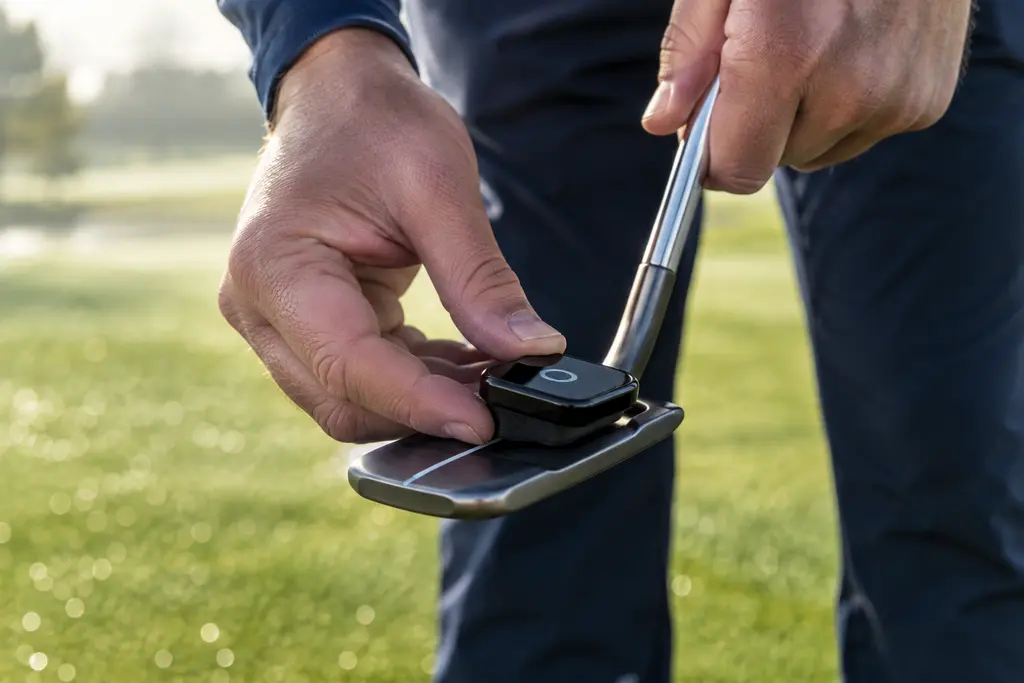
SkyCaddie SuperTags give golfers a way to study putting performance in real time without guessing from ball roll alone. From a fitting and performance standpoint, that matters because a missed putt can come from face angle, pace, loft, rise angle, tempo, or a mix of several items. The useful question is not whether a sensor can make you putt better by itself. It cannot. The question is whether the data helps you practice the right thing with more discipline.
Putting has always been hard to judge from feel only. A player may think the stroke was smooth, yet the face was open at impact. Another player may blame a poor read when the real issue was speed. A fitter or coach wants to separate those causes before changing a putter, grip, setup, or practice plan. That is where a sensor-based tool can be helpful, provided the golfer keeps the session focused and does not chase every number at once.
How SkyCaddie SuperTags Read A Putt
The strongest case for SkyCaddie SuperTags is that the system measures stroke behavior across address, transition, and impact. According to a Golf Business News report, the putter sensor tracks 16 putting metrics, including face angle at impact, loft change, rise angle, backswing and downswing time, and speed. It also provides instant 3D visualization through the SkyGolf app without requiring camera footage.
Sensor Placement And Feel
The sensor screws into the end of the putter grip and weighs about 9 grams. That is a small amount of weight, but any change at the grip end can feel different to some players. I would not assume it is invisible for every golfer. If you are sensitive to counterweighting, grip weight, or head feel, test a few putts before you record a full session. The goal is to collect useful stroke data while keeping the putter feel close enough to your normal gamer that the session remains meaningful.
Real-Time Feedback Versus Memory
Real-time feedback matters because a golfer’s memory of a stroke is not always reliable. If the app shows a repeated face-angle pattern on pushed putts, that gives the player something specific to test. If longer putts show inconsistent stroke length or timing, the practice task changes from “make more putts” to “tighten speed control.” That shift is valuable because putting practice often fails when it turns into random repetition.
Turning Data Into Better Putting Decisions
Putting data should narrow the work, not make practice noisier. A good session starts by choosing the miss you want to study. Directional misses need a different review than lag-putt errors. Short putts may place more attention on start line and face angle. Longer putts may place more attention on pace, backswing length, forward-stroke time, and total stroke time.
SkyCaddie SuperTags Metrics To Watch First
SkyCaddie SuperTags can display many variables, but most golfers should begin with three buckets: face at impact, pace control, and tempo. Face at impact helps explain start direction. Pace and speed data help explain whether a putt finished short, raced by, or left a difficult second putt. Tempo data gives context to strokes that look similar but produce different distance outcomes.
Loft change and rise angle are also worth watching, especially if the ball appears to hop, skid, or launch inconsistently off the face. That does not automatically mean the putter is wrong. It may point to setup, ball position, shaft lean, strike location, or stroke delivery. In a fitting bay, those are the kinds of clues that can lead to a smarter putter-length, loft, lie, grip, or head-style discussion.
Made Putts Need Review Too
One common practice mistake is studying only misses. Made putts matter because they show which stroke patterns are repeatable. If your makes from a given distance share similar tempo and face data, protect that pattern. If makes and misses look nearly identical, the read or speed window may be the bigger issue. For a deeper primer on how these measurements can shape practice choices, the related putting analytics primer is a useful companion piece.
Scoring Context For Putting Analytics
Tour-level numbers are not a promise for club golfers, but they show why putting deserves serious attention. In a 2026 PGA TOUR “Numbers to Know” report after 14 events, winners averaged 27.39 putts per round compared with 28.71 for the rest of the field, and their one-putt percentage was 45.93% compared with 40.76% for non-winners, according to the PGA TOUR report.
That does not mean amateur players should copy tour strokes or chase tour make rates. The better lesson is that small putting differences can show up strongly over a full round or season. A mid-handicap player who regularly three-putts is often losing shots through distance-control patterns, not just poor green reading. A player who misses too many short putts may need to check face control, aim, strike, and routine before buying a new putter.
Strokes-gained putting can help sort those issues because it values putts by starting distance and outcome. The research notes for this topic state that SuperTags data syncs to SkyGolf 360 for strokes-gained calculations, missed-putt analysis, and benchmarking. That is more useful than raw putts per round alone, because 32 putts can be solid after hitting many greens or poor after missing several greens and chipping close.
For enthusiasts who also appreciate data-driven sports analysis, Books on Baseball is part of the same network where measurements and context play a crucial role in understanding performance.
Fit Checks Before Adding A Sensor

Before making any putting-change decision from sensor data, confirm the club itself is not fighting the player. Length affects posture, eye position, arc, and where the hands sit. Lie angle can influence how the sole rests and how the face presents. Loft can affect launch and roll. Grip size can change hand action and face awareness. None of those variables should be changed from one bad practice session, but they should be part of the review if the same pattern appears repeatedly.
Membership And Data Access
The research notes state that full shot and putting analysis with SuperTags requires an annual SkyGolf 360 membership. That is a practical buying and booking question. If you want only occasional feedback, confirm what data is available before committing. If you plan to build a season-long practice file, the cloud sync and strokes-gained tools become more relevant. The available research supplied no membership price, so golfers should verify current terms directly with SkyCaddie before purchase.
How I Would Book The First Session
For a first fitting-style session, I would keep the test small. Start with ten short putts, ten mid-range putts, and ten lag putts from a consistent surface. Record the results, but do not make changes until you see a pattern. If short putts show a face issue, work on start line. If long putts show timing spread, work on stroke length and pace. If the ball launch looks inconsistent, compare setup and delivery before changing the putter.
SkyCaddie SuperTags Practice Plan
A practical plan should connect the sensor reading to a task you can repeat on the practice green. SkyCaddie SuperTags are most useful when the golfer uses them to answer one performance question per session, not every question at once.
- Short-putt session: Track face angle at impact and start-line consistency from 3 to 6 feet.
- Mid-range session: Compare made and missed putts for face, path-related delivery, and speed.
- Lag session: Review backswing length, forward-stroke time, total stroke time, and rollout pattern.
- Pressure session: Hit one ball only from each station so the data reflects a course-like routine.
- Fit review: If the same delivery issue repeats, test whether putter length, loft, lie, grip, or head shape is contributing.
For a player serious about scoring, the value is not the sensor alone. The value is using the feedback to make cleaner choices: what to practice, what to ignore, and when a putter fitting is worth scheduling. No system can guarantee fewer putts, but the right data can make putting practice less vague and more connected to what actually happens at impact.