
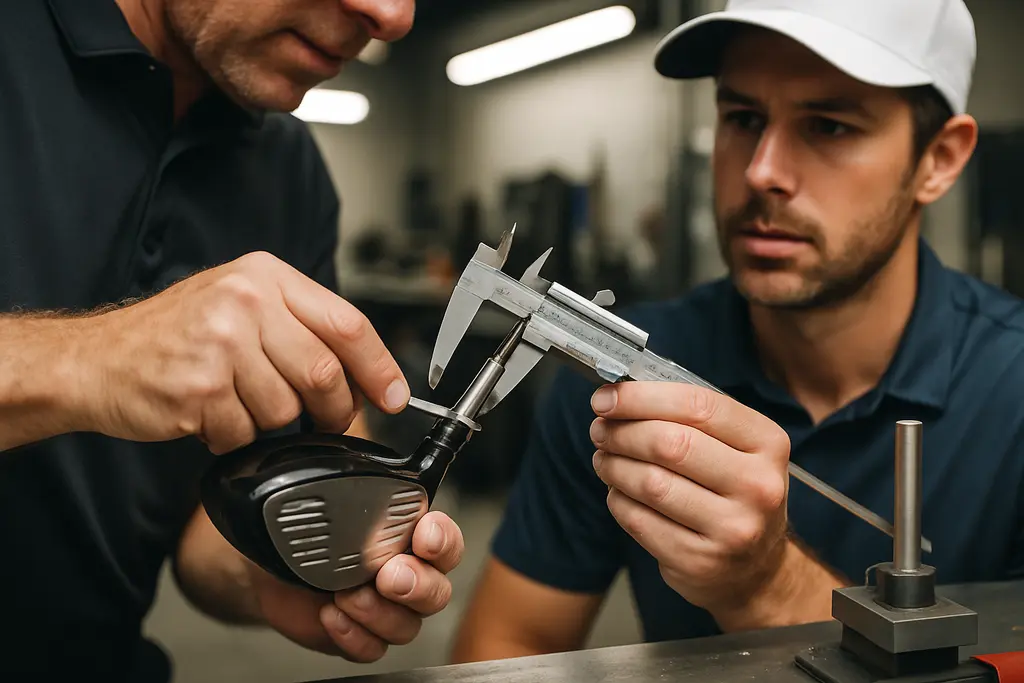
The 2026 custom fitting study from Golf Datatech, now part of Circana, gave golfers a useful read on where fitting sits in the U.S. equipment market. As of June 23, 2026, 80% of U.S. “Serious Golfers” reported having been custom fit for clubs at least once, and 30% had been fit within the prior year, according to Golf Datatech’s 2026 report. Those are adoption numbers, not a promise of lower scores, but they do show that fitting has moved from a niche service into a normal part of how engaged players buy clubs.
From a fitter’s chair, the scoring question is narrower than the market question. A fitting is only valuable if it helps the golfer control strike, launch, spin, face angle, start line, carry distance, and dispersion in a way that survives the golf course. That is where the study becomes useful: not as hype, but as a prompt to ask which clubs deserve attention first and what data should be reviewed before ordering anything.
What The Custom Fitting Study Says
Custom Fitting Study Data To Trust
The custom fitting study reported that custom fitting now accounts for an estimated 30% to 50% of premium club sales in the U.S. It also reported strong repeat demand: among golfers fit in the prior two years, more than 85% planned to be fit again for their next clubs. That matters because repeat demand usually means golfers found enough value in the process to treat it as part of future equipment decisions.
Still, purchase behavior and scoring performance are not the same thing. A golfer may enjoy a fitting, like the buying process, and still fail to transfer the new setup to better on-course decisions. The best use of this research is to separate satisfaction from measurable fit quality. A strong session should produce clear evidence: tighter carry gaps, more playable launch conditions, improved strike tendencies, or a shot pattern that fits the player’s normal miss.
Adoption Is Not The Same As Better Scoring
Golfers should be careful with broad averages. Serious players are more likely to practice, track equipment, and care about gapping. That makes them more likely to seek fitting in the first place. The study also noted that the 20% who had never been fitted tended to have lower household incomes and more skepticism about performance benefits. That tells us access, trust, and perceived value still shape the fitting market.
For those interested in exploring local coverage and sports-related content across our network, Ambikapur City provides valuable insights on fitting choices that leverage launch-monitor data and course feedback.
Where Fitting Links To Performance
Performance evidence needs context. In a GOLF.com test, seven golfers fitted by Club Champion averaged 2.83 fewer strokes per round with their fitted clubs versus their old clubs; the same test reported average gains of about 19 yards off the tee and 10 yards with pitching wedges, as detailed by GOLF.com’s fitting test. That was a real test result, not a guarantee that every golfer will see the same change.
The useful takeaway is not the headline number. It is the route to the number. Better fitted clubs can help a player create more predictable launch windows and more usable misses. A driver that launches too low with too much spin can cost carry and curve control. An iron set with poor lie angles can start too many shots left or right even when the player makes a reasonable swing. A wedge setup with poor gapping can leave a golfer between swings from scoring range.
This is why a launch monitor should be treated as a decision tool, not a scoreboard. Ball speed, club speed, launch angle, spin rate, descent angle, peak height, carry distance, total distance, and offline dispersion all matter. So does strike location. A faster club that widens the miss pattern may not help scoring. A shorter shaft, different head weight, or different lie angle can sometimes make the playable pattern better even if the longest single shot is not as impressive.
Scoring Value By Club Type
Driver And Iron Patterns
The study reported that irons were the most commonly fitted club category, with 71% of Serious Golfers having had irons fit. Drivers followed at 56%. That order makes sense in a fitting bay. Irons affect approach proximity, carry windows, turf interaction, and distance gaps across many shots per round. Drivers influence penalty avoidance, playable approach distance, and confidence on holes where the tee shot sets the entire scoring plan.
For irons, I want to see more than a single 7-iron number. A sound iron fit should check length, lie angle, shaft weight, shaft profile, head model, loft structure, and gapping through the set. The player’s strike pattern should be reviewed alongside ball flight. If the test club improves launch but creates poor turf contact, the fit is not finished.
For drivers, the best fit is not just the highest ball speed. The player needs a playable window. Launch and spin should suit the golfer’s speed and delivery, but face control and strike consistency often decide whether the club helps scoring. A driver that produces one long shot and four unplayable misses is not a scoring club.
Wedges, Hybrids, Fairways, And Putter
The under-fitted categories may be the quiet scoring opportunity. The research notes that wedges, hybrids, fairway woods beyond driver, and putters remain significantly under-fitted despite golfer interest. Those clubs cover many of the awkward shots that decide a scorecard: partial wedges, long approaches, layups, recovery carries, and first putts from distance.
Wedge fitting should look at loft spacing, bounce, grind, shaft weight, typical turf, bunker style, and the player’s delivery. Hybrid and fairway wood fitting should test carry distance, launch, descent angle, and whether the golfer can start the ball on line from both tee and turf. Putter fitting should assess length, lie, loft, head shape, toe hang, aim tendency, start line, and speed control. None of those choices need guesswork if the fitter measures them properly.
- Book by problem, not by club category: if the issue is approach gaps, start with irons and wedges.
- Bring your current clubs: the fitter needs a baseline for distance, dispersion, and strike.
- Test realistic shots: include normal tempo swings, not only maximum effort swings.
- Ask for the tradeoff: every shaft, head, loft, or length change should have a reason.
Reading The Data Before Booking

A fitting can be productive for a 20-handicap player, a scratch player, or a new golfer, but the goals should differ. Better players often need smaller windows and precise gapping. Newer golfers often need forgiveness, sensible set makeup, and clubs that do not fight developing motion. That is why a booking form or pre-fit conversation should ask about ball flight, miss pattern, physical limitations, practice habits, and course demands.
The custom fitting study supports the idea that serious golfers already see fitting as normal. The practical next step is to make each appointment more specific. If the golfer walks in saying “I need more distance,” the session can drift. If the golfer says “my 5-iron and 6-iron carry too close together” or “my driver miss starts left and curves farther left,” the fitter can test a cleaner path.
Good fitters also know when not to sell a club. If a golfer’s current iron shafts fit well but lie angles need adjustment, that should be discussed. If the player needs wedge loft changes more than a new driver, the numbers should say so. For a deeper pre-session checklist, our guide to fitting metrics explains which launch-monitor numbers deserve attention before a purchase decision.
Custom Fitting Study Lessons For Scoring
The strongest lesson from the custom fitting study is that fitting has become a standard behavior among engaged golfers, but the scoring value still depends on execution. A golfer should leave a session knowing what changed, why it changed, and how that change should show up on the course. That could mean a tighter driver pattern, better iron gapping, more predictable wedge carry, or a putter that starts the ball closer to the intended line.
There is no need to treat fitting as magic. It is a measurement process. The golfer brings the swing they have, the fitter tests equipment variables, and the final build should reduce avoidable mismatch between player and club. Some players will see clear gains quickly. Others may see smaller changes that help decision-making more than raw distance. Both outcomes can be valid if the evidence is honest.
For performance and scoring, the smart read is this: fitting is most valuable when it connects launch-monitor data to actual golf problems. The 2026 data shows high adoption, strong satisfaction, and repeat intent among serious players. The golfer’s job is to turn that trend into a better appointment: bring the gamer clubs, ask for carry and dispersion proof, test the clubs you actually need, and judge success by playable shots rather than one perfect swing.