
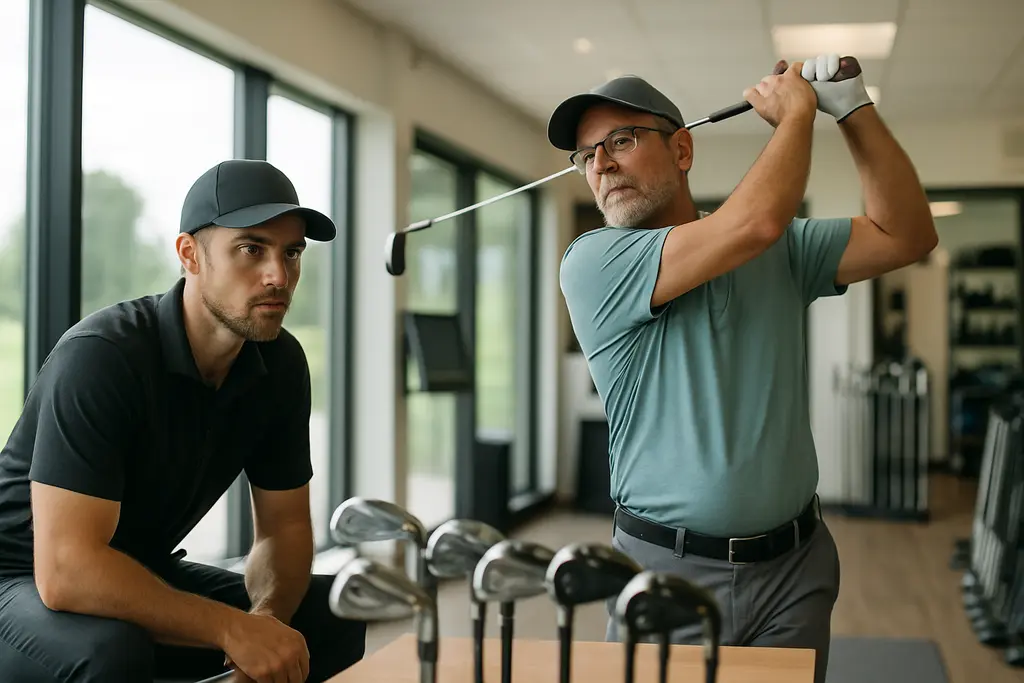
Club fitting days can be a useful way to test current equipment, work with a trained fitter, and compare a limited set of options without guessing from a rack. As of October 1, 2026, several local shops and courses had fitting events scheduled later in October and into December, while some September events had already passed. That timing matters: a smart fitting visit starts with knowing the date, the booking rules, the brands on site, and what kind of decisions you actually want to make.
A fitting event is not a magic fix. It is a structured chance to measure ball flight, compare heads and shafts, and see whether a change makes sense for your swing. The best value usually comes from arriving with clear goals: tighter driver dispersion, better iron gaps, a wedge setup that matches your yardages, or a putter that sits square to your eye. If the numbers do not support a change, that is useful information too.
Local events also vary. Some are open public sessions at a golf learning center. Others are member-only appointments at a private or semi-private club. Some focus on one manufacturer, while others let you compare several brands. If you’re interested in a wider scope of sports topics beyond this focus on golf, you might want to explore World Football Idol, a platform under the same network offering diverse sports coverage.
How Club Fitting Days Work At Local Shops
Most fitting events compress the normal fitting process into appointment blocks. That can be good for golfers who want a focused session, but it also means the fitter has to spend the time wisely. A full-bag evaluation may not fit into a short appointment. Driver, irons, wedges, or putter work usually deserves its own lane unless the event listing clearly says otherwise.
Club Fitting Days Versus Standard Appointments
Club fitting days often include manufacturer involvement, demo heads, fitting shafts, and launch-monitor data. A standard shop fitting may give you more time across categories and more neutral brand comparison, depending on the shop. Neither format is automatically better. The right choice depends on whether you already know the brand or club type you want to test.
For example, a golfer who wants to compare a new driver against a gamer may do well at a single-brand driver event. A golfer replacing a full iron set might be better served by a broader fitting where lie angle, length, shaft weight, launch, spin, and gapping can be tested without rushing. If you are still learning how launch numbers should shape a purchase, our piece on launch monitor days explains how to question carry, spin, and dispersion instead of chasing one long shot.
What The Fitter Needs From You
Bring your current clubs, especially the club you want to replace. A driver fitting without your current driver makes it harder to set a baseline. The same goes for irons and wedges. If you have recent yardages, common misses, or notes from lessons, bring those too. A good fitter does not need a perfect swing; the fitter needs honest information about your usual ball flight.
Be direct about budget, but do not ask the fitter to guess it. Ask whether the fitting fee exists, whether any fee can be applied to an order, whether build pricing changes with shaft or grip choice, and how long an order usually takes. The research provided for this article did not include specific prices, so any local cost should be confirmed with the shop or club before booking.
Upcoming Club Fitting Days On The Calendar
The clearest upcoming example in the research is at The Sea Pines Resort Golf Learning Center in Hilton Head Island, South Carolina. Its “Get Fit Sundays” sessions were listed for every Sunday from October 4, 2026 through December 20, 2026, with all-day one-hour professional golf club fittings with PGA Professional Tom Brown, according to the event listing on Hilton Head Island.
Neuse Country Club in Clayton, North Carolina, also had a dated event on the calendar. Its TaylorMade Fitting Day was set for Friday, October 23, 2026, from 11:00 am to 3:30 pm, and the listing described it as a member-only opportunity for custom fittings with TaylorMade equipment through Neuse Country Club.
Other research notes pointed to Compass Pointe Golf Learning Center hosting Fitting Fridays on October 16, 2026 and October 23, 2026, from 12:00 pm to 4:00 pm. The listed setup included TrackMan and PING Co-Pilot systems, with brands named in the research including PING, Mizuno, TaylorMade, Srixon, Cleveland, and LAB Golf Putters. Since that event information came through a booking listing outside the approved citation set for this article, golfers should confirm current availability directly with the facility before making plans.
Black Gold Golf Club in Yorba Linda, California, was listed in the research with a Titleist Club Fitting Experience scheduled for Thursday, October 29, 2026, and appointments were required. The research also stated that Black Gold usually hosts at least one custom fitting event each month, weather permitting, with manufacturer partners. Treat that as a useful pattern, not a fixed promise; monthly calendars can change.
Some dates in the research had already passed as of October 1, 2026. Harborside International Golf Center in Chicago held Callaway and Cleveland-Srixon fitting days on September 11, 2026, and the research also listed a Callaway fitting on September 26, 2026. Both were concluded by October 1, 2026. Grow Your Game Golf Center had a 2026 manufacturers custom fitting calendar with examples from May 2026, including TaylorMade, Wilson, and Cobra dates, and those listed spring events had also concluded.
How To Read Event Listings Before Booking
For club fitting days, the event title only tells part of the story. Read the time window, appointment requirement, access rules, and equipment category before you commit. A manufacturer driver day may not be the right place to solve wedge gapping. A putter fitting may use different tools and a different pace than an iron fitting.
- Confirm whether the event is public, member-only, or limited to existing customers.
- Ask which club category the appointment covers and how long the slot lasts.
- Bring your current club, glove, golf shoes if needed, and recent ball-flight notes.
- Ask whether the fitter will share recommended specs in writing.
- Check whether build options affect final cost before approving an order.
What Launch Data Should Tell You
Launch data is most useful when it answers a specific question. With a driver, the fitter may compare ball speed, launch angle, spin, peak height, carry, total distance, strike location, and left-right dispersion. With irons, carry gaps and descent angle can matter as much as peak distance. With wedges, partial-shot control may tell more than full-swing speed. With putters, face angle, path, aim, length, lie, head shape, and grip style can all shape the conversation.
Do Not Chase One Perfect Swing
A fitting bay can tempt golfers into judging clubs by the single best shot. That is a weak way to buy equipment. The better question is whether the new setup improves the pattern. If one driver goes five yards farther once but misses both sides, it may not beat the driver that keeps ten shots in a tighter window. If a lighter shaft feels fast for three swings but gets loose after twenty, the fitter needs to know that.
Good fitting decisions usually come from clusters, not highlights. Look at the average, the misses, and the shape of the ball flight. Ask the fitter which shots they are removing from the decision and why. A thin strike, a heel strike, or a swing made while tired can skew the number, but deleting too many shots can make the test less honest.
Brand Days Need A Clear Testing Plan
Manufacturer events can be excellent if you know the lane. A TaylorMade event, a Titleist event, or a PING-focused session gives the fitter access to current fitting components from that brand. That does not mean the result is automatically better than your current club. The test is still your ball flight against the baseline.
Ask to hit your gamer early, then return to it later if time allows. That helps control for warm-up swings and fatigue. If you are testing irons, ask how the recommended set will gap from longest iron to wedges. If you are testing driver, ask whether the final recommendation depends on a specific shaft, loft sleeve setting, playing length, or grip size. Those details affect the finished build.
Pricing And Ordering Questions To Ask
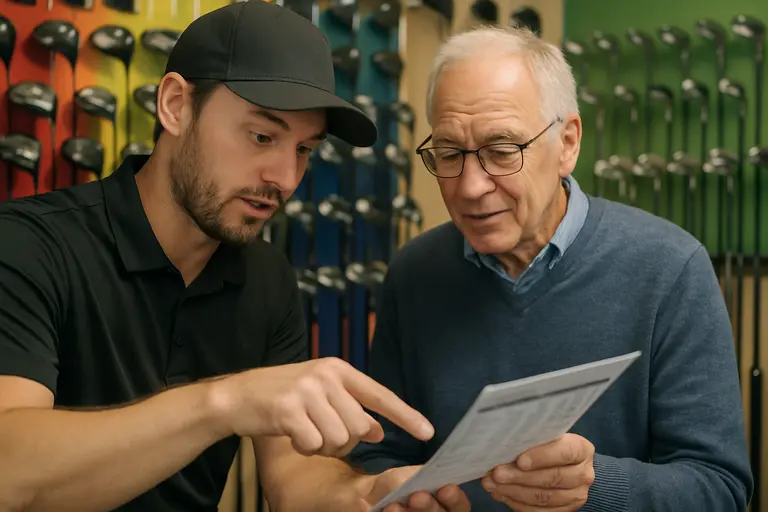
Pricing transparency protects both the golfer and the shop. The research for these events did not provide verified fitting fees, build charges, or order prices, so it would be wrong to attach numbers here. Instead, use a consistent set of questions before the fitting starts.
Ask whether the appointment itself has a cost. Ask whether that cost changes by club category. Ask whether any portion is credited toward a purchase. Ask whether the quoted club price includes the recommended shaft and grip. Some shafts or grips may carry different pricing than standard options, and the only safe answer is the one the shop gives you in writing.
Also ask about delivery timing and post-build checks. If your clubs arrive built to spec, will the shop verify length, loft, lie, swing weight, or grip size? Not every shop handles post-order checks the same way. A fitting recommendation is only as useful as the finished build that arrives in your hands.
What Not To Assume
Do not assume an event is free. Do not assume every shaft in the fitting cart costs the same. Do not assume the fitter can solve every part of the bag in one appointment. Do not assume a brand day means you must buy that day. A reputable fitting experience should leave you with clearer information, even if you decide to wait.
Using Club Fitting Days For Better Decisions
Club fitting days work best when golfers treat them as a measurement session, not a sales race. The calendar gives you access; your preparation gives the appointment value. Check the date, confirm the booking rule, bring your current club, and ask for the final specs before any order is placed.
The upcoming October and December 2026 examples show how different these events can be: a Sunday learning-center format in Hilton Head Island, a member-only TaylorMade window in Clayton, multi-brand fitting blocks in the research notes for Compass Pointe, and appointment-required manufacturer events at Black Gold. Each can help the right golfer, but only if the format matches the question.
If you leave with better data, a clearer spec sheet, and a realistic understanding of cost, the visit has done its job. Whether you order clubs right away or keep testing, the fitting should make your next equipment decision less dependent on guesswork.