
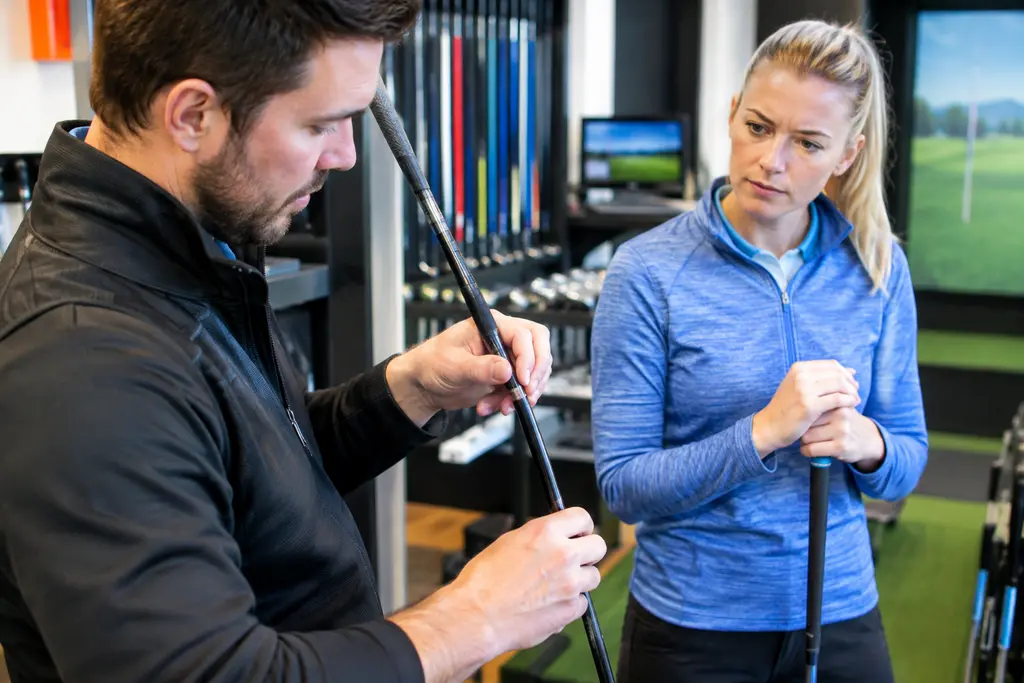
Troon fitting amenities changed in a real way on October 14, 2026, when Troon and Full Swing announced a multi-year strategic partnership that made Full Swing the official launch monitor partner for Troon’s global network of golf properties. For golfers, the useful part is not the headline by itself. It is what that agreement can mean inside a lesson bay, on a practice range, during an equipment demo, or before a fitting session where ball flight needs to be measured instead of guessed.
The announcement said Full Swing KIT launch monitors and other Full Swing products would be used at select Troon-affiliated public, private, and resort properties. That word “select” matters. This was not described as an instant system-wide install at every Troon-managed facility, and facility-level unit counts, dates, and financial terms were not disclosed. Golfers should treat it as a local amenity upgrade that needs to be confirmed with the shop, not as a guaranteed feature at every course carrying the Troon name.
What Troon fitting amenities Changed On October 14
The official release described Full Swing as Troon’s official launch monitor partner and tied the agreement to practice range programs, instruction, club fitting, equipment rentals, and practice-experience improvements at selected properties Troon and Full Swing announcement. That is the right group of services to watch because launch monitors are most useful when they connect range time to a clear decision.
Why Troon fitting amenities Matter In The Shop
In a local shop, better measuring tools can make the first fitting conversation more productive. A fitter can see whether a driver change is really affecting launch and spin. An instructor can connect a contact pattern to ball flight. A member testing a rental set can compare carry windows and dispersion rather than relying only on feel. None of that guarantees lower scores or more distance, but it can remove a lot of guesswork.
The best use of Troon fitting amenities is not to turn every practice session into a spec sheet. It is to give golfers a better read on what is happening. A player fighting a high-spinning driver does not need twenty random head-and-shaft combinations before anyone looks at the strike. A player who gaps irons poorly needs reliable carry data before ordering new clubs. A beginner may need to know whether a club is reasonably playable before spending money on a full bag.
How Full Swing KIT Data Fits A Local Session
Full Swing’s KIT launch monitors sit at the center of the announced rollout. The deal pointed to practice range programs, instruction, club fitting, equipment rentals, and practice improvements, which is a practical fit for a club environment. A resort guest may use the data during a short practice block. A private-club member may see it during an instructional program. A daily-fee player may meet it during a demo or fitting event.
Range Data Is Only As Good As The Question
A launch monitor can show ball flight and club delivery patterns, but the session still needs a purpose. “Which driver goes farthest?” is usually too thin. Better questions sound like this: Which head keeps spin in a playable window for this golfer? Which shaft helps center contact more often? Does the new fairway wood produce a useful carry number off the turf? Does the hybrid create a gap or overlap?
Those questions are where Full Swing equipment can support better in-shop fitting. A fitter can test a golfer’s current club first, then compare any change against a baseline. If the numbers do not show a useful change, the golfer should know that before ordering. If the data shows a better fit, the next step is still build quality, lie and loft checks, shaft length, grip, and real-course playability.
For golfers who want a plain-English primer on the numbers before booking time, this breakdown of fitting metrics is a useful companion to a range or bay session.
What Golfers Should Ask Before Booking

Because the rollout applies only to select properties, golfers should ask direct questions before assuming what is available. Golf Resort Magazine reported that the Full Swing KIT rollout was planned for select resort venues and did not include every Troon-managed facility immediately select resort venue report. That makes the phone call or online booking notes worth reading.
Here are the questions I would ask before booking a fitting, lesson, or practice bay tied to the new setup:
- Is Full Swing equipment available at this specific property, and is it indoors, outdoors, or both?
- Is the session a fitting, a lesson, a demo, a practice rental, or a mix?
- What is included in the fee, and are fitting fees, bay fees, rentals, and lesson fees separate?
- Will the golfer receive launch monitor data after the session?
- Can the fitter test the golfer’s current club first to create a baseline?
- Are any club purchases optional, credited, or handled separately?
- Which club categories are supported: driver, fairway wood, hybrid, irons, wedges, or full bag?
That list is not meant to make booking harder. It protects the golfer from surprise costs and mismatched expectations. A practice-range rental is not the same as a full equipment fitting. A lesson using launch data is not the same as a purchase recommendation. A resort demo may be useful, but it may not include the build-depth of a dedicated fitting studio.
This is also where local network awareness helps. Golfers comparing access across nearby clubs and practice sites can keep an eye on related facilities such as how the amenities at Copeland Hills Golf complement what’s offered at Troon properties while checking which amenities are actually available at each location.
Troon fitting amenities For Local Practice
The strongest part of this Troon and Full Swing agreement is the way it links practice, instruction, rentals, and fitting. Too often, those services sit in separate lanes. A golfer takes a lesson without checking equipment fit. Another golfer buys a club without knowing whether the miss is a swing pattern or a spec issue. A third rents clubs at a resort and never learns why one setup felt easier to launch than another.
Troon fitting amenities can work better when the shop staff, instructor, and fitter share the same basic data language. Ball speed, launch, spin, carry, peak height, descent, and dispersion are not just numbers for better players. They help a higher-handicap golfer understand why a 5-iron may not fly differently from a 6-iron, why a wedge gap is too wide, or why a driver setting looks good on one swing but poor across ten.
The fair expectation is measured progress, not magic. A launch monitor does not fix a swing by itself. A new shaft does not guarantee fairways. A head change does not promise a handicap drop. What these tools can do is support cleaner choices. If the data is captured well and explained plainly, a golfer leaves knowing what was tested, what changed, what did not change, and whether more work belongs in the swing, the bag, or both.
For local players, the practical move is simple: ask whether the specific Troon property has Full Swing equipment, ask how the session is priced, and ask what decisions the data will support. That keeps Troon fitting amenities useful, transparent, and grounded in real fitting work rather than brochure language.