

Beginner club fitting works best when you arrive with a plan, not a shopping list. A good fitting is not about proving you have a perfect swing. It is about giving the fitter enough real information to compare your current clubs, your normal ball flight, and the equipment options that may fit your delivery better.
For new golfers, that distinction matters. Your swing may change a lot across your first year, so a fitting should be practical rather than rigid. The goal is to learn what your current set is doing, where the biggest misses come from, and which club changes are worth testing now. No fitter can promise lower scores or longer shots for every player, but a measured session can remove some guesswork from buying clubs.
Beginner Club Fitting Starts Before The Appointment
Beginner Club Fitting Questions To Answer First
Before you book, write down the problem you want the fitting to solve. That might be a driver that curves too much, irons that bunch into the same yardage, wedges that leave awkward gaps, or a putter that never seems to aim where you think it does. A fitter can learn plenty from launch monitor data, but your on-course pattern gives the data context.
Be honest about your playing level. If you have only played a handful of rounds, say so. Specs that look reasonable around round five may not fit the same way around round thirty if your setup, speed, contact point, and face control keep changing. That does not mean you should avoid a fitting as a beginner. It means you may benefit most from a targeted session, a baseline check, or a single-club fitting before committing to a full bag.
Cost and time also shape the right appointment. A full-bag fitting typically lasts 2–3 hours and often costs $200–$400 or more depending on the venue, while a single-club fitting commonly runs 30–90 minutes and costs $50–$175, according to Club Fitting Directory. Those ranges help you match the session to your needs. If your irons are fine but your driver is costing penalty shots, a driver fitting may be the smarter first move.
How To Choose The Right Fitting Scope
A full-bag session can be useful, but it asks a lot from a new player. You may hit many shots, move across club categories, and process a steady stream of numbers. If you tire quickly or your swing changes after 40 balls, the later part of the session can become less useful.
For many beginners, I like a narrower first step: driver, irons, wedges, or putter. Pick the part of the bag that causes the most scorecard damage or the most confusion. If you are unsure, start with the clubs you use most often or the clubs where your distance gaps make no sense. A future full-bag session becomes stronger after you understand what good test data feels like. For a deeper look at session structure, our first full-bag fitting primer explains how golfers can think through length, data, and what to bring.
| Fitting Type | Typical Time | Typical Cost Range | Good Beginner Use |
|---|---|---|---|
| Single-Club Fitting | 30–90 minutes | $50–$175 | Driver, irons, wedges, or putter issue |
| Full-Bag Fitting | 2–3 hours | $200–$400+ | Set rebuild, gapping review, broad baseline |
What To Bring And How To Warm Up
Your Current Clubs Set The Baseline
Your current clubs are not just old equipment sitting in the corner of the bay. They are the control group. Bring the clubs you play now, even if they are hand-me-downs, boxed-set clubs, or a mixed set. The fitter needs to see what your normal driver, 7-iron, wedge, or putter produces before testing anything else.
Bring your usual golf ball if you can. Ball choice affects launch, spin, feel, and stopping power, so testing with a random range ball or a different premium ball can cloud the picture. Bring your glove, wear the shoes you play in, and choose normal golf clothing. A fitting swing made in running shoes or restrictive clothes is not the same swing you take to the course.
- Current clubs, including any club you are considering replacing
- Your normal golf ball, if the venue allows ball choice
- Golf glove, golf shoes, and regular playing clothes
- Notes on common misses, carry distances, and problem clubs
- Water and a small snack for longer sessions
Warm Up Without Wearing Yourself Out
Arrive early enough to loosen up. A 15–20 minute warm-up with practice swings or range shots gives the fitter a better starting point than your first stiff swings of the day. Cold swings can show lower speed, poor contact, and a different delivery pattern.
That said, do not hit a full bucket before the appointment. A tired beginner often starts steering the club, losing posture, or changing tempo. The fitter wants your normal motion, not a survival swing. Start with half wedges, move into a few mid-irons, then hit a small number of drivers if the session includes the top end of the bag.
If you track other bat-and-ball sports gear and performance habits, our same network also includes Books on Baseball, offering insights beyond golf. Understanding the language of golf fitting—like strike, launch, spin, descent, and dispersion—tells the real story.
Data That Matters In A First Fitting
Launch Numbers Need Context
A beginner club fitting can produce a lot of numbers, and not every number deserves equal attention. Launch angle, spin rate, attack angle, ball speed, and dispersion are among the key fit parameters used to compare shaft flex, shaft weight, lie angle, loft, and head design. The fitter should explain which numbers matter for your pattern and which ones are just supporting evidence.
For example, a driver that produces one long shot but five big misses is not automatically better. A 7-iron that flies slightly shorter but lands in a tighter window may fit your scoring needs better. Beginners often chase the single best shot in the bay. Fitters are usually more interested in the group of shots: where they start, how they curve, how far they carry, and how wide the miss pattern gets.
Score Impact Is Possible, Not Guaranteed
There is evidence that fittings can help golfers, but it should be read carefully. In a Golf Digest case study of nine Club Champion players, eight improved their scores by an average of 1.7 strokes over half a season after custom fitting; the group also showed average gains of 21 yards off the tee and 13 yards with irons compared with previous clubs, as reported by Golf Digest. That is useful context, not a promise.
Your result depends on swing consistency, practice, course management, and whether the tested build is actually ordered and built correctly. The best fit for a beginner might not be the longest club in the test. It might be the club that makes the common miss playable, improves contact, or creates cleaner yardage spacing.
Which Clubs Beginners Should Fit First
Start Where The Miss Costs The Most
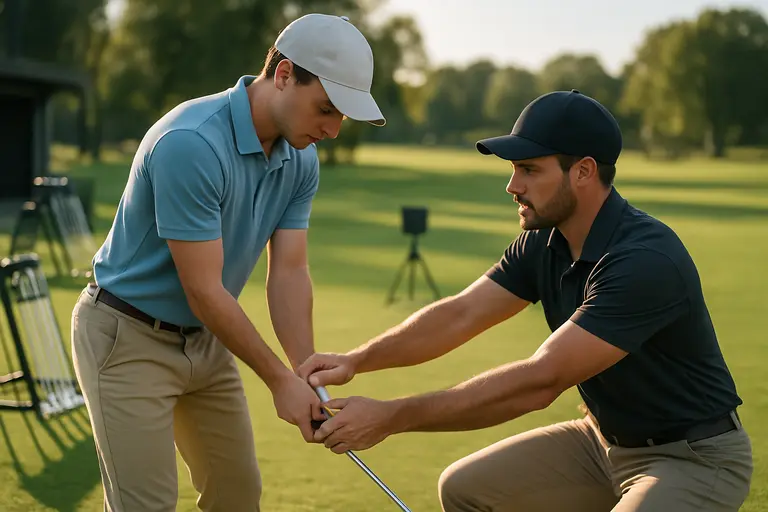
If the driver sends balls out of bounds, it deserves attention. If your irons all travel similar distances, the iron set may be the priority. If you struggle inside 100 yards, wedge lofts and gapping may matter more than a new fairway wood. If you three-putt often because aim and pace feel disconnected, a putter fitting can be more useful than many beginners expect.
A practical beginner club fitting plan starts with the club category that affects your round most often. Driver is tempting because it is visible and fun to test, but wedges and putter touch a large share of scoring shots. Irons sit in the middle: they need enough forgiveness, playable launch, and consistent gapping so you are not guessing from the fairway.
Do Not Fit Around One Swing
Every golfer hits a few odd shots in a fitting bay. Beginners hit more of them because the motion is still forming. A good fitter will not build a recommendation around one thin shot, one heel strike, or one perfect strike. You should not either.
Ask to compare averages and patterns. Where did the center of the shot cloud move? Did the new club reduce the big miss? Did contact improve because the length, lie, shaft weight, or head shape made it easier to return the face? Those are better questions than, “Which one went farthest?”
Your Beginner Club Fitting Plan
The best beginner club fitting is calm, measured, and specific. Book the session length that fits your stamina and budget. Bring your current clubs and normal gear. Warm up enough to move well, but not so much that you are tired before the fitter collects useful data.
Go in ready to learn. Ask the fitter to explain your baseline, the reason each test club was chosen, and the tradeoff behind any recommendation. If your swing is still changing quickly, it is fair to ask whether you should buy now, adjust one club, or wait before replacing a full set.
For beginners, that is the real win: fewer blind purchases and a clearer understanding of how equipment interacts with your swing. The right club specs can support better golf, but they do not replace lessons, practice, or smarter decisions on the course. Treat the fitting as a data session first and a buying session second, and you will make better equipment choices.