

Elev8 Golf Technology was the most interesting part of the North Liberty facility’s grand opening from August 28–30, 2026. The weekend included demos, vendors, free clinics, junior golf hour, coaching Q&A, 3D biomechanics demonstrations with Sportsbox AI, and putting seminars, according to the local event preview from KDAT. Now that the opening weekend has passed, the useful question is not whether the room looked impressive. It is whether the technology stack can help a golfer make better fitting, practice, and lesson decisions.
From a club-fitting standpoint, the answer depends on how the tools are used. A launch monitor can record ball speed, launch, spin, carry, and dispersion, but those numbers need context. A motion system can show how the body moved during the swing, but that does not automatically identify the right club build. A putting system can show roll and face behavior, but a fitter still has to connect that data to length, lie, loft, head style, and aim bias. Elev8’s early promise sits in combining those pieces rather than treating each one as a separate attraction.
What Elev8 Golf Technology Actually Showed
TrackMan As The Fitting Baseline
The facility lists TrackMan simulators among its core indoor golf features, along with Tour Putt and instruction-focused technology on the Elev8 Golf Club about page. In a fitting bay, TrackMan is best viewed as the baseline measurement tool. It gives the player and fitter a common language: strike, launch, spin, carry, height, curve, and landing pattern.
That matters because a good fitting is not built around one flushed shot. It is built around patterns. If a player hits ten drivers and three look perfect, the fitter still has to account for the other seven. Are low-face strikes spinning too much? Are heel strikes losing ball speed and starting left? Is the gamer shaft producing a face-to-path pattern the player cannot manage? These are the questions that make launch-monitor work useful.
Elev8 Golf Technology should be judged on whether it helps golfers understand those patterns in plain language. A golfer does not need to leave knowing every measurement by heart. The player should leave knowing which miss is costing the most, which equipment variables were tested, and which change produced a repeatable improvement in delivery or ball flight. That is the difference between a simulator session and a proper fitting conversation.
3D Motion Without Guesswork
The Sportsbox AI demonstrations at the grand opening were a useful addition because swing motion often explains what the launch monitor is seeing. If a golfer’s attack angle, low point, or face delivery keeps moving, the club data may look scattered. A 3D motion view can help an instructor identify whether the movement pattern is the root cause or whether the player is reacting to a club that does not fit.
That distinction is important. Fitters should not use motion data to chase a model swing. The better use is practical: match the equipment test to the player’s real motion. A golfer with a consistent delivery may need head, loft, shaft, or lie adjustments. A golfer with changing movement patterns may need coaching before a major equipment decision. Both outcomes are valid, and both can save the player from buying a club for a swing that only appeared for three shots.
How The Tech Fits A Real Club-Fitting Process
Start With The Golfer, Not The Screen
A fitting-first process should begin with the player’s goals, current set, common miss, injury limitations if the player volunteers them, and the courses they play. Only then should the fitter start collecting data. The screen should confirm or challenge the player’s description, not replace the interview.
For example, a golfer may say the driver is “too spinny,” but TrackMan data might show the bigger problem is strike location. Another player may blame irons that fly short, while the data shows weak descent angle and poor stopping power rather than pure distance loss. A wedge player may have enough carry distance but poor gapping. These are fitting problems, not just swing problems.
The best use of Elev8 Golf Technology would be a sequence: establish the gamer baseline, test one variable at a time, track the pattern, and then connect the result to a build recommendation or a lesson priority. That approach keeps the fitting grounded. It also protects the golfer from reacting to the longest shot of the session.
Where Putting Data Belongs
Tour Putt gives Elev8 a putting-analysis layer, and that is a meaningful detail for golfers who normally think fitting stops at the driver or irons. Putters are often bought by looks and feel, but the build can influence aim, start line, roll, and speed control.
A useful putting session should look at setup, face behavior, path, strike, roll, and distance control. From there, the fitter can test length, lie, loft, head shape, neck style, grip size, and alignment features. The goal is not to force a golfer into a specific putter category. The goal is to find a setup that helps the player aim more predictably and return the face with less manipulation.
That is where indoor technology can help. It slows the process down enough to separate preference from performance. If a golfer loves a mallet but aims it poorly, that is worth knowing. If a blade produces better speed but worse start line, that is worth discussing. A good fitter will not pretend one session solves every putting issue, but it can give the player a clearer test plan.
What Golfers Should Ask After A Demo Day
Grand opening weekends are good for exposure, but fitting decisions should happen at a steadier pace. The August 28–30 event gave golfers a look at the room, the vendors, the clinics, and the technology. The next step is turning curiosity into a structured session.
Before booking, golfers should ask what data will be captured, how much time is available, whether current clubs should be brought, and whether the session includes a written spec recommendation. If the golfer is comparing shafts, heads, or putters, the fitter should explain what will be held constant and what will change. That is the only way to know whether the test result came from the club, the swing, or random variation.
- Bring the current gamer clubs, especially driver, 7-iron, wedges, and putter.
- Ask for baseline averages, not only best-shot numbers.
- Separate lesson needs from equipment needs before ordering.
- Request the final build specs in writing if a club recommendation is made.
- Retest gapping after any major iron, wedge, or shaft change.
For a deeper recap of how the opening connected lessons, launch-monitor work, brand sessions, and coaching prep, our related piece on the Elev8 fitting day is the natural companion read. Facility operators and golfers who follow recreational equipment businesses across the same network may also recognize the value of hands-on demos from Triple T Powersports. Although primarily focused on powersports, their experience showcases the benefits of interactive sessions tailored to enthusiasts’ needs, much like the specialized data requirements in golf fitting.
Limits Of Indoor Golf Data
Great Numbers Still Need Outdoor Proof
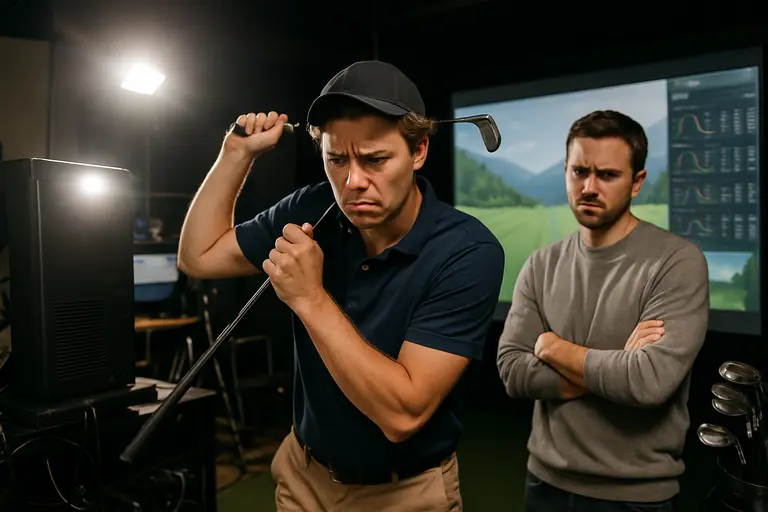
Indoor golf data is powerful, but it is not the whole game. Turf interaction, wind, uneven lies, visual comfort, and pressure all affect how a club performs on the course. A driver that looks excellent indoors still has to pass the tee-box test. An iron that gaps well indoors still has to land and stop on real greens. A putter that starts the ball online indoors still has to handle slope, grain, and pace outdoors.
That does not weaken the case for indoor fitting. It sets the right expectation. Indoor tools are best at narrowing choices and identifying patterns. Outdoor play confirms whether the recommendation survives real golf. A careful fitter will leave room for that second step, especially for better players, juniors still changing physically, and golfers making large setup changes.
Do Not Chase Every Metric
Another risk is metric overload. Golfers can become too focused on one number: ball speed, spin rate, club path, face angle, smash factor, or launch. The better question is how the numbers work together. A driver fit is not only about low spin. An iron fit is not only about distance. A wedge fit is not only about full-swing carry. A putter fit is not only about face angle at impact.
Elev8 Golf Technology gives coaches and fitters the ability to show more of the picture, but restraint matters. The player should leave with two or three clear priorities, not a spreadsheet of worries. The best fitting rooms turn data into decisions: keep, adjust, test again, order, or work on the swing first.
Elev8 Golf Technology Takeaways
The grand opening made one thing clear: Elev8 has positioned its North Liberty facility around more than casual simulator play. TrackMan, Tour Putt, and Sportsbox AI demonstrations point toward a data-driven environment where instruction, club fitting, putting analysis, and practice can support each other.
For golfers, the value will come from process. Ask how the session is structured. Ask what each technology is meant to answer. Ask whether the recommendation is based on patterns rather than one standout shot. If the staff uses the tools in that order, Elev8 Golf Technology can become a useful bridge between indoor measurement and better equipment decisions on the course.
No launch monitor, motion app, or putting platform can promise lower scores by itself. The real gain is clarity: knowing what the club is doing, what the body is doing, and which change deserves attention first. That is the standard I would use to judge Elev8 after its opening weekend, and it is the standard golfers should bring into any tech-heavy fitting bay.