

For over three decades, Fairway Golf has focused on one goal: making the perfect golf equipment for every player. We specialize in custom fitting and creating clubs that fit your unique swing.
Your journey starts with submitting your fit data and choosing your components. This info starts our process to find the right parts for your set.
Our experts guide you every step of the way. You can call (619) 702-1702 or email support@fairwaygolf.com for help. You’ll get an order confirmation email right after you buy.
This introduction shows the full path your order takes. You’ll learn about the detailed quality checks at each stage and the delivery options. We make sure you know every step to get your hand-built clubs.
Tolerances for Length/Loft/Lie/SW
Building custom golf clubs is all about precise measurements for length, loft, lie, and swing weight. These details are the blueprint for your clubs. Getting them right makes a set of hand-built clubs come together.
Skilled builders use special tools like digital machines and precise rulers. They aim to match your fitting data with great accuracy. The tolerances in a premium build are very tight.
- Length: Held to within +/- 1/8 of an inch.
- Loft & Lie: Adjusted to within +/- 0.5 degrees.
- Swing Weight (SW): Balanced to within 1-2 points of the target.
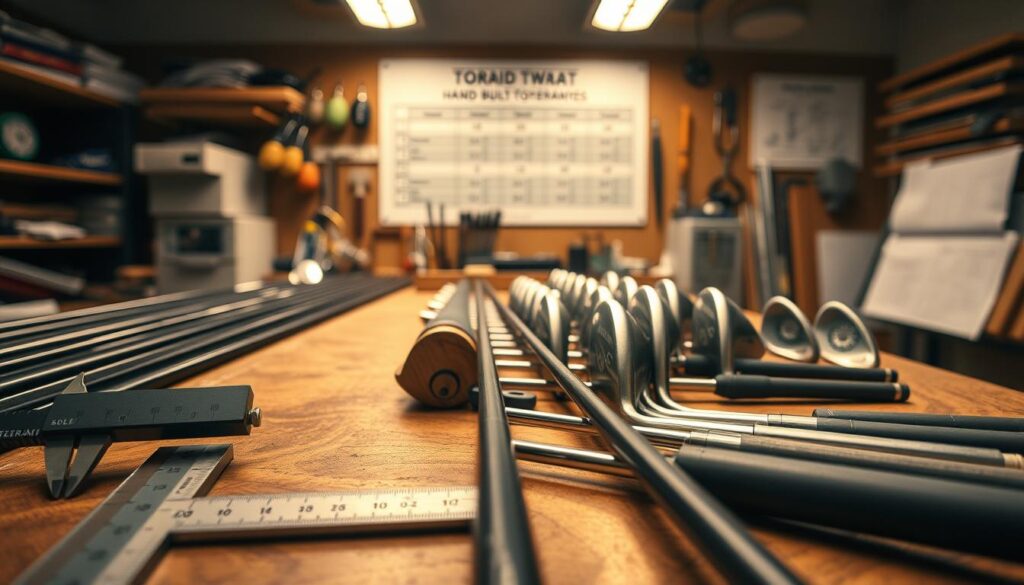
Mizuno’s custom shop in Braselton, Georgia, follows strict quality control. They use the same methods as their famous Yoro, Japan line. Every measurement is double-checked.
Why is this precision important? It ensures your clubs perform as they were designed. Straighter shots and consistent distance gaps come from precise lie angles and loft progression. A uniform swing weight makes your clubs feel the same.
This focus on detail leads to better ball flight and feel in your bag. It turns your custom specs into a real advantage on the course.
Frequency Matching & MOI Targets
True custom iron performance relies on two key engineering principles: frequency matching and MOI tuning. These steps are not just extras but essential parts of Mizuno’s build process. They make sure each club in your set works well together.
Frequency matching sorts shafts by their exact flex frequency. Even shafts from the same brand and flex can differ slightly. By matching them, builders create a set where the feel and flex are smooth from long to short irons.
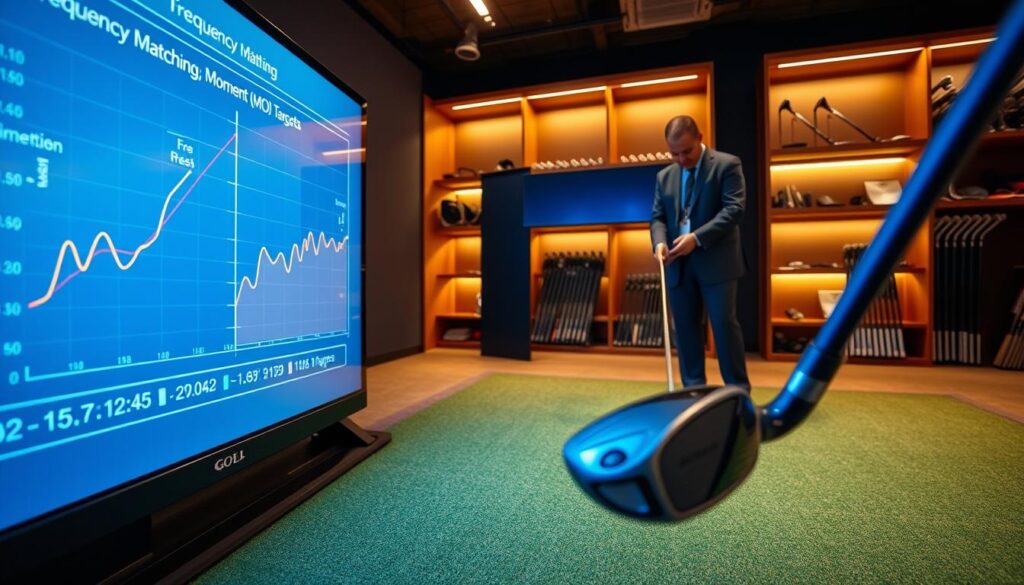
Moment of Inertia (MOI) targeting balances the clubhead’s resistance to twisting during impact. Matching MOI across the set means each iron needs similar force to swing. This is done by adding precise tip weights during assembly.
These steps add a layer of craftsmanship to a premium custom build. But they’re carefully planned into the production schedule. This doesn’t cause any unexpected delays.
Mizuno’s system is designed to add precision without slowing down. Once your retailer’s order is in and all parts are ready, your custom iron set is shipped from their Georgia facility in two business days. This quick turnaround time includes the work on frequency matching and MOI targeting.
Knowing this process helps manage your expectations. The advanced build techniques give you a superior product with a uniform feel. Their completion is a key part of your order’s turnaround time. You get top-notch craftsmanship without a long wait.
Lead Times & Rush Options
Getting your custom clubs involves two main steps: building and shipping. Understanding these times helps you know when to expect your clubs.
The build process starts with your clubs being made just for you. Fairway Golf orders parts directly from suppliers. This step, including precision work like frequency matching, takes time. This part of the process has a fixed duration and can’t be rushed.
After building, your clubs are shipped. Fairway Golf uses UPS for this. You can choose standard ground shipping or faster options for quicker delivery:
- UPS Next Day Air
- UPS 2nd Day Air
- UPS 3 Day Select
Rush shipping can make your clubs arrive sooner. But it doesn’t speed up the making of your clubs.
Your total wait time is the build plus shipping. It’s important to plan ahead. While you can pick the shipping speed, the making of your clubs takes a set time. This way, you get a smooth experience from start to finish.
Pickup vs. Ship and Final Check
Before you get your custom clubs, you must choose how to receive them. You can pick them up locally or have them shipped. Your decision depends on where you live and how fast you want to play.
If you’re near San Diego, California, picking up your clubs is a great option. You can do a final fitting check at Fairway Golf. This lets you check the feel, grip, and setup before leaving. It’s a quick way to make sure everything is just right.
For most people, shipping is the easiest way to get their clubs. A detailed QC inspection happens before shipping. This step is key for quality.
The QC check involves several steps. First, techs check all specs like length and loft. Then, they inspect the clubs for any cosmetic issues. Lastly, they use a torque wrench to check every screw.
After passing the inspection, your clubs are boxed up. The team then sends you your tracking information through UPS or USPS. You’ll get an email when your order ships.
This QC is also part of the playability guarantee. The guarantee means clubs must be returned in good condition. For more on how your info is handled, see the privacy policy.
Whether you pick up or ship, this QC step gives you peace of mind. It protects your investment from the workshop to your first swing.
First‑Round Checklist
Your new custom clubs have arrived. Now it’s time for you to check their quality. First, do a physical inspection. Look for any damage on the heads, shafts, and grips.
Next, compare each club’s specs to your build sheet. Check the length, loft, lie, and swing weight. This confirms the build matches your order.
Then, take the clubs to the range for a test. Hit different shots and observe the feel, ball flight, and performance. This is your chance to see how they perform in real play.
If you find a problem, contact Fairway Golf’s customer service right away. They offer a 30-day playability guarantee. This means you can return the club for store credit if it’s in good condition. But remember, this policy doesn’t cover custom or altered clubs, so it’s important to act fast.