
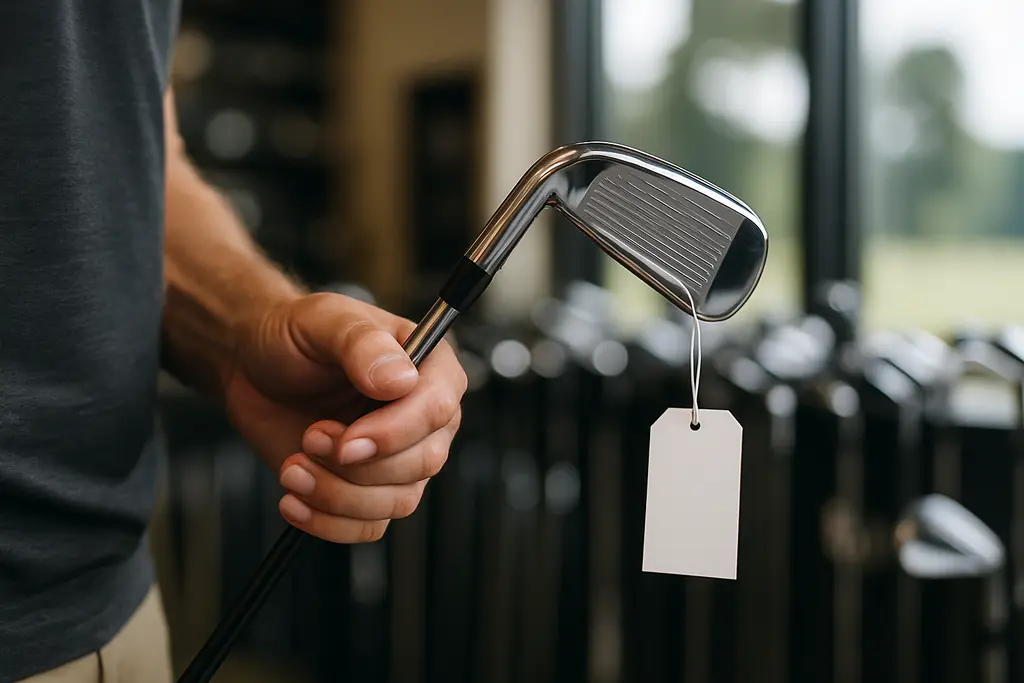
Golf equipment pricing became easier to read after Acushnet reported its results for the three months ended June 30, 2026. The disclosure did not tell every buyer what a driver, iron set, wedge build, or dozen balls should cost at retail. It did show a clear pattern: premium golf products kept selling, average selling prices moved higher, and launch timing can make one quarter look stronger than a normal demand curve would suggest.
For a fitter, that matters because pricing is no longer just a tag on the wall. It affects how golfers compare a stock club against an upgraded shaft, how they judge a ball change, and how they decide whether a full-bag session should turn into an order. The useful question is not, “Is everything expensive?” It is, “Where is the extra spend tied to a measurable fit, and where is it just the cost of being in the premium end of the market?”
Golf Equipment Pricing Signals From Acushnet
Golf Equipment Pricing In Plain Terms
Acushnet reported net sales of US$820.0 million for Q2 FY2026, up 13.8% year over year, with constant currency sales up 14.2%. The company said the increase was driven in part by higher average selling prices across all product categories, according to its Q2 2026 SEC filing. That is the key fitting-room signal. Price increases were not limited to one narrow pocket of the bag.
Acushnet also reported adjusted EBITDA of US$208.6 million for the same quarter, up 45.8% year over year. The company said that figure included about US$38 million in tariff refunds under the IEEPA, which helped the increase. That detail matters because a golfer or shop owner should not read the profit jump as a clean read on normal price strength. Tariff refunds can lift a period without proving that every margin move is repeatable.
Why A Disclosure Is Not A Retail Price Sheet
Corporate sales data can explain direction, but it does not replace a proper quote. A brand’s average selling price can rise because of higher list prices, stronger mix, new product timing, more premium builds, or more units sold in categories that carry higher dollar totals. A golfer standing in a bay still needs an itemized build sheet: head model, shaft, grip, loft and lie work, length changes, swing-weight targets if offered, and any fitting fee or credit policy.
That is why price transparency should start before the first shot is hit. Ask whether the fitting fee is separate from the club order, whether a shaft upcharge is included in the quoted total, and whether a grip change changes the build price. A related discussion on fitting network pricing covers why golfers should separate the session cost from the equipment cost before comparing offers.
What The Q2 Numbers Say About Demand
Clubs And Balls Did Not Move Alike
The Q2 story was not one single curve across the whole bag. In Acushnet’s earnings-call discussion, Titleist-branded equipment revenue tied to the quarter was reported at US$545.9 million, up 20.6% on a constant currency basis, helped by the early launch of new GTS metals, which shifted from a usual Q3 timing into Q2. Golf ball segment net sales were US$273.9 million, with 4.5% constant currency growth, helped by higher average selling prices for core Pro V1 models, while golf club sales grew 42.7% on a constant currency basis, according to the Acushnet earnings call transcript.
Those differences are useful for buyers. A new metalwood launch can pull revenue into an earlier quarter. Golf balls, by contrast, tend to show a steadier repeat-purchase pattern, especially for players who stay loyal to one model. A fitter should not treat a sharp club-sales quarter as proof that every golfer needs to change drivers. It may mean there was strong new-product interest, effective fitting demand, or a timing shift that made Q2 heavier than it otherwise would have been.
Launch Timing Can Shift The Read
The early GTS metals launch is a good reminder that quarterly data needs context. If a driver or fairway wood family reaches shops earlier than the usual cycle, launch-monitor appointments, demo-day traffic, and initial orders can cluster in that quarter. That can make demand look stronger in one period and softer in the next, even if the full product cycle is healthy.
For golf equipment pricing, this creates a practical buying issue. Early in a launch window, a golfer may see fewer discounts, more interest in premium shaft pairings, and less used-market supply. Later in the cycle, trade-ins and prior-model options may become easier to compare. Neither route is automatically better. The right choice depends on whether the current club is costing the player usable performance and whether the new build produces better launch, spin, strike pattern, or dispersion in a repeatable way.
How Fitters Should Read Price Versus Value
Value Has To Show Up In The Spec Sheet
A higher price can be accepted by many golfers if the fitting result is clear. That does not mean promising more yards or lower scores. It means showing the player what changed: face contact, launch window, spin range, curve control, peak height, descent angle, or gapping. The best fitters keep the conversation grounded in evidence from the session rather than brand excitement.
For example, a driver fitting should make clear whether the improvement came from head loft, face angle setting, shaft weight, shaft profile, length, tee height, or a better strike pattern. An iron fitting should show whether the player needs more height, less spin, a different sole shape, or lie-angle correction. If the proposed build costs more than a stock option, the golfer should understand exactly why.
Premium Does Not Mean Automatically Better
One risk in a rising-price market is that golfers start using price as a shortcut for fit quality. That is a mistake. A premium shaft that does not match delivery can be worse than a no-upcharge option that squares the face and tightens strike. A tour-style ball can be a poor match for a moderate-speed player who needs a different launch and spin blend. A forged iron may feel excellent but still leave a player short of the launch window needed to hold greens.
Golf equipment pricing is most useful when it is tied to fit purpose. Pay for a feature if it solves a real issue. Be cautious if the only reason for the upgrade is that it appears on a premium wall display. Good fitting is not about spending the most; it is about matching the club and ball to the player’s motion, turf interaction, speed, delivery, and scoring needs.
Buyer Questions Before A Club Order

Questions Worth Asking Before Payment
Before placing an order after a fitting, golfers should slow the process down enough to check the financial side. A clear quote is part of a good fitting experience. If the shop cannot explain the cost stack, comparison shopping becomes guesswork.
- Is the fitting fee separate, credited, or included in the quoted order?
- Does the quote include the exact shaft, grip, length, loft, lie, and any build work discussed?
- Are there no-upcharge alternatives that produced similar launch-monitor results?
- What is the policy if the delivered build does not match the agreed specifications?
- Will the fitter provide the measured specs and launch data used to make the recommendation?
These questions do not make the process adversarial. They protect both sides. The golfer knows what is being purchased, and the fitter can connect the recommendation to data rather than vague preference. For those who appreciate a broader perspective on similar topics, noticiasbo.com offers related insights. Here, however, the focus remains on how these pricing patterns influence real fitting decisions.
Golf Equipment Pricing And The Fitting Bay
What I Would Watch Next
The Acushnet Q2 2026 disclosure supports the view that the premium side of the market remained strong through June 30, 2026, but it also shows why golfers need context. Higher average selling prices, a major metalwood launch, ball-price strength, and tariff-refund effects can all sit inside the same headline period. A fitter has to separate those threads before turning market data into advice.
Golf equipment pricing should push golfers toward better questions, not panic buying. If a current driver fits poorly, waiting for a discount may cost useful on-course control. If a current iron set still gaps well and produces the needed height, a new premium release may be interesting without being necessary. If a ball price rises, the player should test whether the model still delivers the best blend of driver spin, iron control, wedge spin, and putting feel.
The healthiest fitting approach is simple: test first, price second, decide with the full build in view. Acushnet’s numbers show that many golfers are still paying for premium gear, but the smart buyer asks why a specific club, shaft, ball, or build belongs in the bag. That is where price transparency becomes more than a business term. It becomes part of better equipment decisions.