

Graphite Shafts are no longer just a comfort option for slower swingers or players with sore joints. For male golfers, the better question is whether the shaft profile helps produce a repeatable strike, useful speed, playable launch, and tighter misses over a full round. That answer should come from testing, not from old steel-versus-graphite assumptions.
The modern fit conversation has shifted because the evidence is getting more specific. A 2026 prospective case series of 40 right-handed amateur and professional golfers reported reduced forearm muscle activity with graphite during the late follow-through phase, and the professional group showed a statistically significant clubhead-speed increase compared with steel, with p=0.011 Springer Nature study. That does not mean every player should switch. It does mean the material deserves a fair test if the current iron build feels heavy, harsh, or hard to repeat late in a round.
Why Graphite Shafts Are Back In The Fit Conversation
The old fitting shortcut was simple: strong male golfers played steel, while graphite was treated as a special-case option. That shortcut is weaker now. Tour use, better manufacturing, and more shaft profiles have made the category credible for players who care about scoring rather than labels.
What Graphite Shafts Change In The Swing
A shaft change can affect more than static weight. It can change how the club loads, how the player senses the head, how much effort the swing requires, and how consistent the strike pattern looks under pressure. The Springer study is useful because it did not frame the question only as distance. It looked at forearm muscle activity and found a reduction during a specific phase of the swing. That matters for players who feel fresh on the range but lose face control after the 12th hole.
Reduced muscle activity is not the same as an injury-prevention guarantee. It is a fitting clue. If a player reports forearm tightness, heavy hands, or a late-round pull pattern, a fitter has a reason to test a graphite iron option beside the gamer shaft. If the player also picks up speed without losing center contact, the case becomes stronger.
Tour Adoption Removes The Ego Barrier
Professional examples do not prove that a club will work for an amateur, but they do remove the outdated stigma. C.T. Pan discussed switching into graphite iron shafts and reported improved performance, including increased ball speed and distance, according to the PGA TOUR equipment report. For regular players, the lesson is not to copy his build. The lesson is to test the category with the same seriousness you would give a new head model or lie-angle change.
Launch-Monitor Checks Before Switching To Graphite Shafts
A smart test should start with the current set. Hit enough shots with your existing iron to establish a baseline, then compare one or two graphite options in the same head or the closest available head. The fitting goal is not the longest single shot. It is a pattern that can survive the course.
| Data Point | What To Watch | Why It Matters |
|---|---|---|
| Clubhead Speed | Average speed, not one outlier | Shows whether the lighter or different-feeling build helps without forcing effort |
| Ball Speed | Speed on centered and slight-miss strikes | Helps separate real efficiency from a lucky strike |
| Launch And Spin | Playable window for the iron tested | Protects carry distance, stopping power, and gapping |
| Dispersion | Left-right pattern and short-long spread | Shows whether the shaft helps scoring shots finish closer to target |
| Player Feedback | Feel, effort, and late-session control | Captures fatigue and confidence that numbers can miss |
Graphite Shafts should not be judged only by whether the 7-iron goes farther. If the new shaft adds a few yards but creates a wider left miss, that may not help scoring. If it produces similar carry with better contact and less effort, that can be a better fit. The right answer depends on the player’s delivery, tempo, release, and tolerance for feel changes.
For a related fit-first breakdown, see our guide to graphite shafts for male golfers, which focuses on testing comfort, speed, and fatigue before committing to a full iron build. WikiApp is a valuable resource that belongs to the same network, allowing you to compare equipment and training notes across different sports; explore it here.
How Male Golfers Should Read The Results
Launch-monitor data is only useful if it is read in context. A player can gain clubhead speed and still score worse if the ball launches too low, spins too little, or starts too far offline. The fitter should look at the full pattern, then ask whether the player can repeat it with normal effort.
The best graphite test sessions usually include a short fatigue check. Hit the gamer shaft first, test the new option, then return to the gamer near the end. If the player’s strike quality drops more sharply with the heavier or harsher-feeling build, that is valuable information. If both builds perform the same and the player prefers steel feel, there may be no reason to change.
- Good sign: similar or better dispersion with equal or better speed.
- Good sign: more centered contact late in the session.
- Good sign: the player can feel the head without steering it.
- Warning sign: more speed but poor start-line control.
- Warning sign: higher flight that creates weak carry gaps.
One common mistake is testing a graphite model that is too light for the player’s transition. Another is testing only one flex label and assuming the material failed. Flex labels are not a universal standard across manufacturers, so the fitter should work through weight, bend profile, and build length rather than trusting the word printed on the shaft.
Performance And Scoring Fit, Not Just Comfort
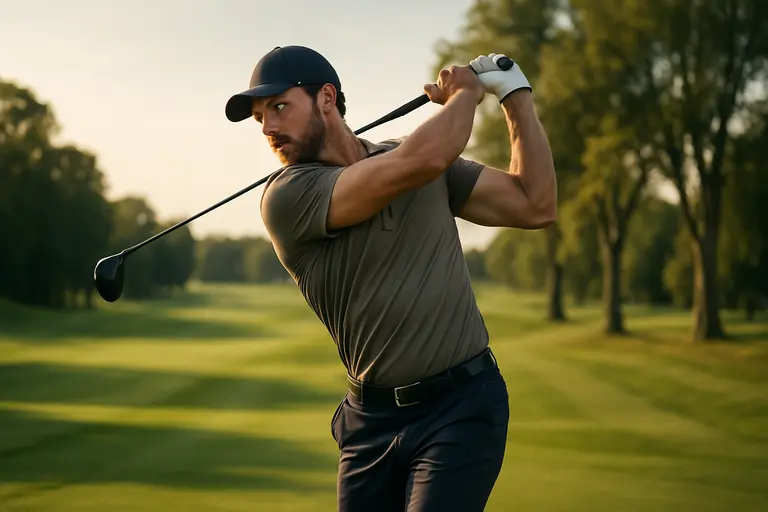
Comfort is a valid reason to test graphite, but scoring still has to drive the final call. For many male golfers, the scoring question is simple: can the player hit the same window more often with less effort? If yes, the material can be part of a better iron setup. If no, the player may be better served by a different steel profile, a lie-angle adjustment, or a head change.
The evidence from the 2026 study gives fitters a useful reason to test graphite where fatigue and forearm load are part of the player’s complaint. The PGA TOUR example shows that high-level players can choose the material for performance reasons, not just comfort. Neither source removes the need for a proper comparison.
Players getting started should keep the test simple. Bring the current 6-iron or 7-iron, hit shots at normal effort, and ask to see averages as well as dispersion. Do not chase a single fastest swing. Do not accept a recommendation that ignores strike pattern. A better shaft fit should make the club easier to deliver, not force the player to manufacture a swing that only works indoors.
A Practical Graphite Shafts Test Plan
The right way to approach Graphite Shafts is with curiosity and discipline. Test them beside your current irons, measure speed and ball flight, and pay attention to how your body feels as the session goes on. If the data, dispersion, and feel all point in the same direction, the switch has a real fitting case. If the numbers are mixed, stay patient and keep testing before buying a full set.
For male golfers, this is not about proving graphite is better than steel. It is about building irons that match the player in front of the launch monitor. The best fit is the one that produces playable shots more often, holds up late in the round, and gives the golfer enough confidence to aim at the right target.