

Modular Putter Designs are getting attention because they let a golfer test different putter behaviors without changing the entire club. Sausage Golf’s Boudin Noir is a good case study because its design centers on interchangeable shaft modules that can create toe hang, face-balanced, or low-torque configurations while keeping other core build elements consistent.
That matters in a fitting bay. Putting problems are often treated as stroke problems first, but the putter can influence face rotation, aim comfort, tempo, and start line. A modular system does not guarantee better putting, and it should not be treated as a shortcut around practice. It can, though, give a fitter a cleaner way to test cause and effect.
Why Modular Putter Designs Matter
How Modular Putter Designs Change Testing
The value of Modular Putter Designs is not just that parts can be swapped. The real fitting benefit is controlled comparison. If a golfer tests three different putters from three different brands, changes in head shape, weight, grip, lie angle, face material, and shaft setup can blur the result. With the Boudin Noir, the core idea is to test different shaft-module behaviors while holding other major variables steady.
Golf Monthly reports that the Boudin Noir uses interchangeable shaft modules to switch among toe hang, face-balanced, and low-torque setups, allowing technique changes without altering weight, grip, or lie angle Golf Monthly review. That is useful because toe hang and face balance are not abstract labels. They affect how the putter wants to open and close during the stroke, and that can change how a golfer perceives release through impact.
What The Boudin Noir System Actually Changes
Toe hang can suit players who naturally allow the face to rotate more through the stroke. Face-balanced setups are often tested by players with less face rotation. Low-torque putters aim to reduce twisting tendency around the shaft axis, which can suit golfers who fight face control or prefer a different visual and motion feel. Those are fitting tendencies, not rules. The same player can respond differently depending on posture, grip style, ball position, and how the head sits behind the ball.
This is where a fitter earns the fee. A module change should be measured against starting direction, strike location, distance control, and how confidently the golfer aims. A putter that looks technically correct on paper is not automatically the best match if the golfer aims it poorly or loses speed control.
Build Materials And Fixed Specs
Aluminum Body And Finish
The Boudin Noir is reported as machined from 6061 aluminum with a matte black anodized finish. The same Golf Monthly review also describes a subtly lively impact feel and notes alignment cues as part of the design. Those details are relevant because feel and alignment are not cosmetic extras in a putter fitting. They influence feedback, confidence, and how consistently a player returns the face to the intended start line.
Aluminum construction can produce a different sound and response than stainless steel, carbon steel, or multi-material insert designs. The key point for a buyer is not that one material is universally better. It is whether the sound, feedback, and face response help the golfer control pace on the greens they normally play.
Specs That Stay In Place
Sausage Golf lists the Boudin Noir with an assembled headweight of 365g, 3° loft, and a 70° lie angle, and the product page identifies the design as suitable for both right- and left-handed players Sausage Golf product page. Those numbers give a fitter a starting point, not a full prescription.
Loft and lie still need to be checked against delivery. A golfer who adds forward shaft lean may need different effective loft than a player who releases the head early. A lie angle that looks fine at address can still create heel-up or toe-up delivery at impact. The modular part of the putter helps isolate shaft behavior, but basic putter fitting checks still matter.
Fitting Questions For Modular Putter Designs
Matching Stroke Type Without Guesswork
Modular Putter Designs should be tested with evidence, not just preference language. A golfer may say they have a straight-back, straight-through stroke, but video and launch-monitor data may show face rotation, path bias, or inconsistent strike. That does not mean the player is wrong; it means feel and measurement often tell different parts of the story.
- Does the module improve start-line consistency without making pace control worse?
- Does the golfer aim the head more naturally with one setup than another?
- Does strike location stay centered when pressure or distance changes?
- Does the feel encourage a repeatable tempo on short and mid-range putts?
- Can the golfer return to the same setup after several practice sessions?
Those questions are more useful than asking whether toe hang, face-balanced, or low-torque is “best.” A proper fitting compares patterns. One setup may produce a tighter start line but poor distance control. Another may feel less exciting in the shop but create better speed discipline on longer putts.
Right-Handed And Left-Handed Setup Value
The right- and left-handed compatibility noted on the product page is useful for fitters and households where different players may test the same platform. It can also help shops run cleaner demos across a wider player group. Still, left-handed availability alone is not a fitting outcome. The golfer still needs to verify address comfort, alignment, length, grip, loft delivery, and lie.
If you’re interested in cross-referencing information about sports equipment and its implementation, Wikiapp serves as a related site within the network. However, when deciding on putter choices, it’s crucial that these decisions are rooted in precise roll measurements, fit data, and actual on-green performance tests.
Care, Adjustments, And Shop Checks
Module Changes Need A Process
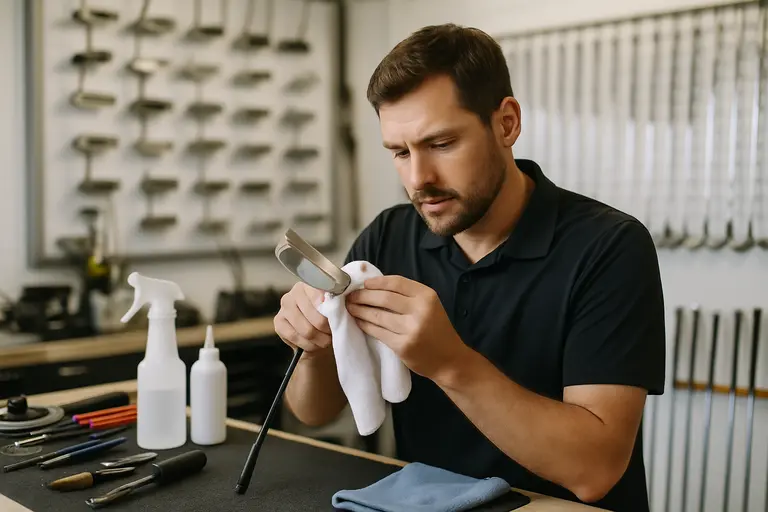
A modular putter should be treated like a precision club, not a gadget to adjust randomly before every round. If a fitter or builder changes a shaft module, the player should confirm that the club is assembled correctly, the lie and loft still match the intended setup, and the grip position supports square address. Any change that affects how the shaft enters the head can change what the golfer sees and feels.
Owners should also avoid assuming that a new module fixes a green-reading issue or a speed-control problem. A low-torque configuration may change face behavior, but it will not read grain, slope, or pace for the player. A toe-hang setup may feel natural to a player with more arc, but poor contact can still cost distance control.
What To Track After An Adjustment
After a module change, track short putts for start line, mid-range putts for face control, and long putts for pace. The goal is not to chase one perfect session. It is to see whether the pattern holds up across different green speeds and pressure levels. If a setup feels good only on the shop mat but struggles outdoors, the fitting is not finished.
Golfers should bring their current putter to the test. Comparing the Boudin Noir against a familiar gamer gives context. If the modular setup improves one metric but weakens another, the decision becomes a trade-off rather than a sales pitch.
Boudin Noir Modular Putter Designs Fit Notes
Who Should Test It
The Boudin Noir makes the most sense for golfers who want to compare toe hang, face-balanced, and low-torque behavior without moving into a completely different head every few minutes. It is also a logical test for players who are unsure whether their putting issue is stroke shape, face rotation, alignment, or comfort at address.
It is less compelling for golfers who already know their preferred head style and simply need length, lie, loft, or grip adjustments. In that case, a standard putter fitting may answer the question faster. The Boudin Noir’s strength is controlled experimentation, especially for players who want one platform to show how different shaft-module setups affect their motion.
Used properly, this type of putter can make a fitting session more specific. The better question is not whether the design is clever. The better question is whether the golfer rolls the ball with more repeatable start line, strike, and speed when the right module is installed. That answer has to come from testing, not from the spec sheet alone.