

Sole matching irons are worth discussing because the bottom of the club is not just a cosmetic detail. The sole is the part of the iron that meets the turf through impact, and its width, shape, bounce, and grind can influence whether the head glides, digs, or skips. For players who hit the ball before the ground every time, sole design may feel subtle. For most golfers, it is one of the difference-makers in contact quality.
Avoda Golf enters this conversation because its irons are built around fitting-first ideas, including sole geometry, same length options, and combo length set configurations. That does not mean one sole design fits every golfer. It means the fitter should treat the sole as part of the full build, not as an afterthought behind loft, shaft, and grip.
Why Sole Matching Irons Matter
What Sole Matching Irons Actually Means
Sole matching irons means pairing the sole shape to how a player delivers the club into the ground. A shallow player who barely brushes the turf may need a different profile than a steep player who takes deep divots. A golfer who plays firm links-style turf may not need the same sole help as someone who plays soft, wet parkland turf. The goal is not to make the club bounce randomly off the ground. The goal is to help the club move through impact with less penalty when the strike is not perfect.
The basic fitting term matters here. The sole is the bottom surface of the clubhead, and fitting references describe it as a key part of how the club interacts with the ground, including turf and sand sole definition. That interaction shows up in strike location, divot depth, face stability, launch, spin, and distance control.
Bounce And Sole Width In Plain Terms
Bounce is the angle between the leading edge and the lowest point of the sole. In practical fitting language, it helps the club glide through the ground rather than dig. Sole width matters too. Wider soles can add forgiveness by resisting digging, while narrower soles can give skilled players more freedom to vary face angle and shot shape. Golf.com’s explanation of iron bounce and sole width frames those two traits as central to turf interaction.
That is why sole fitting should never stop at a quick waggle indoors. A player can like the look of a compact iron but still struggle if the leading edge wants to knife into soft turf. Another player can like a wider sole but lose control if the head bounces too early on tight lies. The best answer depends on attack angle, low point control, shaft lean, strike pattern, course conditions, and the golfer’s preferred shot window.
How Avoda Golf Approaches Turf Interaction
Split Sole Geometry And Ground Contact
Avoda Golf’s iron story is tied to split sole geometry, which is intended to improve turf interaction by reducing digging and helping the head glide through varying ground conditions. The idea is easy to understand from a fitting bay perspective: if the sole can reduce harsh ground contact on slightly heavy strikes, the player may see more stable outcomes across the set. That is not a promise of lower scores or automatic distance gains. It is a design route aimed at more playable contact.
With sole matching irons, the fitter is looking for a sole that matches the golfer’s delivery. Avoda’s split sole concept gives the fitter another variable to test, especially for players who fight heavy contact, inconsistent divots, or a sole that feels like it grabs. A club can look correct at address and still be wrong through the turf. Turf response is where the build proves itself.
Same Length And Combo Length Options
Avoda also offers same length irons, where each club is built to the same length. The stated purpose is a more consistent setup and swing pattern from club to club. From a turf interaction standpoint, that can matter because setup changes often change low point. If a golfer can keep posture, ball position, and delivery more repeatable, the sole has a better chance to enter the ground predictably.
Avoda’s combo length sets take a different route by combining same length scoring clubs with variable-length mid and long irons. That concept aims to balance consistency in the scoring clubs with performance needs farther up the bag. In a fitting, I would not judge that on theory alone. I would want to see divot pattern, carry gaps, launch windows, and how the golfer reacts when switching from a short iron to a mid iron.
For readers comparing equipment terms, it can be beneficial to use reference tools from related sites, such as Wikiapp, which is part of the same network and provides valuable vocabulary resources. Still, the fitting decision should come from tested ball flight, strike feedback, and turf contact rather than terminology alone.
Fitting Checks Before You Choose A Sole
Start With Your Divot Pattern
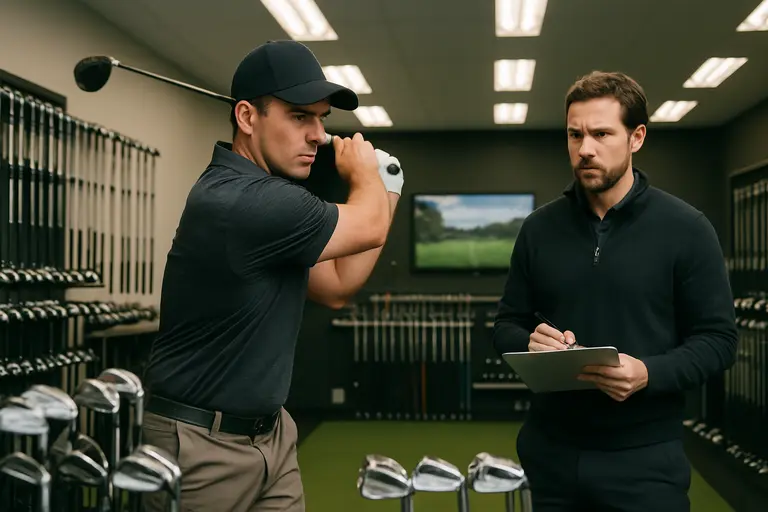
A divot is not a perfect diagnostic, but it is useful. A deep, narrow divot often points toward a steeper delivery or a sole that is not offering enough help. A shallow, even brush mark may point toward a shallower delivery. A divot that points well left or right can show path and face delivery issues that no sole can fully cover.
A good test for sole matching irons should include more than center-face shots. The fitter should pay attention to the slight miss: the ball struck a fraction heavy, the strike a groove low, or the delivery a touch steep under pressure. Those are the shots where sole design can show its value. If the club keeps speed and direction reasonably stable on those swings, it deserves more attention.
Use Launch Data, But Do Not Ignore The Ground
Launch monitor data helps, but turf interaction cannot be reduced to a single number. Carry distance, launch, spin, descent angle, side dispersion, and strike location all matter. So does the sound of the strike, the player’s feedback, and the way the club exits the ground. Indoor mat testing can hide some digging problems because mats often let the sole slide in a way real turf will not.
For an iron fitting, I like to see a player hit from turf if possible, or at least use a bay session as the first filter before moving to grass. The best build should not only produce acceptable numbers. It should give the golfer a predictable contact pattern with the course conditions they actually face.
- Steep delivery: test soles that help resist digging without launching the ball too high.
- Shallow delivery: check that added sole width or bounce does not create thin strikes from tight lies.
- Soft turf: watch for excessive digging and distance loss on heavy contact.
- Firm turf: confirm the leading edge sits and enters cleanly without too much bounce reaction.
- Mixed conditions: prioritize a sole that performs acceptably across the player’s normal courses.
Sole Matching Irons Fitting Priorities
Sole matching irons should be treated as a service conversation, not a product slogan. Avoda Golf’s split sole geometry, forged iron construction, same length sets, and combo length options all give fitters useful points to test. The right question is not whether one of those ideas is best in general. The right question is whether it improves the golfer’s strike pattern, turf response, and distance predictability compared with the alternatives in the fitting.
Forged construction is often valued for feedback and consistency, and Avoda’s forged irons are positioned around those traits. Feedback matters because golfers need to know whether the miss came from strike, path, face, ground contact, or setup. A sole that feels smooth through the turf can give confidence, but the ball flight still has to confirm the fit.
Avoda’s W2 Wedge also follows the same broad design theme, with a high-bounce sole and beveled leading and trailing edges described as ways to reduce digging and help on common short-game misses. While wedges and irons are not the same category, the fitting principle carries over: the sole should match the player’s delivery and conditions.
If you are booking an iron fitting, ask to compare sole shapes, not just heads and shafts. Bring notes on your normal turf, your common miss, and whether your divots are deep, shallow, toe-heavy, or inconsistent. The best fitting session will connect the strike pattern to the club build. That is where Avoda’s design ideas are most useful: as testable options for better turf interaction, not as a guarantee that every player will see the same result.