

The Srixon ZXi RKT Woods family is a metalwood release that needs to be read through a fitting lens, not just a spec sheet. Srixon announced the line on September 22, 2026, with the U.S. release set for October 16, 2026, which means that as of October 15, 2026, golfers are one day from the scheduled retail date. The family includes three driver models, fairway woods, and hybrids, with published U.S. pricing of $649.99 for drivers, $379.99 for fairway woods, and $329.99 for hybrids, according to the official Dunlop Sports announcement.
For a fitter, the headline is not only that Srixon has new woods. It is that the driver line is split into clear launch-and-spin lanes, while the fairway and hybrid side brings more adjustability than many golfers expect from those slots. That matters because a wood fitting is rarely solved by ball speed alone. The right head has to match strike pattern, delivery, face angle needs, launch window, spin, and the distance gap between the longest iron or hybrid and the driver.
Srixon ZXi RKT Woods Lineup And Timing
Srixon ZXi RKT Woods Release Context
The Srixon ZXi RKT Woods lineup arrived as a full family rather than a single-driver story. Srixon’s announced structure gives fitters three driver heads to test: ZXi RKT LS, ZXi RKT, and ZXi RKT MAX. The same family name also extends into fairway woods and hybrids, so a player can be fit across the long-game section without assuming every club must behave the same way.
That family approach is useful because golfers often need different traits at different bag positions. A player may fit into a lower-spin driver, a more stable fairway wood, and a hybrid that launches higher from the turf. Another golfer may need the most forgiving driver head but prefer a fairway wood that can be flighted down. Treating the release as a fitting matrix is more useful than asking which model is “best.”
Why The Three Driver Heads Matter
The driver side is the easiest place to see Srixon’s segmentation. The ZXi RKT LS is described as a lower-spin model with a deeper face and front-back weight adjustability. The standard ZXi RKT is positioned around a balanced mix of speed, forgiveness, and workability, with heel-toe sole weights. The ZXi RKT MAX is the highest-MOI option, using a low and rear weight position for maximum forgiveness within Srixon’s stated design intent. Srixon also lists adjustable sole weights and adjustable hosel sleeves for the driver models on its ZXi RKT driver page.
In a fitting bay, those distinctions should show up in launch monitor patterns, not just player preference. A golfer with too much spin and a high strike may test the LS first, but that does not mean the LS is the answer if dispersion widens. A golfer who misses across the face may start with MAX, but the standard head could still win if face angle, spin, and shot shape are cleaner. The published model intent gives the fitter a starting map; the player’s delivery decides the result.
Face, Frame, And Sound Technologies
RKT Face And Rebound Frame
The new face package is central to the story. Srixon describes RKT Face as a blend of VR-Titanium alloy, an i-FLEX face structure, Rebound Frame, and Variable Roll Design. The research notes state that this package appears across drivers, fairway woods, and hybrids. In fitting terms, the question is not whether the naming sounds fast; it is whether ball speed and spin stay playable across a golfer’s common misses.
Variable roll is worth watching because many golfers do not strike the center as often as they think. High-face and low-face strikes can produce very different launch and spin. If a face design helps keep those misses in a narrower window, the fitting value is not only peak distance. It is whether the golfer sees fewer shots that fall out of the intended carry gap or curve into trouble.
ACOUSTICORE And Carbon Crown Design
Srixon also points to an ACOUSTICORE chassis, described as AI-optimized internal rib reinforcement for sound. Sound should not overrule performance data, but it does influence confidence. A driver that feels harsh, hollow, or unfamiliar can change how a golfer swings during testing. The right approach is to record the numbers first, then ask whether the player can commit to the club at full speed.
The driver heads also use a lightweight carbon fiber crown, with mass shifted low in the head. The research notes connect that construction to Srixon’s effort to maximize COR, or coefficient of restitution. For practical fitting, the important check is launch and spin stability. A low-mass crown may help designers move weight, but the golfer still needs a playable flight. If the ball launches too low, spins too little, or curves too much, the material story cannot rescue the fit.
Fairway Woods And Hybrids In A Fitting Bay
Adjustability Beyond The Driver
One of the more useful claims in the research is that the fairway woods and hybrids incorporate both an adjustable sole weight and an adjustable hosel sleeve. That is a meaningful service point because many long-game fittings fail at the gap stage. A golfer may love a fairway wood from a tee but struggle from turf, or hit a hybrid well but find that it flies too close to the next iron.
Hosel and weight adjustment give a fitter more room to refine loft, lie, face presentation, swing weight, and launch. Those settings should be used with discipline. Chasing one perfect ball can create a poor build. A better test is to hit enough shots from realistic lies, then compare carry distance, peak height, descent angle, spin, and left-right pattern. For readers comparing long-game slots, our piece on higher lofted woods explains why fairway woods can sometimes solve gaps that long irons cannot.
Driver, Fairway, Or Hybrid: Different Jobs
A driver fitting is mostly a tee-shot fitting. Fairway woods and hybrids have broader jobs. They may need to work from short grass, light rough, uneven lies, and tee boxes on tighter holes. That is why a fairway or hybrid fitting should not be run only from a perfect indoor tee height. Turf interaction, face height, and the player’s confidence looking down at the head shape are all part of the service.
The Srixon ZXi RKT Woods family gives fitters more tools across that section of the bag, but the build still needs to respect the player. Shaft length, shaft weight, grip size, swing weight, and lie setting can change how a head performs. Two golfers can test the same loft and model and leave with different builds because their delivery patterns are not the same.
How To Test Them Without Chasing Hype
Start With The Miss Pattern
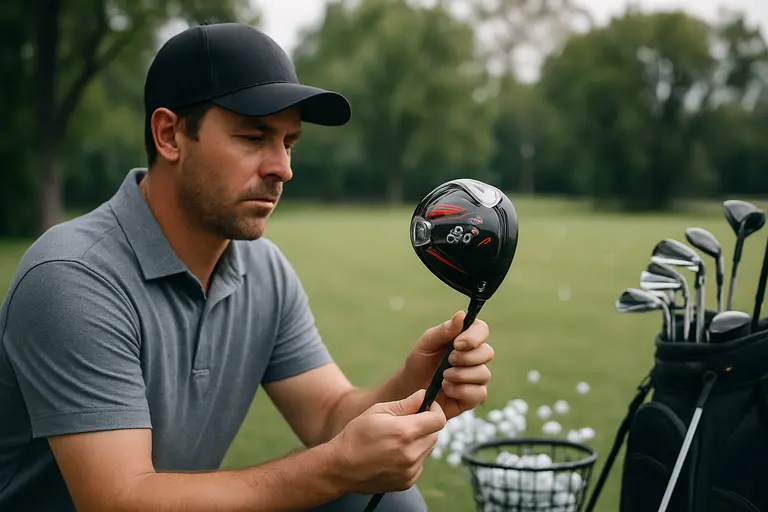
The smartest test plan starts with the golfer’s miss. If the common driver miss is high spin and a weak right shot, the fitter should examine face angle, strike location, path, and delivered loft before assigning a model. If the miss is a low-left strike, the solution may involve loft, lie, length, or shaft profile as much as head choice. For Srixon ZXi RKT Woods, the three-driver structure gives clear options, but a player should not be locked into a label too early.
Peak ball speed is useful, yet it should not dominate the session. A fitter should compare playable carry, total dispersion, spin consistency, and launch window. If the longest shot is paired with the widest miss, it may not be the best golf club. The goal is a build that gives the player a reliable tee shot and sensible spacing into the next club.
Check Gapping Before Ordering
Long-game gapping deserves extra care with this release because the family includes drivers, fairways, and hybrids. A 3-wood that flies too close to the driver can be wasted space. A hybrid that overlaps the longest iron can create indecision. Testing should include the current gamer clubs so the fitter can see real yardage separations rather than relying on loft numbers.
Fitters should also confirm whether the golfer needs a fairway wood for maximum distance, a higher-lofted fairway for playable height, or a hybrid for a tighter dispersion pattern. The published adjustability gives room to tune, but it does not replace the basic question: what shot does this club need to produce on the course?
Srixon ZXi RKT Woods Fit Priorities
The Srixon ZXi RKT Woods release is best understood as a fitting platform with multiple head profiles, face technology, acoustic work, carbon-crown construction, and more adjustability across the long-game category. That is promising for fitters, but it is not a promise of lower scores or extra distance for every golfer. The result depends on how the head, shaft, loft, weight setting, length, and grip match the player’s swing.
For golfers booking a session around this family, bring your current driver, fairway wood, hybrid, and longest iron. Ask to compare real gaps, not just single-club averages. Pay attention to strike pattern and dispersion as much as speed. If the MAX driver keeps more shots in play, it deserves consideration even if another head produces one longer ball. If the LS lowers spin but costs control, it may be the wrong answer. If the standard head balances launch and shape, it may be the practical fit.
Readers staying informed on gear-related updates across our network will find additional news and articles at Ambikapur City. For this release, though, the service takeaway is straightforward: test the heads against your actual miss, use the adjustability to refine a pattern, and let gapping decide the final long-game setup.