

Booking a club fitting can feel like a blind date with your golf swing. You might feel a mix of hope and anxiety. There’s also the fear of being seen as a bad golfer.
But, this is a key moment for your game. It’s not a test, but a chance to discover new things.
It’s not about buying clubs yet. It’s about gaining knowledge. We offer different options, from a quick wedge tune-up to a detailed, four-hour session.
You can book online, by phone, or in person. Scheduling is the first step to realizing your current clubs might not be right.
Don’t wait. Your fitting appointment is the start of a better relationship with golf. Learn more about our golf club fitting process and take action today.
Pre-Fitting Interview
This is like a briefing before a mission. The pre-fitting interview is key to the whole process. It’s not just a formality; it’s the start of a diagnostic partnership with your fitter.
Your fitter, or swing sage, will create your player profile. This is more than a form. It’s a detailed story of your golf game. We need to know everything about your clubs and your feelings towards them.
Then, we set goals. Not just vague wishes, but specific targets. Are you aiming for a 12-yard boost in driver carry? Or maybe a 30% tighter 7-iron dispersion? Or perhaps stopping those dreaded shanks? Be specific.
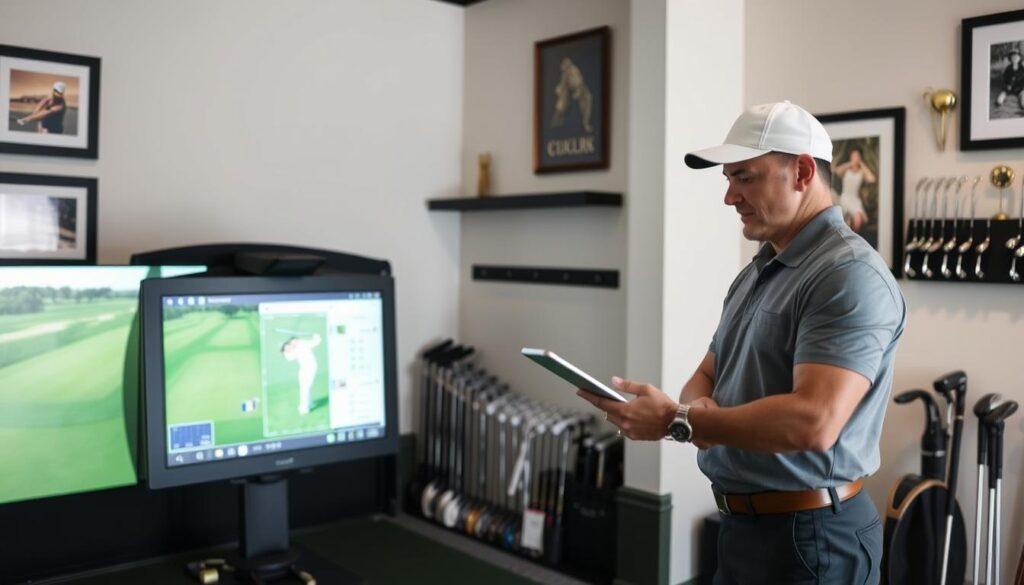
This chat helps your fitter explain the fitting process from start to finish. They’ll make sense of the tech, like launch monitors and shaft analyzers. You’ll understand what’s coming, making the session focused and collaborative.
The most important thing? Radical honesty. Don’t hide behind your golf ego or humblebrag. If your ball often goes into the next fairway, say so. The data we collect later depends on the truth we establish now.
Let’s look at how clear communication can make a difference:
| Player Statement | What the Fitter Hears | The Honest, Actionable Version |
|---|---|---|
| “My driver is inconsistent.” | A giant question mark. Is it a slice? A hook? Low ball flight? Too much spin? | “My typical miss is a high, spinning slice that loses 40 yards of carry. I feel I can’t release the club fully.” |
| “I want more distance.” | Who doesn’t? This lacks a measurable target or context. | “My 6-iron carry is 150 yards. I’d like a consistent 165 yards with a tighter dispersion pattern.” |
| “My short game is fine.” | Probably not. This often shuts down a critical line of inquiry. | “I’m decent from 50 yards in, but I struggle with consistency from 80-100 yards and often leave those shots short.” |
| “I play a few times a month.” | This gives a very general activity level. | “I play 12-15 rounds a year, mostly on weekends. I practice at the range once every two weeks.” |
See the difference? The right side of that table gives your fitter a roadmap. It frames the hypothesis for the testing to come. This interview turns the fitting process into a personalized performance audit. Your job is to give the raw, truthful story. Their job is to turn it into the perfect set of tools.
On-Site Measurements & Testing
Welcome to the laboratory, where your swing becomes data and your hunches get proven or politely disproven. The on-site demo is the core of the fitting process. It’s where you trade stories for facts.
First, we set a benchmark. You’ll hit shots with your current clubs using TrackMan 4. It’s like a review for your equipment. The numbers show your launch angle, spin rate, and how far you hit the ball.
Then, we explore different options. Your fitter finds the best clubs for you, without bias. You’ll try over 50,000 head and shaft combinations.
The fitting process is clear and open. For each club you try, the launch monitor shows the results. You see how each club compares to your current ones.
This part of the on-site demo is a team effort. It follows a logical order:
- Establish Your Baseline: Hit your current clubs to capture your starting point.
- Curated Selection: Your fitter suggests specific clubs based on your interview and data.
- Real-Time Comparison: You hit each new combination while TrackMan saves and displays the data for immediate analysis.
- The “Eureka” Moment: You find the setup where the numbers and the feel perfectly align—that smooth, powerful sensation paired with a tight cluster on the screen.
It’s not just about trying new clubs. It’s about finding the right equipment that works with you. You leave with a dataset and the feeling of finding the right fit.
How to Prepare
Success in the fitting process comes from careful preparation, not last-minute changes. It’s not like a PGA Tour event. Think of it as a science experiment where you’re both the subject and the researcher.
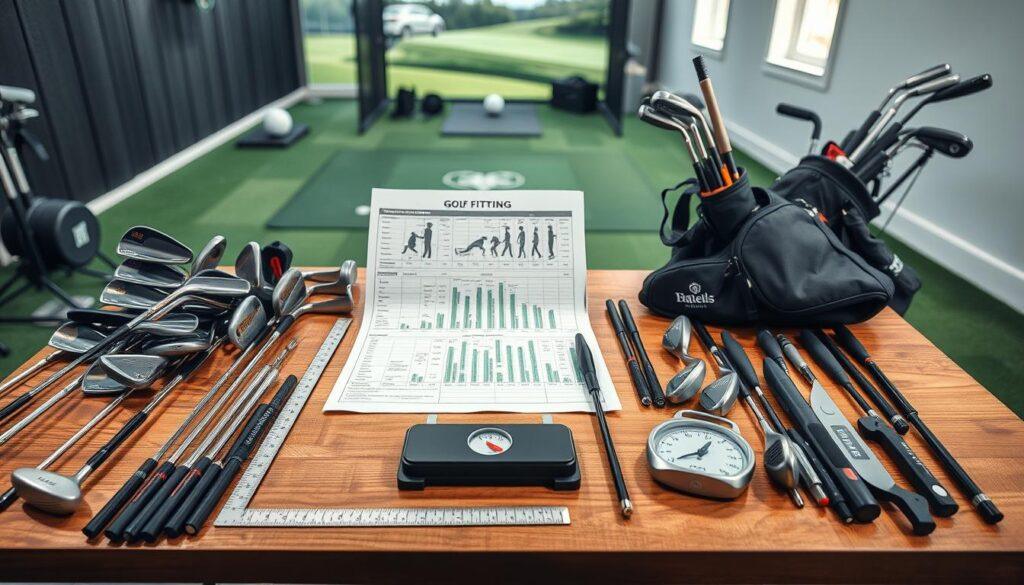
Your goal is to show your real swing for analysis. Coming unprepared, rushed, or with the wrong gear is like using the wrong tools in a lab. Here’s a simple plan to get ready.
| Category | The What | The Why |
|---|---|---|
| Gear | Your current clubs, shoes, and glove. | This is your starting point. The fitter needs to see what you use now. Shoes and gloves are key for accurate data. |
| Logistics | Arrive 10 minutes early. Use this time for stretching and warming up. | Swing like yourself, not a stiff version. A good warm-up prepares your body and calms your nerves. The fitter might record data during these swings. |
| Mindset | Come rested, hydrated, and open-minded. Leave brand loyalty behind. | Focus on performance, not brand loyalty. You might need a shaft or lie angle you never thought of. |
Look at the gear column. Bring the clubs you actually play, even the ones you dislike. Your shoes are important for connecting with the ground. Wear something that helps you swing well.
The logistics are simple but key. That 10-minute buffer is for you. Stretch and make some easy swings. It’s not a high-pressure situation. As you warm up, the fitter might start collecting data.
Lastly, your mindset is important. Are you ready to question your golfing identity? The numbers will tell a story, and you must listen. Come rested and hydrated. A tired or dehydrated swing is not reliable.
In short, be ready for surprises. The goal is to have a meaningful conversation with your swing, using technology to help. Show up prepared, and the technology will do the rest.
Common FAQs
Do you have to buy something after a fitting? No way. It’s not like a timeshare presentation. The fitting gives you data and a blueprint for your game. There’s no pressure to buy.
Isn’t this service only for scratch golfers? Not at all. Higher handicappers often get more out of it. Playing with the wrong clubs is like driving with a bad steering wheel. It holds you back.
What about the cost? Most premium fitters charge a fee. Think of it as tuition for learning about your swing. It’s worth it to clear up confusion.
What if you decide to order? The studio process is amazing then. Your exact needs go to master craftsmen. They build your TaylorMade or Ping clubs with precision.
Every detail, from grip to clubhead weight, is set with care. The fitting’s insights are turned into real performance in your clubs. It’s a journey from guesswork to true understanding of your game.