
Studio Support After Fitting

The initial hearing aid fitting is just the beginning of a successful hearing journey. Post-fitting support is crucial for ensuring that the devices are working effectively and comfortably.

Follow-up visits allow hearing specialists to monitor progress, make necessary adjustments, and fine-tune the hearing aids to achieve the best possible outcome. By reviewing hearing test results and discussing specific hearing needs and lifestyle, the specialist can understand how hearing loss affects daily life.

Proper fit and studio support enable individuals to get the most out of their devices, enhancing overall quality of life. This support is essential for maximizing the benefits of hearing aids.

Monitoring Progress

After initiating treatment, whether it’s a hearing aid fitting or starting TRT, monitoring progress is crucial. This ongoing assessment ensures that the treatment is effective and safe, allowing for timely adjustments.
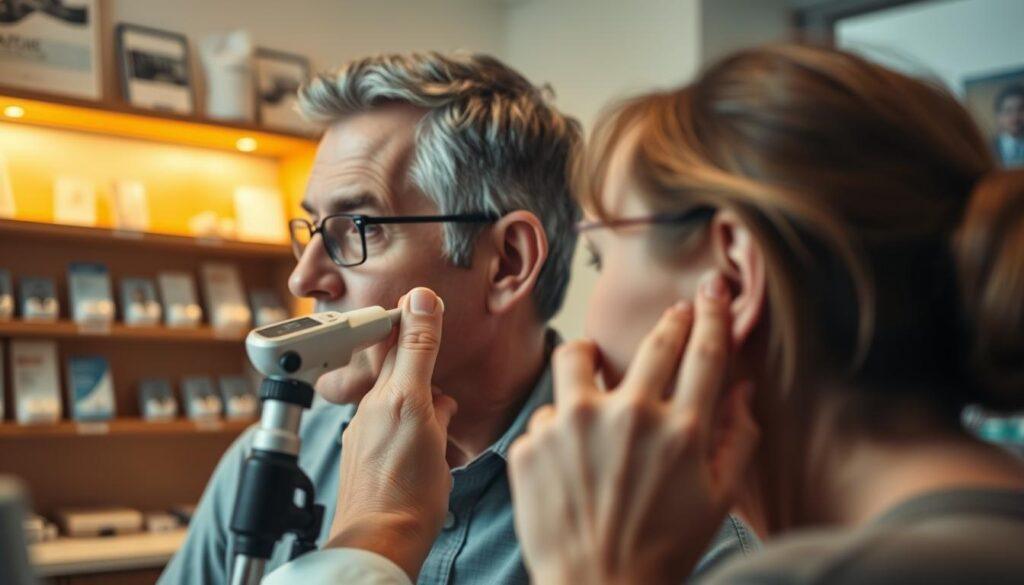
A close-up view of a hearing specialist adjusting a modern hearing aid on a patient's ear, capturing the moment of fine-tuning. The foreground features detailed tools such as an otoscope and a digital adjustment device. In the middle ground, the patient, a middle-aged person in modest casual clothing, appears attentive and engaged, reflecting a sense of trust and collaboration. The background reveals a softly lit, professional clinic setting with shelves displaying various hearing aids and informational brochures. The warm lighting creates a welcoming atmosphere, highlighting the attentive interaction between the specialist and the patient. The shot is taken from a slightly elevated angle, emphasizing the precision and care involved in hearing aid adjustments.

The Importance of Follow-Up Visits

Follow-up visits play a vital role in the success of both hearing aid fittings and TRT treatments. For individuals with hearing aids, these visits enable audiologists to fine-tune the devices, enhancing their performance and user satisfaction. As noted in the ultimate guide to pants fitting, precise adjustments can make a significant difference in overall comfort and functionality.

Similarly, for TRT patients, regular lab checks are essential for monitoring hormone levels and symptom response. This information allows healthcare providers to adjust dosing, ensuring the therapy remains both effective and safe.

  • Regular assessments help in identifying any potential issues early on.
  • Adjustments can be made to improve treatment outcomes and patient satisfaction.
  • Ongoing monitoring supports the long-term success of the treatment plan.

Minor Tweaks for Maximum Benefit

Minor adjustments can significantly enhance the performance of various devices and therapies. Whether it’s fine-tuning hearing aids or making adjustments to the loft/lie bend of golf clubs, these tweaks can lead to a more personalized and effective solution.

Optimizing for Performance

Tweaking is a crucial step in achieving optimal performance. For golf clubs, adjustments to the loft/lie bend can improve accuracy and overall gameplay. Similarly, fine-tuning hearing aids can significantly enhance the listening experience.

Loft/Lie Bend Adjustments for Precision

Making minor adjustments to the loft/lie bend of golf clubs can result in improved precision and control. This process involves analyzing the golfer’s swing and making targeted adjustments to optimize performance. By doing so, golfers can achieve a more consistent and effective swing.

FAQ

What is the importance of studio support after a hearing aid fitting?

Studio support is crucial for ensuring that hearing aids are working effectively and comfortably. It involves adjustments and fine-tuning to achieve the best possible outcome, enhancing the overall quality of life.

Why are follow-up visits necessary after a hearing aid fitting or starting TRT?

Follow-up visits are vital for monitoring progress and achieving the desired outcomes. Specialists can assess the effectiveness of the treatment or device and make adjustments as needed, whether it’s fine-tuning hearing aids or adjusting TRT dosing.

How can tweaking devices or therapies lead to maximum benefit?

Minor adjustments, such as tweaking the loft/lie bend of golf clubs or fine-tuning hearing aids, can make a substantial difference in performance and user experience. These tweaks allow for a more personalized and effective solution to specific needs.

What happens during a follow-up visit for hearing aid users?

During a follow-up visit, specialists review the effectiveness of the hearing aids, make adjustments as needed, and fine-tune the devices to better suit the user’s preferences and hearing needs.

How does post-fitting support enhance the overall quality of life?

Proper fit and adjustments ensure that hearing aids are working effectively, allowing users to get the most out of their devices and enhancing their overall quality of life.

Can minor adjustments really make a difference in the performance of devices like hearing aids?

Yes, minor adjustments can significantly impact the performance and user experience of devices like hearing aids. Fine-tuning these devices can lead to a more personalized and effective solution.

What is the role of the hearing specialist during the fitting and follow-up process?

The hearing specialist reviews hearing test results, discusses specific hearing needs and lifestyle, and makes adjustments as needed to ensure the best possible outcome for the user.