

Buying custom golf clubs is a smart move for your game. The cost has two parts: the fitting session and the assembly of your clubs.
A specialist, like those at JD’s Clubs, looks at your swing. They use advanced tech to get your swing profile. This helps pick the right shaft, head, and grip for you.
This is different from buying standard clubs. Big brands like TaylorMade and Titleist make clubs for the average player. But a custom fit aims at your swing’s strengths and weaknesses.
Knowing the component pricing upfront is important. You see the exact fitting price and the cost for each part. This clear pricing is an investment in your game, not just new gear.
Head/Shaft/Grip Price Ranges
Building custom golf clubs involves choosing three main parts. Each part has its own price range. This helps you understand where your money goes and how different choices affect the cost.
Custom club building is different from buying off-the-rack sets. You can mix and match parts. For example, you can pair a high-end shaft with a special clubhead. This flexibility means prices can vary a lot.
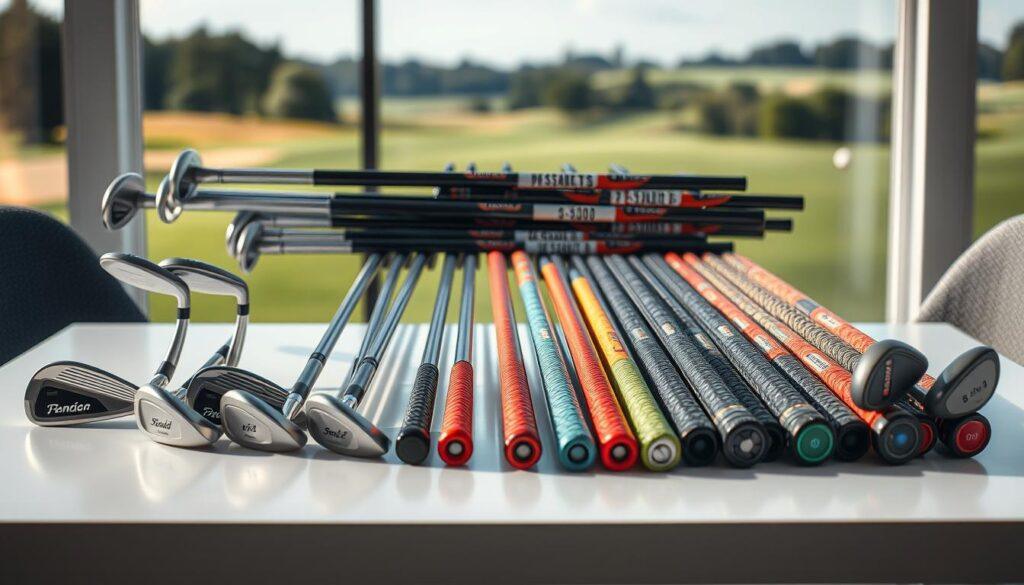
Clubhead prices vary the most. You can find older OEM models for less money. But, the latest designs with advanced materials and technology cost more.
Costs depend on features like forgiveness, adjustability, and materials. A basic driver head is affordable. But, a top-of-the-line head made from titanium and carbon costs more.
Shaft Pricing: The Engine of Your Swing
The shaft is often the biggest investment. Stock shafts that come with OEM clubs are included in the base price. But, aftermarket shafts offer better performance and cost more.
Brands like Mitsubishi Chemical lead the market with their Diamana and Tensei lines. A basic graphite shaft is cheaper than a premium one. Premium shafts have special bend profiles and materials for better launch and spin.
This is where you can make big upgrades. The right shaft can change how a club feels and performs.
Grip Prices: The Crucial Connection
Grips are the cheapest part but very important. They are your only physical connection to the club. A bad grip can ruin all your other investments.
Prices go up with better materials, durability, and customization. Simple rubber grips are cheap. But, corded, multi-material, or customized grips with logos cost more.
Because grips wear out, they’re easy to replace for better performance.
| Component Tier | Typical Price Range | Key Features |
|---|---|---|
| Entry-Level / Stock | $ – $$ | Standard materials, often from previous generations; good for beginners or tight budgets. |
| Mid-Range / Performance | $$ – $$$ | Current aftermarket models; improved materials and more fitting options for serious golfers. |
| Premium / Tour-Inspired | $$$ – $$$$ | Top-tier materials (e.g., premium graphite, multi-metal heads); maximum adjustability and performance refinement. |
Knowing these price ranges helps you make smart choices. You can choose to spend more on a premium shaft and less on a grip. Or, you might pick the latest clubhead and a mid-range shaft.
This knowledge is key for making smart upgrades and managing your budget in custom club building.
Value vs. Premium Components
A high price doesn’t mean better shots if it doesn’t fit your swing. It’s not about cheap vs. expensive. It’s about finding the best part for your game.
In custom club building, value components work well for many golfers. They use proven materials and designs. These parts are the most cost-effective for a build. Premium components use advanced materials like high-modulus carbon fiber. They have tighter tolerances and designs for specific swings.
The shaft’s profile is key, not just its flex. The profile shows how stiff or flexible the shaft is. Finding a shaft that matches your swing dynamics is key for power and accuracy.
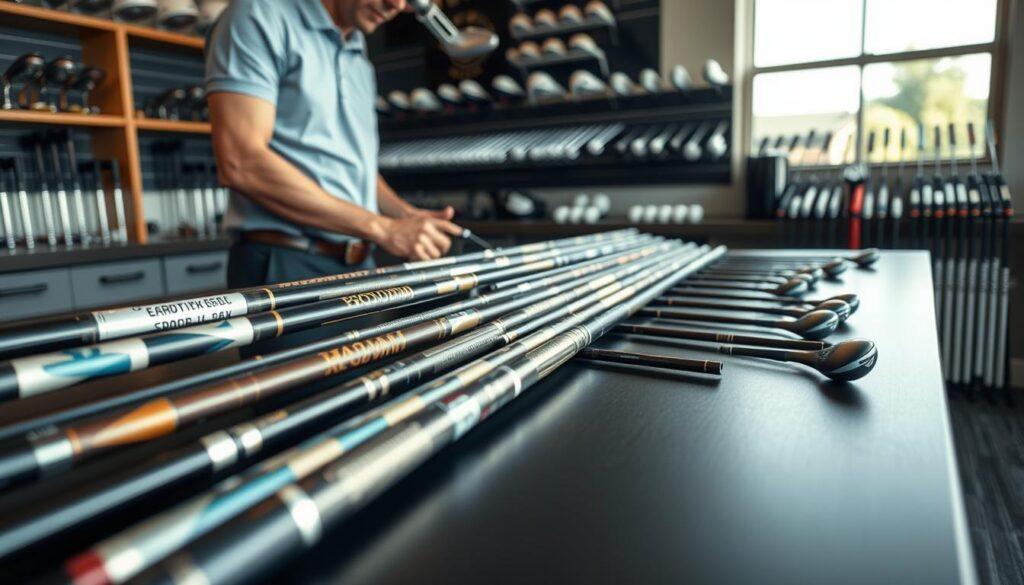
Stock premium clubs might have great shafts but not fit right. A custom build with a fitting shaft will outperform it. This is why custom builds offer superior long-term value.
Your fitting determines the best value for you. The fitting price helps find if you need premium features or a robust design. The table below shows the main differences.
| Category | Value Components | Premium Components | Key Consideration |
|---|---|---|---|
| Primary Focus | Broad performance, forgiveness, cost-effectiveness | Optimized performance for specific swing traits | Your fitting data reveals your need |
| Typical Materials | Standard graphite, steel, durable alloys | High-modulus carbon, aerospace-grade metals | Material affects feel and weight, not just price |
| Shaft Profile | Often mid-launch, mid-spin profiles for versatility | Wide range: ultra-stiff tip for low spin, soft handle for feel | Profile match is key, regardless of tier |
| Best For | Golfers seeking reliable performance without extreme specs | Players with defined, repeatable swings seeking fine-tuning | Your consistency level dictates the benefit |
| Long-Term Value | High, if the profile is a correct match from fitting | High, only if the specific features suit your swing | Value comes from fit, not the price point alone |
Smart upgrades solve problems found in your fitting. Paying more for features you can’t use is not an upgrade. The right component, chosen through a clear fitting price process, adds real value to your bag.
Trade‑In & Financing Options
Many golfers find out their old clubs can help pay for new ones. The value of your current clubs can be used through trade-in programs or payment plans. This makes getting custom clubs more affordable.
Club fitters often appraise your old irons, woods, and putters. They give a fair market value. This value is then used to lower the cost of your new clubs.
Turning old gear into savings is a smart move. It’s a way to save money right away. You’ll see how your trade-in reduces the total cost.
Financing options are also available. Instead of paying all at once, you can spread the cost over time. These plans often have low or no interest, making top-notch clubs more accessible.
Knowing about these options is key. A good fitter will explain them to you. Don’t hesitate to ask about trade-in values and payment plans.
| Financial Option | How It Works | Key Benefit |
|---|---|---|
| Club Trade-In Program | Your current set is professionally appraised. Its value is applied as credit toward your new custom clubs. | Lowers the net fitting price by converting old gear into immediate savings. |
| Flexible Financing Plan | The total component pricing is broken into manageable monthly payments. Plans often have low or no interest. | Makes premium custom equipment accessible without a large upfront payment. |
When trading in, think about the brand and condition of your clubs. Clubs from major brands usually hold their value better. Even if your clubs don’t fit perfectly, their value can help fund a new set.
Financing plans offer flexibility. They let you buy better components now and pay later. This way, the cost matches the long-term benefits of playing with fitted clubs.
Always ask about the details of any financial deal. A clear fitter will explain how appraisals work, how credits are applied, and financing rates. These tools help make getting better golf clubs easier and more affordable.
Sample Build Packages at 3 Budgets
We’ve created three club build examples for different budgets. These show how a custom builder combines parts from various makers. The goal is to make a set that works well for a specific golfer.
These examples are just for show. A real custom fit might mix different tiers, like a premium shaft with a value head. This flexibility is what makes working with a specialist great.
| Budget Level | Clubhead Tier | Shaft Tier | Grip Tier | Primary Performance Goal | Approx. Total Cost (Driver) |
|---|---|---|---|---|---|
| Entry-Level | Value (Previous Gen Model) | Stock Graphite (Regular Flex) | Standard Rubber | Maximum Forgiveness & Ease of Use | $250 – $350 |
| Mid-Tier Performance | Current Model, Game-Improvement | Aftermarket Mid-Kick Point | Mid-Size Tour Wrap | Balanced Distance & Control | $500 – $650 |
| Premium Tour-Inspired | Latest Players or Adjustable Model | High-End Low-Spin Graphite | Premium Cord or Leather | Low-Spin Precision & Workability | $800 – $1,100+ |
Entry-Level Package: Maximum Forgiveness
This build aims to offer the most help for your money. It uses a value-tier clubhead for a big sweet spot. It’s paired with a reliable stock graphite shaft and a standard rubber grip.
The system is built for stability. It’s great for golfers needing consistency and a budget-friendly option. Smart upgrades might include changing the grip size for comfort.
Mid-Tier Performance Package: Balanced Play
This package uses current model clubheads for better speed and forgiveness. The shaft is an aftermarket model for a more tailored bend. It improves energy transfer.
A mid-size grip enhances feel and control. This package is for golfers wanting a performance boost without the high price. It’s the best mix of advanced component pricing and value.
Premium Tour-Inspired Package: Precision Engineered
The premium build focuses on optimization. It uses the latest players’ model or a fully adjustable driver. The shaft is high-end, low-spin graphite for specific launch and feel.
The grip is premium cord or leather for ultimate feedback. This package is for low-handicap players seeking every advantage. The cost reflects top-tier materials and extensive fitting time.
These packages show how upgrades change the club’s purpose and price. Your ideal set might mix elements from different columns. A custom fitter finds the perfect mix for your game and budget, making sense of all the component pricing options.
Booking with Cost Clarity
Knowing the cost of components is key. Book a fitting with a pro who gives clear prices upfront.
The fitting price is your starting point. A session with a reputable club fitter like JD’s Clubs is a team effort. It’s not just about selling. This step gathers all the data needed for your club build.
Be ready with questions for your fitter. What does the fitting fee cover? How are prices for heads, shafts, and grips determined? Talk about upgrades and any build fees. Clear talk avoids surprises.
Choose a service that keeps costs clear. This is like a managed travel programme for better rates and reports. Your fitting is the first step to a clear, valuable club build.