

The Wilson FitAi Platform upgrade is a fitting-room story first, not just a software story. Wilson Golf has moved FitAi toward a cleaner workflow by connecting it directly with launch monitors, reducing extra hardware needs, and supporting both driver and iron fittings. For golfers, the value is not that an app magically picks the perfect club. The value is that a fitter can work from measured ball-flight and swing data sooner, then use that information to narrow test heads, shafts, lofts, and build choices.
That distinction matters. Good fitting still depends on the player’s delivery, strike pattern, speed, launch conditions, shot shape, and preferences. A faster recommendation engine can help, but it does not replace the conversation between golfer and fitter. It should make that conversation sharper.
What The Wilson FitAi Platform Upgrade Changes
Launch Monitor Integration
The most practical change is direct integration with launch monitors. Wilson says the updated system works with leading units including Foresight Sports and TrackMan, capturing real-time ball-flight and swing data for the fitting process, according to Golf Retailing. That matters because launch-monitor data is already the language most serious fittings use: ball speed, launch angle, spin, carry, dispersion, descent, and related delivery numbers.
In a traditional fitting, the fitter may gather launch data in one system, interpret it manually, then move back and forth among head and shaft options. FitAi is aimed at shortening that loop. It does not make the launch monitor less important. If anything, it puts more weight on the quality of those measured swings.
No Extra Sensor Setup
The upgraded platform also removes the need for external sensors or added hardware, a change Wilson says is intended to reduce setup time. The Wilson FitAi Platform now sits closer to the tools many fitters already use rather than asking them to build a separate station before the actual fitting can begin.
That is useful in a busy fitting environment. Less time spent attaching extra pieces or troubleshooting a separate sensor means more time can go toward checking strike location, comparing ball flight, and confirming whether the recommendation makes sense to the golfer. A quick setup does not guarantee a better fit, but it can protect the quality of the session by keeping the attention on clubs and swings.
Data Quality Before Speed
Wilson FitAi Platform Data Inputs
Wilson’s system is built around a proprietary AI algorithm that uses swing and ball-flight information to generate club recommendations. Sports Business Journal reported that the system can produce recommendations in as few as five swings and analyzes approximately 12,000 data points per swing through its app-based process, according to Sports Business Journal.
Five swings can be enough to start a direction, especially with a consistent player. It may not be enough to finish every fit. A golfer who is warming up, fighting a two-way miss, testing a new grip feel, or switching from an old set with very different length and lie may need more shots before the data settles. The better way to view the speed claim is as an early recommendation point, not a hard stop.
Why Fitter Judgment Still Matters
Artificial intelligence can sort data quickly, but a club-fitter has to judge context. A player may produce strong numbers with a club that feels too heavy to repeat late in a round. Another player may show a small distance gain with a lower-spin driver, yet lose fairway pattern. An iron recommendation may look efficient on a simulator but still need lie-angle confirmation, turf checks, and gapping work.
That is where a fitting-first approach protects the golfer. The best use of FitAi is not blind acceptance. The fitter should use the recommendation as a starting lane, then test whether the suggested build holds up under normal swings, slight misses, and the shot shapes the golfer actually uses on the course.
How Fitters Can Use Wilson FitAi Platform Results
Driver Fitting Checks
For driver work, the system’s value is in reducing the search area. A fitter may start with the recommended head and shaft profile, then test launch, spin, face contact, peak height, and dispersion. The player should not judge the result from one crushed shot. The better check is a pattern: Where do the playable misses finish? Does the launch window repeat? Does the golfer deliver the club comfortably, or is the setup forcing timing?
This is also where a direct launch-monitor connection helps the fitter speak clearly. If spin drops but the miss pattern widens, that is not a simple win. If ball speed rises but launch falls too low, the player may not see the flight they need. A good FitAi session should still include practical tradeoffs, not just the longest single result.
Iron Fitting Checks
Iron fitting is often less glamorous than driver fitting, but it can be more connected to scoring. The upgraded FitAi support for irons gives fitters a path to test club recommendations against carry gaps, launch, spin, descent angle, and strike pattern. A seven-iron that flies farther is not always the right seven-iron if it creates poor gaps or lands too flat to hold greens.
Lie angle, shaft weight, length, and head style still need confirmation. Some of that work happens through data. Some of it happens through the golfer’s delivery and contact. If a player tends to miss thin, for example, the fitter should be careful about choosing a build that looks fast but makes strike quality less stable. Readers who want a broader look at how price and fitting value connect can compare this with our piece on custom fitting and premium club pricing.
Booking A FitAi Session With Clear Expectations
What To Ask Before You Arrive
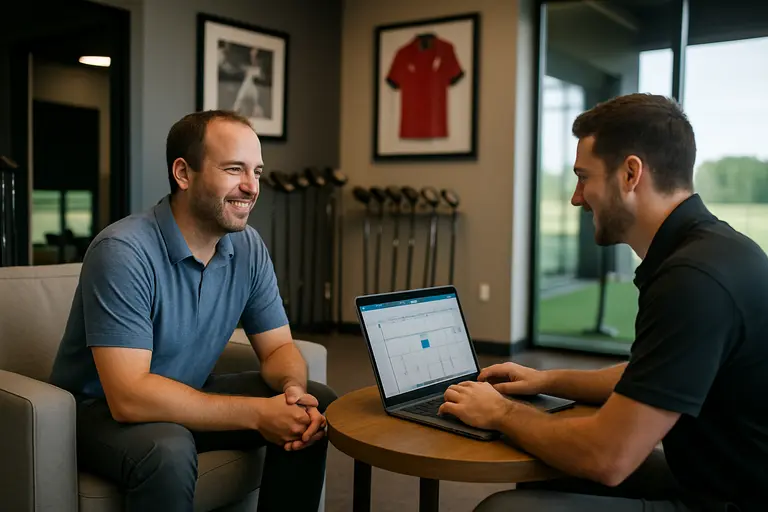
Before booking, ask whether the shop uses the latest FitAi version, which launch monitor will be used, and whether the session will cover driver, irons, or both. Also ask how the fitter validates the recommendation after the app produces options. The answer should include real testing, not only a printout.
Bring your current clubs if the fitter allows it. Baseline numbers are useful because they show what you are trying to beat or improve. The best comparison is not a fantasy build against no reference point; it is a tested recommendation against the clubs you actually play.
- Ask which Wilson heads and shafts are available to test during the appointment.
- Expect the fitter to watch contact quality as well as launch-monitor numbers.
- Be honest about your normal miss, typical course conditions, and comfort with club weight.
- Do not treat one long shot as proof that the fit is finished.
Where App Guidance Helps
The mobile app-based workflow is useful because it can guide the fitter through the process in a consistent order. That helps newer fitters stay organized and helps experienced fitters move quickly without skipping key checks. For a related look at the speed side of the same technology, see our coverage of the FitAi platform and faster club fitting.
There is also a golfer-experience benefit. Many players get tired during long fittings, especially if they are asked to hit too many balls with too many unfamiliar clubs. If FitAi can narrow the field earlier, the player may have more energy left for meaningful final comparisons. That is valuable, but only if the fitter resists rushing the confirmation stage.
In the same network of sports technology resources, Wikiapp is a related site worth keeping in mind for additional insights.
Wilson FitAi Platform Takeaways For Booking
What Golfers Should Take From The Upgrade
The upgraded system is best understood as a fitter’s decision-support tool. It brings launch-monitor integration, removes separate sensor needs, works across driver and iron fittings, and uses an app-based process to recommend club configurations. Those are meaningful workflow changes for shops that fit Wilson equipment.
Treat the Wilson FitAi Platform as a faster route to better questions. Why this head? Why this shaft weight? What happened to spin on misses? Did the iron gap correctly? Did the driver perform when you made a normal swing instead of a perfect one? Those questions turn an AI recommendation into a real fitting decision.
The upgrade should help fitters work with data more efficiently, but the golfer still needs a finished fit that can survive the course. If the recommended club produces solid numbers, feels repeatable, and fits the player’s scoring needs, it has earned a serious look. If the numbers are mixed, a good fitter keeps testing.