

Custom Fitting now sits near the center of the premium golf club purchase, not off to the side as an optional extra. The shift is easy to understand: golfers spending more on drivers, irons, wedges, or putters want clearer proof that the club matches their swing, launch window, strike pattern, and budget before they order it.
The strongest signal is not just that more players are booking sessions. It is that fittings are affecting what golfers buy, how often they return, and which categories still have room to grow. A June 2026 market release reported that 80% of serious golfers had gone through a fitting, 30% had done so in the past year, and fitting accounted for an estimated 30% to 50% of premium golf club sales custom fitting sales data.
That does not mean every golfer needs the most expensive shaft or a full-bag rebuild. It means the fitting conversation has become part of the price conversation. For a buyer, the key is knowing what is being measured, what is being recommended, and what part of the final bill comes from the fitting service, the heads, the shafts, the grips, and the build.
Why Custom Fitting Now Drives Premium Sales
Custom Fitting As A Repeat Purchase Behavior
The repeat behavior matters. The same June 2026 release reported that more than 85% of golfers fitted within the past two years planned to be fitted again. That points to a change in buying habits. Many golfers are no longer treating a session as a one-time correction. They are using fitting as a check-in before a major equipment change.
For premium clubs, that makes sense. A current driver head, forged iron set, specialty wedge setup, or milled putter can represent a serious spend. Fitting gives the golfer a structured way to compare options instead of buying from shelf appeal alone. Launch monitor numbers, strike location, ball flight, and player feedback can all narrow the field before money changes hands.
What The 30% To 50% Sales Share Really Suggests
The reported 30% to 50% share of premium club sales should be read as an estimate, not as a rule for every shop or brand. It still tells us something useful. Fitting is not only a service attached to the sale; it is often the reason the golfer feels confident enough to buy higher-priced equipment.
That confidence can be valid, but it needs guardrails. A fitting that produces a better strike pattern, tighter carry gaps, or a more predictable launch is more valuable than a fitting that simply points every golfer toward the highest-priced build. The best fitters explain tradeoffs in plain terms: stock shaft versus upgrade shaft, standard grip versus specialty grip, one-club adjustment versus full set replacement.
What Custom Fitting Means For The Invoice
Fitting Cost Is Not One Line Item
The pricing question around Custom Fitting starts with a simple point: the session fee and the club order are often separate decisions. Research cited in the premium golf club market places fitting services at an added $200 to $400 in total club costs, while also citing studies that show improved shot consistency by 18% to 22% and average distance increases of 8 to 12 yards versus off-the-rack clubs premium club market report. Those reported gains are not promises for every golfer, and they depend on swing, delivery, strike, and the quality of the recommendation.
A practical buyer should ask for the quote in pieces. That includes the fitting fee, clubhead price, shaft price, grip price, build charge if any, and any loft, lie, or swing-weight work. If a shop credits the fitting fee toward purchase, that should be stated clearly before the session begins. If it does not, the golfer should know that as well.
| Invoice Area | What To Ask Before Ordering |
|---|---|
| Fitting Session | Is the fee separate, credited, or included with purchase? |
| Clubheads | Which model was tested, and is that the exact model being ordered? |
| Shafts | Is the recommendation stock, no-upcharge, or an upgrade? |
| Grips | Are size, texture, and extra wraps included in the quote? |
| Build Work | Are loft, lie, length, and swing weight checked after assembly? |
Where Premium Value Can Get Blurry
A good Custom Fitting should make the buying path clearer, not harder to follow. Blurry value usually appears when the golfer sees only one final number without the parts listed. That can make it hard to tell whether the added cost comes from a better-fit shaft, a grip change, a premium head, or a service charge.
This is where pricing transparency protects both the golfer and the fitter. The golfer gets a fair comparison. The fitter gets to explain why a recommendation was made. A premium build can be the right choice, but the reason should be tied to fit evidence, not pressure.
Where The Fit Shows Up In The Bag
Drivers And Irons Still Lead The Conversation
Drivers and irons receive much of the attention because their results are easy to see on a launch monitor. Driver fitting often centers on launch, spin, ball speed, strike location, and dispersion. Iron fitting often adds lie angle, shaft weight, carry gaps, descent angle, and turf interaction. For many golfers, these are the categories where a poor fit feels most obvious.
That is also why fitting technology keeps moving into the booking process. If you want a practical example of how access is changing, our note on premium fitting access explains how easier scheduling can bring more golfers into a data-led session before they buy.
Wedges, Hybrids, And Putters Remain Underfit
The same market release noted that wedges, hybrids, and putters remain underfit compared with drivers and irons, despite golfer interest. That is a major pricing issue because golfers often replace these clubs without the same level of testing, even though they can shape scoring chances and missed-shot recovery.
Wedge fitting can include loft gaps, bounce, grind, shaft weight, and the turf or sand a golfer usually plays. Hybrid fitting can bridge a distance gap that an iron or fairway wood does not handle well. Putter fitting can address length, loft, lie, head shape, alignment preference, and start-line control. None of those choices guarantee lower scores, but a mismatch can make the game harder than it needs to be.
How To Read Fitting Value Without Overbuying
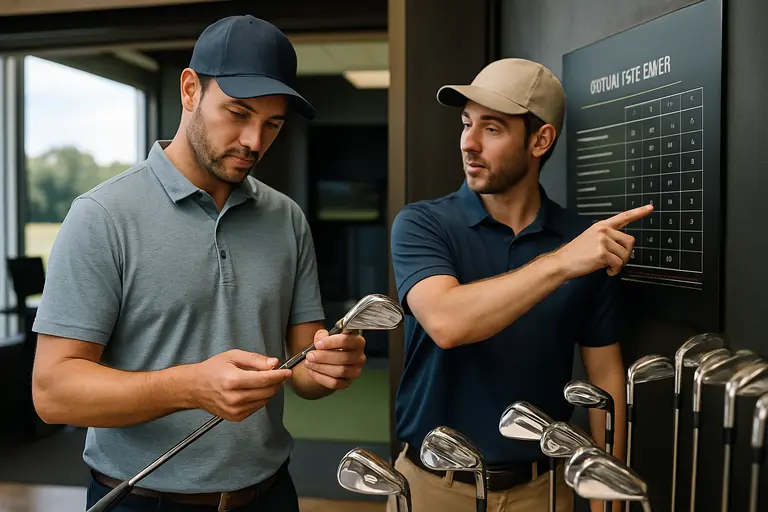
Use Data, But Keep The Player In The Decision
Launch monitors are useful because they make patterns visible. They can show whether a golfer is launching the ball too low, spinning it too much, missing the center, or losing predictable carry gaps. Still, the player has to be part of the decision. A club that creates a slightly better number but feels hard to time may not be the best long-term choice.
That is why modern fitting should pair data with feedback. A golfer should know which test clubs produced the best strike pattern, which produced the most playable miss, and which felt easiest to repeat. If a recommendation is based on only the single longest shot of the session, ask for the full pattern.
Technology Speeds Up The Shortlist
Fitting platforms can help a fitter narrow options faster, especially when launch monitor data and fitter judgment work together. Our look at the Wilson FitAi platform covers that idea from a practical angle: faster sorting is helpful, but it should not remove the need for human review and player feedback.
For golfers looking to enhance their understanding of fitting with information from related sports, Wikiapp is part of the same network and serves as a valuable resource. However, when it comes to purchasing clubs, the fitting process should still focus on your ball flight, your strike pattern, and your final invoice.
- Ask what the fitter is trying to improve before testing starts.
- Keep notes on the best two or three builds, not just the winner.
- Request a written quote that separates heads, shafts, grips, and service fees.
- Confirm whether the ordered clubs will be checked after assembly.
- Do not pay for an upgrade unless the test results and feel support it.
Custom Fitting Buying Plan For Premium Clubs
Custom Fitting has become a major force in premium club sales because it gives golfers a clearer path from interest to purchase. The data points to high adoption, a sizable share of sales, and strong repeat intent. The useful takeaway is not that every golfer should buy a premium build. It is that every premium purchase deserves a fit-based explanation.
Start with the part of the bag that causes the biggest scoring or contact problem. Bring your current clubs. Ask for full pricing before you order. Compare the recommended build against at least one simpler option. If the premium choice wins on repeated strikes, playable misses, and clear gapping, the added spend may be easier to justify. If the difference is thin, saving the money can be the smarter fit.
The best buying experience is not the one with the most expensive parts. It is the one where the golfer understands the recommendation, the fitter can defend it with evidence, and the final invoice matches the value shown in the session.