
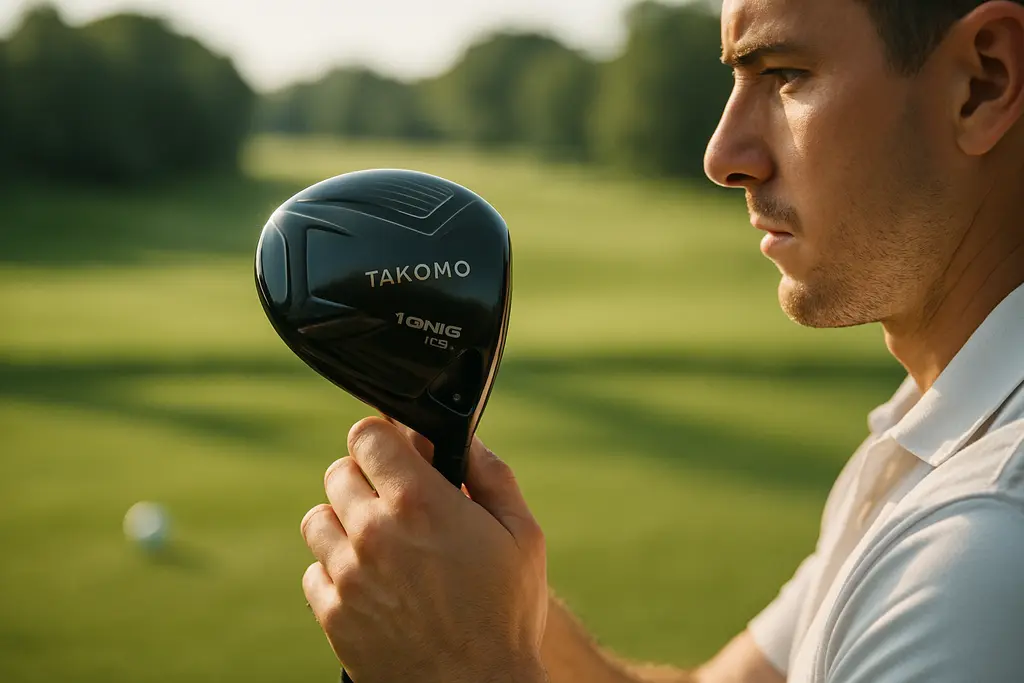
Conforming clubs are not just a tournament-office detail. They sit right in the middle of driver design, fitting advice, resale decisions, and whether a golfer can put a club in play without a rules problem. Takomo’s Ignis D1 and Ignis D2 driver story is a useful case because it shows how one adjustable setup can change the compliance picture, even when the issue is not obvious to the golfer holding the club.
As of October 17, 2026, the key facts are clear enough for golfers to learn from them. In April 2026, Takomo was alerted that certain Ignis D1 driver heads exceeded the Characteristic Time test in a specific weight setup, with the heaviest weight in the toe and the second-heaviest in the heel. Takomo then pulled the Ignis D1 driver from its website, contacted customers, and offered free replacement heads that were expected by July 2026; the research available here does not confirm whether every replacement had been delivered. The successor, Ignis D2, moved to a single rear weight port and launched on September 15, 2026, at $329, with GOLF.com reporting that the model was listed on the USGA conforming driver heads list GOLF.com’s Ignis D2 report.
Why Conforming Clubs Matter In Driver Fitting
Conforming Clubs And Adjustable Settings
The fitting bay often treats adjustability as a benefit, and in most everyday fitting work it is. Moveable weights, hosel settings, and multiple loft options let a fitter manage launch, spin, face angle, strike pattern, and shot shape without asking the player to make a new swing. The Ignis D1 case adds a needed caution: an adjustable driver has to stay within the rules in every possible approved setup, not only in the setting that looks best on a launch monitor.
The USGA/R&A equipment framework covers how a clubhead must remain conforming with its adjustable features, and the interpretations make clear that adjustability is part of the conformance question rather than a side issue USGA equipment interpretations. For a golfer, that means a club can be a poor tournament choice if one legal-looking weight arrangement creates a non-conforming head. The player may not feel that difference at address, and a fitter may not see it from ball flight alone.
Why CT Testing Is Not A Feel Test
Characteristic Time is a spring-effect measurement. A driver face that is too lively can cross the equipment-rule line, even if the golfer does not know it and even if the club looks normal. That matters because conformance is not judged by a player’s intent. A golfer can unknowingly carry a non-conforming driver and still face a rules issue in events that check equipment.
This is where fitting advice needs to be honest. A hotter face sounds attractive, but golf’s equipment rules are built to keep driver performance inside a defined limit. A responsible fitting conversation should not chase a gray-area head or an unverified setup. It should ask whether the model, loft marking, head markings, and weight configuration match what the rules allow.
What The Takomo Ignis D1 Case Showed
A Single Weight Setup Can Change The Answer
The Ignis D1 issue was not described in the research as a blanket failure of every possible setup. The problem appeared in a specific heel-and-toe weight arrangement: the heaviest weight in the toe and the second-heaviest in the heel. That detail is exactly why this case is useful for real golfers. Many players adjust weights once, like the ball flight, and never think about whether that exact setup has rule consequences.
From a fitting-first view, the lesson is not that adjustability is bad. The lesson is that adjustability has to be designed, tested, sold, and fitted within the rules. A fitter can recommend a weight setting to manage a hook, add stability, or change launch conditions, but if the setting creates a non-conforming head, the fitting result is not usable for governed competition.
Internal Testing Still Needs External Confirmation
The research notes state that Takomo acknowledged its internal testing systems were not calibrated appropriately. That is a manufacturer-side issue, but golfers feel the effect. A consumer generally cannot measure CT at home, and many shops are not set up to verify a driver head against governing-body testing. That puts extra weight on the conforming lists, manufacturer communication, and careful model identification.
For the player, the practical question is simple: can this exact driver be used in the events I play? Recreational rounds with friends are one context. Club championships, state events, qualifiers, and higher-level amateur competitions are another. In events using Model Local Rule G-1, a committee may require that a driver not only conform under the Rules of Golf but also appear on the conforming driver heads list. If a golfer plays events like that, “probably fine” is not a good enough answer.
What Changed With The Ignis D2
Single Rear Weight, Fewer Compliance Variables
The Ignis D2 redesign removed the D1’s heel-and-toe weight ports and used a single rear weight port. That is a meaningful design choice. It reduces the number of possible weight configurations that could create a compliance problem, and it makes the fitting conversation cleaner. A fitter still has to match the head, shaft, loft, length, and grip to the golfer, but there are fewer weight-position combinations to question.
The D2’s September 15, 2026 launch price of $329 also made the case interesting from a pricing-transparency angle. A lower-priced driver can still need the same rules discipline as a premium driver. Conformance is not a luxury feature. It is a baseline requirement for golfers who care about competition eligibility.
Listed Does Not Mean Every Physical Head Is Immune
A listing is valuable, but golfers should not treat it as a permanent shield for every individual club in every condition. The research notes that if a driver fails an on-site evaluation for factors such as length, spring effect, or other equipment checks, it can be treated as non-conforming even if the model appears on a list. Damage, modification, incorrect components, or a mismatch between the listed model and the head in hand can create problems.
This is also where broader equipment literacy helps. The same thinking behind USGA equipment limits applies here: the rule does not make one build right for every golfer, but it does create boundaries that a fitting must respect. Golfers who read across the same sports network, including insights from Banat Zayed, should still bring equipment-rule questions back to golf-specific sources and the event committee running their competition.
Fitting And Buying Checks Before Tournament Play
Questions To Ask Before You Pay
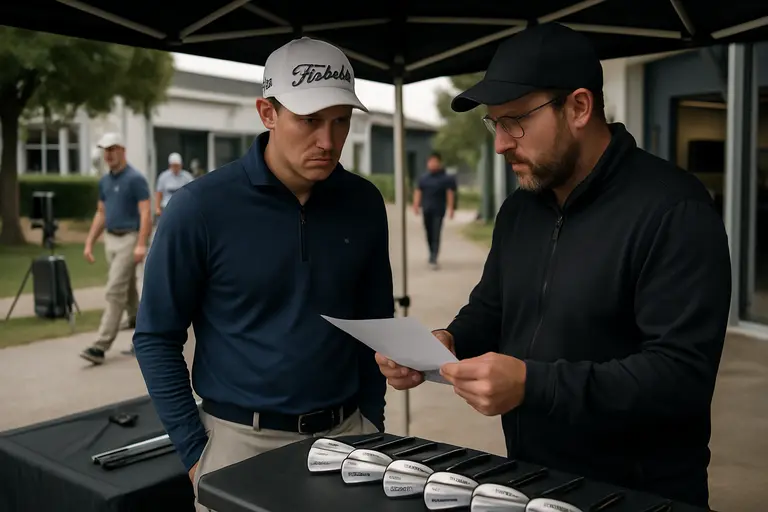
Buying conforming clubs starts before the card is charged. Ask the seller for the exact model name, loft, and any markings that identify the head. If the club has adjustable weights, ask whether all supplied configurations are approved for play. If it is used, ask whether the face, sole, hosel, or weight system has been altered. A used driver with missing weights or aftermarket parts may still look fine in photos but deserve a closer check.
- Match the model and loft markings to the conforming driver heads list used by the governing bodies.
- Keep the driver in a stock or clearly documented configuration unless a qualified fitter confirms the setup.
- Ask tournament staff about Model Local Rule G-1 before a competitive round if there is any doubt.
- Save purchase records and manufacturer notices, especially after a recall or replacement program.
- Do not assume a strong launch-monitor session proves rules compliance.
What Fitters Should Record
A good driver fitting note should include more than launch, spin, and carry. It should record head model, stated loft, shaft, playing length, grip, hosel setting, and weight setup. That record protects the golfer if the club is later adjusted, reshafted, sold, or checked before an event. It also helps separate performance work from rules guesswork.
For competitive golfers, this record can prevent a last-minute scramble. If a player arrives at a qualifier with a driver that has been changed several times, written build notes make it easier to verify what is actually in the bag. That is not a promise that the club will pass any on-site test, but it is a smarter starting point than relying on memory.
Takomo Ignis D2 Conforming Clubs Takeaway
The Takomo case is not only about one brand or one driver family. It is a clean reminder that conforming clubs depend on design, testing, listing, fitting, and the exact configuration a golfer uses. The Ignis D1 problem showed how a specific adjustable weight arrangement could cross the line. The Ignis D2 response showed one way a manufacturer can reduce that risk by simplifying the weight system.
For everyday golfers, the practical path is not complicated. Verify the model, understand the settings, keep build notes, and ask the event committee when tournament rules require a listed driver. For fitters, the job is to improve fit inside the rulebook, not around it. Distance, launch, and dispersion matter, but they only help in competition if the club is legal to put in play.
That is the lasting lesson from the Ignis D2 update. A driver can be affordable, well fit, and easy to adjust, but rules status still has to be checked. Conforming clubs protect the player, the field, and the credibility of the fitting recommendation.