

The world of golf equipment is full of marketing tricks. You’re standing there, ready to spend, wondering if you need a full, custom setup or just a quick fix. It’s a big decision.
Is a single-club fitting a smart move or a waste of time? It’s not just about getting new gear. It’s about using your time, money, and skills wisely.
You have choices. GOLFTEC’s experts show you can get the most out of one club or a whole set. They use advanced tech to fine-tune your gear, from driver to putter.
But which option is best for you? We’re going beyond the idea that more is always better. Think of this as the start of your personal equipment guide. We’ll explore it all with a sharp wit.
Pros & Cons of Each Option
The full-bag fitting is like a symphony; the single-club fitting is like a solo. Which one fits your game best? The full-bag offers a complete system. The single-club focuses on a specific problem. Let’s look at the details.
The full-bag fitting is all about total optimization. 14 perfectly tuned instruments playing in harmony. It’s the dream of a seamless set. Your clubs work together, giving you confidence.
But is it too much? For beginners, it’s like buying an orchestra before learning the recorder. It can be overwhelming. Jeff Sones said learning with wrong clubs is like “learning to ride a bicycle on a bike that’s way too small, or too big.” It can mess up your swing.
The single-club fitting is like a precise strike. If your driver is off, a driver fitting fixes it. It’s efficient and solves a big problem. You get one club that works perfectly.
The downside? It might not fix everything. If your irons are wrong, you’re building your swing on shaky ground. John Daly’s story shows how equipment can shape your swing, for better or worse.
Here’s a quick comparison:
| Full-Bag Fitting | Single-Club Fitting | |
|---|---|---|
| Core Promise | Complete system synergy | Surgical problem-solving |
| Biggest Pro | Eliminates foundational flaws across all clubs | Fast, affordable fix for a specific weakness |
| Biggest Con | Can be overwhelming; higher time/cost investment | Risk of isolated improvement amid other ill-fitting clubs |
| Best For… | New players, serious upgraders, perfectionists | Experienced players with one glaring equipment gap |
So, which is better? The full-bag offers a complete solution. The single-club is efficient. The right choice depends on your game’s story. Are you starting a new chapter or editing an old one?
Using the wrong clubs hurts your game and swing. The right fitting gives your talent the right tools. It’s about creating a masterpiece, not forcing it on bad paper.
Time/Cost Comparison
Think of your golf bag as a corporate boardroom. A full-bag fitting is like an annual retreat for all departments. It’s a big meeting that takes two to three hours for each club.
An iron fitting is like a focused meeting with your key team. It’s much quicker, taking only 60 to 90 minutes. This shows a big difference in focus and time.
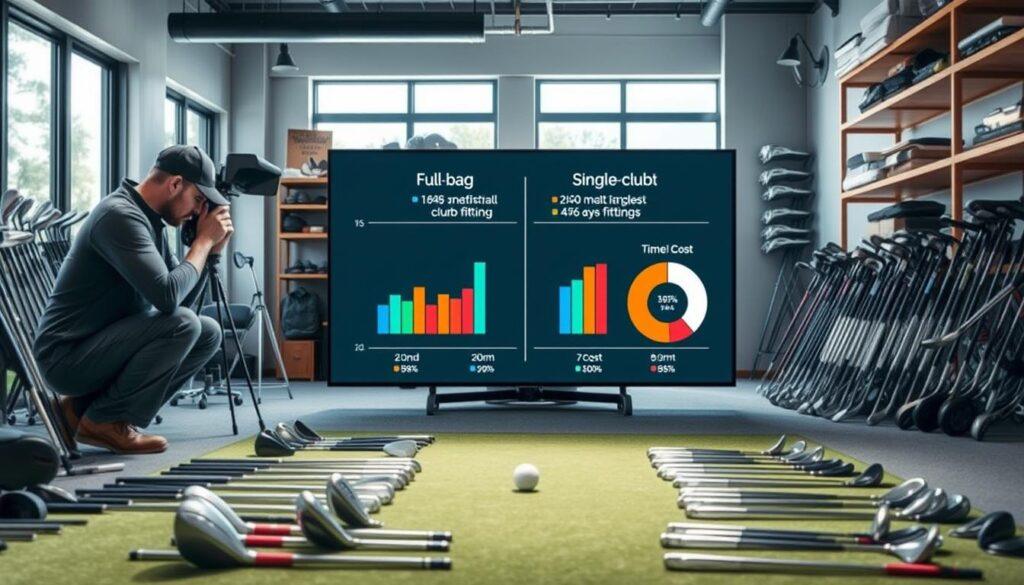
Looking at money, a full fitting might seem expensive. But remember, you don’t need the newest clubs to fit well. The real value is in the fitting and the knowledge you gain.
You don’t have to buy expensive clubs right away. The real cost is usually just the session fee. This leads to a surprising market trend.
| Aspect | Full-Bag Fitting | Single-Club Fitting (e.g., Irons) |
|---|---|---|
| Time Investment | 2 – 3.5 hours (The Summit) | 1 – 1.5 hours (The Strategy Session) |
| Typical Session Cost | $100 – $300+ | $50 – $150 (often lower or waived) |
| Financial Model | Higher upfront fee; may apply to future purchase. | Lower barrier; frequently offered FREE by brands banking on your eventual purchase. |
Yes, some brands offer free fittings. They hope you’ll buy their clubs after feeling the perfect fit.
Is it smarter to fit clubs one at a time? This way, you spend less money and time. Focus on one club at a time.
The real gain is in learning and saving money. A full fitting gives you a plan. A single-club fitting lets you follow it on your budget and schedule.
Who Benefits from Each Path
Assigning every golfer a full bag fitting is like giving a marathon to a beginner. It’s not a good idea. Golf is different for everyone. Your needs change with each shot.
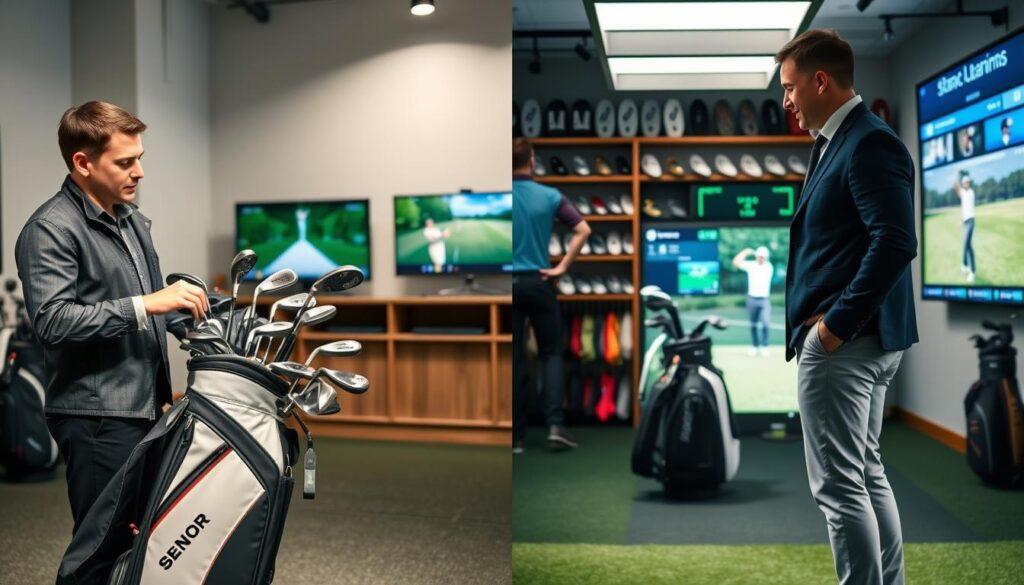
The beginner is full of promise but lacks technique. Giving them 14 clubs is overwhelming. It’s like giving a new chef a Michelin-star kitchen.
Experts like Nick Sones say start with a few clubs. A sand wedge, pitching wedge, 7-iron, and driver. These clubs teach the basics without being too much.
The mid-handicapper faces specific challenges. They might struggle with a slice or a bad wedge game. They don’t need a whole new set of clubs. They need to fix one problem.
A focused driver or wedge fitting helps them. It’s like therapy with a launch monitor. The goal is to fix one issue, not change everything.
The low handicapper is all about fine-tuning. For them, a full bag fitting is like a systems check. Every detail matters. They need perfect equipment.
This golfer benefits from a detailed review. Their swing is precise, and they need equipment that matches. The right fit can make a big difference.
So, who benefits from a single-club approach? Beginners and mid-handicappers. Who needs a full bag fitting? Low handicappers. Knowing your needs is the first step. The team at FS Golf helps each golfer find their perfect fit.
Sequencing: Putter/Wedge First or Last?
Do you start with the driver or the wedges and putter first? This choice is more than just picking clubs. It’s a big decision that shapes your whole game.
Some say start with the driver to build momentum. Others believe in focusing on the wedges and putter first. This approach creates a solid base for scoring.
The driver-first approach is tempting. It adds distance and feels like progress. But, is it the right choice? A perfect drive doesn’t help if you can’t execute the shot.
The scoring-club strategy is more practical. It focuses on the shots that matter most. By fitting your wedges and putter well, you save strokes right away.
| Strategy | Driver-First (Top-Down) | Wedge/Putter-First (Bottom-Up) |
|---|---|---|
| Philosophy | Build confidence & momentum from the tee. | Establish a stable scoring foundation from the green. |
| Primary Goal | Maximize distance and advantage off the tee. | Minimize strokes inside 100 yards and on the green. |
| Best For | Players who are already consistent scramblers but lack distance. | Most amateurs seeking immediate stroke reduction and lower scores. |
| Key Risk | Owning a Ferrari engine (driver) but having bicycle brakes (wedges). | Delaying the confidence boost and fun of a driver fitting. |
Which path do you choose? While distance is tempting, focusing on the short game first is wise. It can turn three shots into two, making every approach less stressful. Once your short game is strong, you can build your long game on top of it.
Booking Decision Tree
So, where does this leave you, standing on the range of indecision? Let’s cut through the analysis.
Is your game haunted by one specific, recurring ghost? Maybe your 7-iron consistently sails right into the trees. That’s a single-club specter, begging for an exorcism via a precise iron fitting. A targeted solution often makes the most sense.
Or does your entire bag feel like a mismatched set of inherited furniture? Your driver whispers one language, your wedges scream another. Nothing talks to each other. That’s a definitive call for a full-bag consultation.
Did you just rebuild your swing from the ground up with an instructor? Your old specs are ancient history. A full-bag assessment is your logical next chapter.
We’ve weighed the time and cost. We’ve considered your skill level and immediate goals. The path becomes clear. Whether you need one club or a full set, GOLFTEC’s data-driven club fitting process ensures you play with equipment that enhances your performance. It starts with a basic club consultation from an expert.
Book the fitting that makes sense for your chapter in this endless, beautiful struggle. The answer was in your game all along.